
Custom Cleaning Brush
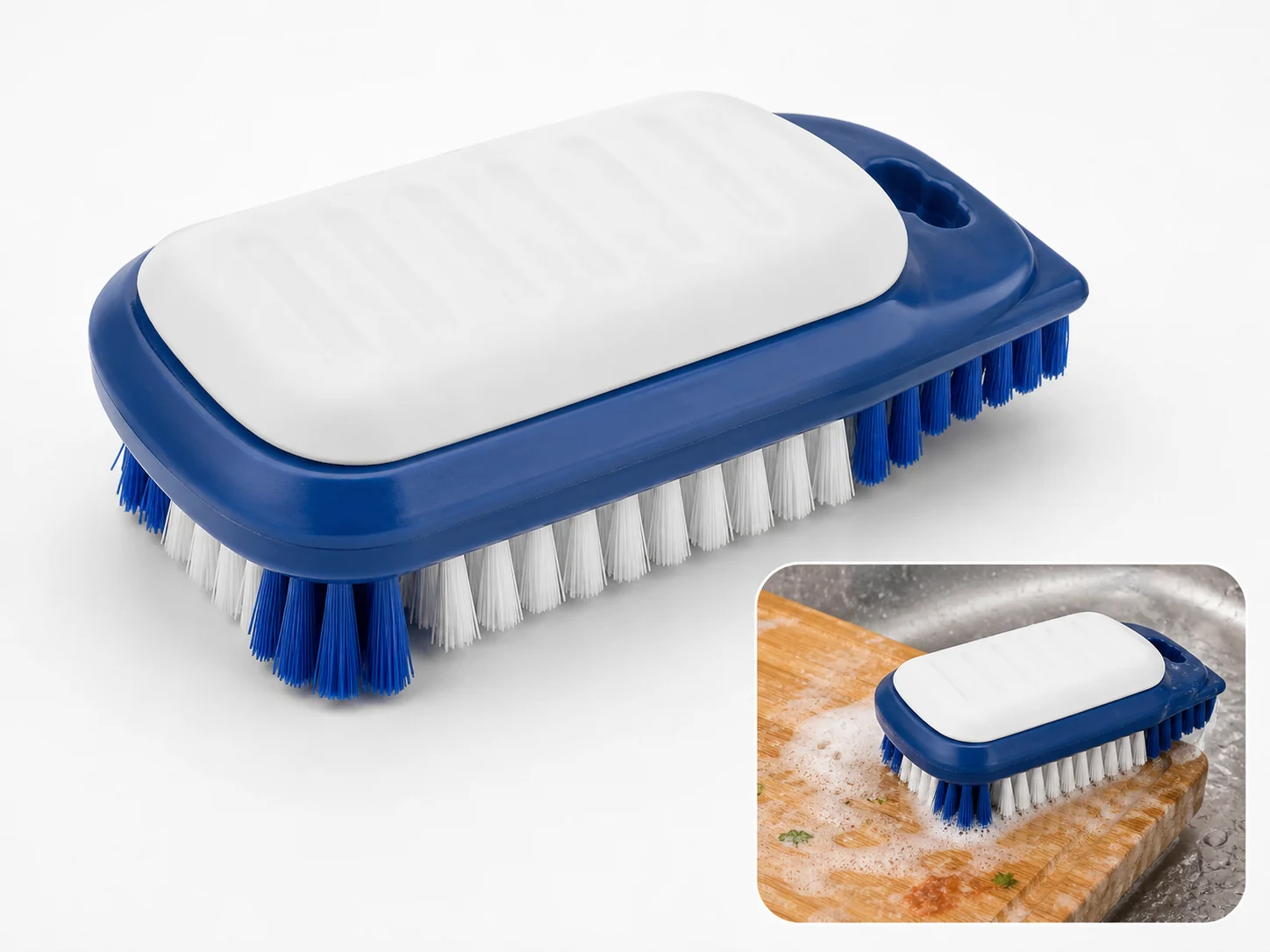
Nylon Hand Cleaning Brush Kitchen Antibacterial Wear Resistant
Antibacterial nylon hand cleaning brush for kitchen sinks, dishes, and cookware. Wear-resistant nylon PA bristles, PP handle, 20-50 mm head, custom sizes.
Small brush
500 pcs
Minimum order
Held in one hand: tube, bottle, detail and swab brushes — including long-handled ones with a small head.
Production lead time, once the specification is confirmed
- Up to 500 pcsWithin 7 days
- 501–50,000 pcsWithin 14 days
- Over 50,000 pcsWithin 21 days
Peak season can extend these times; the shipping date is confirmed in writing with your quotation. Sampling and shipping are quoted separately.
A hand-held kitchen cleaning brush built on wear-resistant nylon PA filaments, an antibacterial filament treatment, and a molded polypropylene handle. It removes food residue, grease, and soap film from dishes, cookware, sinks, and countertops while keeping the brush itself cleaner between uses.
What can this brush do for you?
Wear-resistant nylon fill keeps scrubbing pressure consistent
Nylon PA combines high abrasion resistance with low moisture absorption. The bristle tips wear slowly and spring back after flexing, so dried-on food continues to see the same contact pressure after months of wet use instead of softening into a flattened mat.
Antibacterial filament reduces buildup in the brush head
The antibacterial additive is compounded into the filament resin, not sprayed on as a surface coating. It reduces microbial growth on the bristles themselves in the warm, damp gap between uses, cutting down on sour odor and slime formation. It does not sanitize the dishes or surfaces being cleaned.
Stiffness options that protect the surface you are scrubbing
Filament diameter can be set from fine 0.20 mm tips for coated cookware and glassware to heavier 0.80 mm bristles for cast iron, stainless steel, and grout lines. The same product platform can cover a full kitchen cleaning range without moving the customer to a separate brush type.
Open filament pattern rinses food debris out quickly
Unlike a sponge that traps particles inside its pores, the bristle rows release loosened crumbs and food bits under running water. This reduces carryover between dishes and makes the brush easier to air-dry after a shift.
Head and trim geometry sized for real kitchen contact points
Head widths from 20 mm to 50 mm and trim lengths from 20 mm to 80 mm can be matched to sink rims, faucet bases, pan corners, and countertop edges. A shorter trim creates firmer pressure on flat surfaces; a longer trim reaches around curves without having to force the handle into an opening.
What is a Nylon Hand Cleaning Brush Kitchen Antibacterial Wear Resistant?
This is a manually operated cleaning brush with a molded polypropylene block at one end and a dense nylon filament fill at the other. The user holds the handle and works the bristle tips over open, hand-accessible kitchen surfaces with short scrubbing strokes. The filament tips do the mechanical work; water or detergent carries away what they loosen.
The brush is specified by head width, trim length, filament diameter, and fill material, not by a single fixed design. Short, heavy-gauge fills lean toward pots, grout, and cast iron. Long, fine-gauge fills lean toward coated pans, glass, and polished surfaces. The same core construction can be configured across that range.
The operating limit is worth noting. Nylon and polypropylene are rated for continuous use at 0–80°C for normal dishwashing temperatures. The brush should not be left on hot burners, placed in boiling water, or run through high-temperature sterilization. It is a residue-removal tool; it does not sanitize, strip baked-on carbon, or replace detergent or chemical cleaning steps.
Technical Specifications
Default values below are typical for a kitchen hand brush in this family. Head width, trim length, overall length, filament diameter, and material are normally confirmed against the customer’s surface and replacement program.
| Parameter | Value / Options |
|---|---|
| Brush head width | 20–50 mm, selected for the sink corner, pan base, or counter area |
| Trim length | 20–80 mm; shorter trim for firmer scrubbing, longer trim for contours |
| Overall length | 200–300 mm, matched to hand size and reach |
| Filament diameter | 0.20–0.80 mm; finer filament for delicate surfaces, heavier for heavy soil |
| Fill materials | Nylon PA, PBT, Polypropylene PP, or antibacterial synthetic filament |
| Antibacterial treatment | Antibacterial additive compounded into the filament resin; reduces microbial growth on the brush surface only |
| Handle / block material | Polypropylene PP, with grip texture or hanging feature as configured |
| Handle or thread interface | Hand grip, 1/2 in, M8, M10, or custom mount |
| Operating temperature | 0–80 °C for Nylon/PP fill; 0–120 °C for PBT filament, subject to handle material |
| End configuration | Straight cut, flagged, or split tips for reduced scratching |
| Brush type | Custom Handheld Detail Brushes |
| How it is driven | Hand-guided |
| Cleaning target | dish and cookware washing, faucet base, and countertop cleanup and prep surface cleaning |
| Surface or part | cookware, pans, bases, pads, tile, grout lines, edges, and rims |
| Residue or debris | grease, soap film, food residue, and carbon |
| Mounting / connection | Hand grip, 1/2 in, M8, M10, or custom mount |
If the brush is used for heavier commercial kitchen work or dishwasher-wet environments, specify the fill material and filament diameter together: a heavy gauge with a long trim can reduce control, while a fine gauge with a short trim may not remove stubborn grease by itself.
Where does this brush work best?
- Dish and cookware washing: plates, bowls, utensils, pans, and bakeware with attached food or grease where a sponge or cloth loses contact too quickly.
- Sinks, drains, and faucet bases: areas where soap film and grease collect in rims and around hardware that a flat scrub pad cannot follow.
- Countertop cleanup and prep surfaces: cutting boards, tile edges, grout lines, and counter seams within hand reach.
- Light commercial kitchen use: dish rooms, cafeterias, and food-prep stations where hand brushes are replaced on a schedule and consistent stiffness matters.
It is not designed for cleaning the inside of narrow bottles, pipe bores, ventilation ducts, or machine-driven brush applications. Those jobs call for bottle brushes, tube brushes, or automated roller brushes.
How do I choose the right one?
Start from the surface and the residue, not from a general stiffness label. Five parameters control how this brush performs.
- Filament diameter and surface sensitivity. Use 0.20–0.35 mm filament for nonstick coatings, anodized or polished surfaces, and glassware. Use 0.35–0.60 mm for general dishwashing and stainless steel. Use 0.60–0.80 mm only for hard surfaces such as cast iron, unfinished tile, or thick grease films where surface marking is acceptable. Flagged or split tips add scratch protection without forcing a change in handle size.
- Trim length and contact pressure. A 20–40 mm trim gives firmer, flatter contact for baked-on residue on flat surfaces. A 50–80 mm trim flexes more and reaches around faucet bases and curved pan walls, but it will not transfer as much pressure per stroke. Choose the longer trim only when access matters more than aggressive scrubbing.
- Head width and overall length. A 20–30 mm head fits small items, sink corners, and detail areas; a 40–50 mm head covers pans and counter sections faster. Overall length below 250 mm gives close hand control; 250–300 mm improves reach and leverage for larger sinks and taller users.
- Fill material and temperature. Nylon PA is the default for wet kitchen use at 0–80°C. PP is lighter and lower-cost but less heat-tolerant. PBT filament moves the bristle rating up to 120°C, but the PP handle and thread interface must still match the actual exposure. Choose antibacterial nylon for warm, humid kitchens or shared brushes that sit damp between shifts.
- Interface. Most kitchen programs use a molded hand grip. If the brush must lock into a wall bracket, caddy, or fixture, specify 1/2 in, M8, M10, or a custom thread early because retrofitting after molding is usually not practical.
Do not use this brush when the job requires wire-level abrasion, carbon removal from oven interiors, paint stripping, or contact with surfaces above the temperature limits. For narrow openings, use a bottle brush; for heavy carbon or rust on metal, use a wire brush. Nylon hand cleaning brushes remove food soil and grease, not hardened scale or fused deposits.
Can I customize this brush?
Most kitchen hand brush programs change at least one of these variables. To start a specification, provide the target surfaces, the most common residue, wash temperature range, handle style, and whether the brush must fit an existing caddy or holder. A photo or drawing of the current brush shortens the process.
- Head: width, length, shape, angle, corner radius, fill pattern, and tuft density.
- Filament: material (Nylon PA, PBT, PP, antibacterial synthetic), diameter, trim length, color, and end finish (straight, flagged, or split).
- Handle / block: overall length, grip contour, texture, hang hole, material grade, and color.
- Interface: hand grip or 1/2 in, M8, M10, or custom mounting thread.
- Marking: pad printing, laser marking, molded-in branding, or color coding for stiffness levels.
- Packaging: bulk pack, individual polybag, shelf-ready sleeve, or private-label retail packaging.
When the brush is supplied for institutional or export programs, we can also support material documentation, inspection plans, and third-party testing according to the buyer’s project requirements.
Which filament survives the cleaning and still lasts on a nylon hand cleaning brush kitchen antibacterial wear resistant?
Does the antibacterial filament sanitize my dishes or countertops?
No. The antibacterial additive is formulated into the bristle resin to reduce microbial growth on the brush itself between uses. It does not replace washing, rinsing, or separate sanitizing steps.
Can one brush handle both nonstick pans and cast iron cookware?
Rarely well. A brush soft enough to protect a nonstick coating will usually feel weak on heavy cast iron soil, and a firm 0.60–0.80 mm filament can mark a coated pan. For mixed kitchens, provide two stiffness levels in the same handle design or use a flagged filament as the compromise for light-to-medium soil.
What happens if the brush is left in boiling water or on a hot surface?
Nylon and polypropylene soften as they approach 80°C. Bristles can bend permanently, and the handle can warp. PBT filament tolerates higher heat than nylon, but the molded PP handle still limits the total brush rating. Keep the brush on a cool rack or caddy when not in hand.
Should the brush be soaked in detergent or bleach between uses?
No. Soaking weakens the handle surface and attacks the bristle base over time. Rinse the brush under running water, shake out loose debris, and store it bristle-side down where air can reach the fill. A dry brush lasts longer and smells less.
How do I know when to replace the brush?
Replace it when the bristles stay bent or flattened after rinsing, when the handle shows cracks or warping, or when the brush no longer removes the same residue with the same number of strokes. In commercial kitchens, set a weekly visual check rather than waiting for stiffness to fail during service.
Can this brush be cleaned in a dishwasher?
A short upper-rack cycle at modest temperature may be acceptable for many configurations, but repeated dishwasher drying cycles can embrittle nylon and warp PP. Hand rinsing and air drying are the safest maintenance routine, and the brush itself is not intended as a dishwasher-cleaning tool.
Guides that go deeper on this
Custom Manufacturing RFQ
Describe Your Application
Please include the main sizes, application, residue, preferred material, interface, quantity, and any drawing or sample available.
Drawing or photo optional — it speeds things up, it does not gate the enquiry.
Custom Brush RFQ
Send Your Brush Project
Upload a drawing, product photo, or sample photo and provide the core dimensions and cleaning conditions.
“We need a brush to remove wet residue from a stainless steel conveyor, about 800mm wide. The current brush wears quickly. We can send photos.”
“We sell drinkware and need a cleaning brush to include with the product. Quantity around 5,000 pieces.”