
Custom Cleaning Brush
Nylon Plate Brush
Every tuft sits on one plane, so a single stroke clears chips, swarf and loose powder across the full plate width without marking ground surfaces.
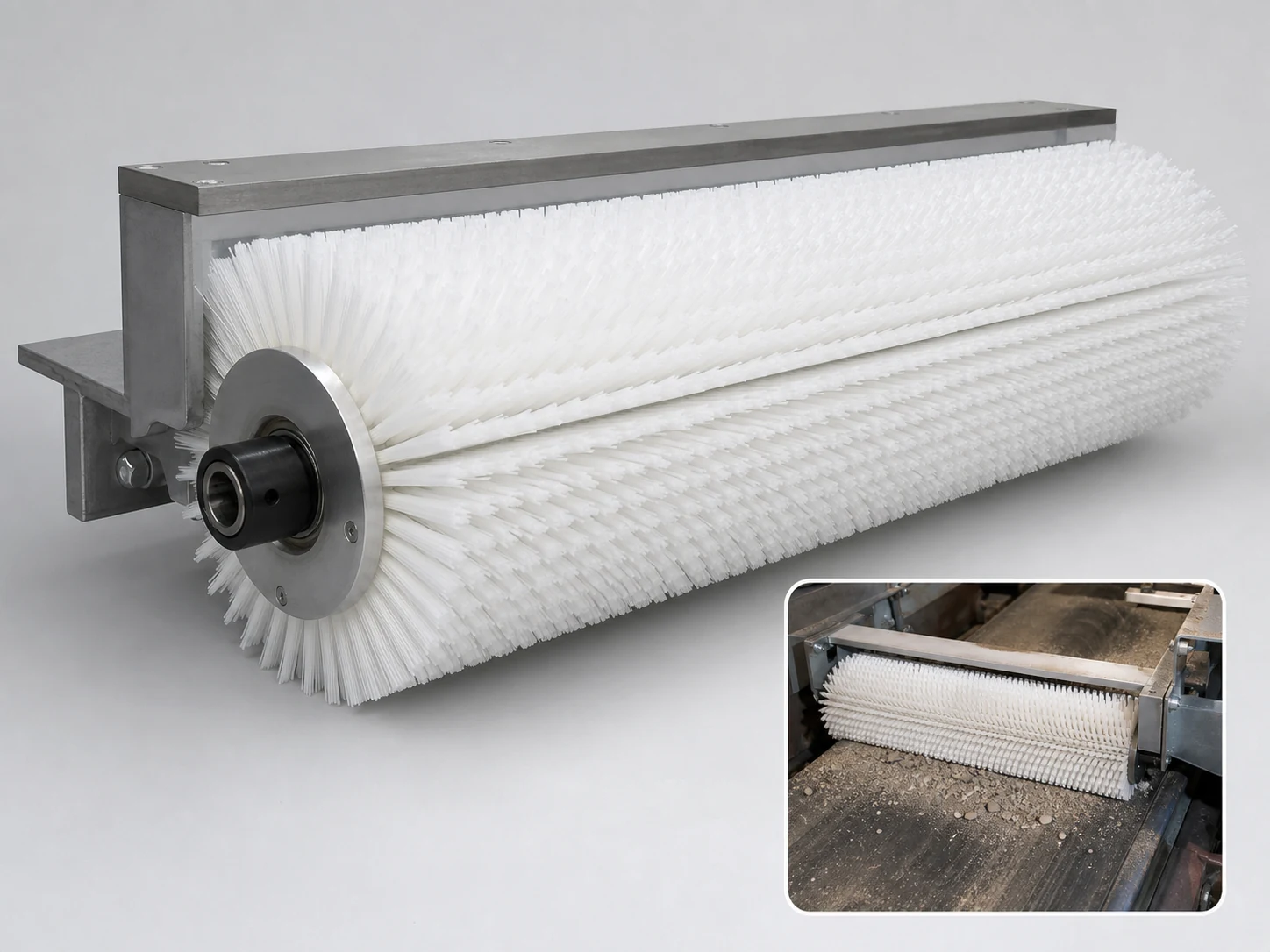
Large-format brush
100 pcs
Minimum order
Built one at a time on a core or channel: full-width rollers, sweeper brooms and long strip.
Production lead time, once the specification is confirmed
- Up to 100 pcsWithin 20 days
- 101–1,000 pcsWithin 30 days
- Over 1,000 pcsConfirmed with your quotation
Peak season can extend these times; the shipping date is confirmed in writing with your quotation. Sampling and shipping are quoted separately.
A custom-size nylon plate brush built for flat-surface sweeping: straight nylon PA filament tufts set into a rigid plate base wipe chips, dust, swarf, loose powder, and light oily residue from machine beds, work tables, guide ways, and flat components without damaging ground or coated surfaces.
What can this brush do for you?
One stroke covers the full contact width
The flat plate holds every tuft on a single plane, so the filament tips engage the surface across the entire plate width. A single pass clears a continuous strip instead of leaving clean rows separated by untouched dirt, which matters when you are clearing a machine table or conveyor deck quickly between cycles.
Nylon gives way instead of gouging
Nylon PA filament is resilient enough to push chips and dust, but it deflects under moderate load instead of cutting into the surface. On ground steel tables, anodized aluminum fixture plates, painted panels, and other precision surfaces, the brush removes loose material while the contact itself remains non-marring.
Tuft pattern can be matched to the debris
Open rows allow large chips and stringy swarf to release from the face without jamming. Dense or staggered rows trap fine powder and metallic dust. Because the pattern is part of the build, the plate can have different zones for different conditions on the same brush.
The rigid plate keeps pressure consistent
A solid backing plate spreads hand or actuator force evenly to the tufts. There is no soft cushion that lets pressure concentrate in the center and miss the edges. If the brush is mounted to a moving carriage, the consistent face height also produces a repeatable wipe line pass after pass.
Works dry or lightly wet
PA6 and PA6.6 retain usable stiffness when exposed to water, cutting coolant, or light oil, so the same plate can be used to sweep a dry table and then drag loosened coolant-swollen residue off a wet surface. The filament will not rust, and it continues to spring back after saturated use.
What is a Nylon Plate Brush?
A nylon plate brush is a flat-backed brush assembly in which nylon PA filaments are tufted into a rigid plate or block. The plate defines the shape, mounting, and working width; the filament defines the cleaning contact. It is usually hand-guided across a surface, but the plate can also be bolted to a bracket, bar, or automated slide for fixed wiping strokes.
In use, the operator pushes or pulls the tufts across the contaminated area. The filaments lift loose particulate and carry it ahead of the plate; finer dust is trapped between tufts and released when the brush is tapped or washed. For oily residue, the short, stiff filament face acts like many small scrapers that move the film without relying on absorption.
This is first and foremost a flat-surface sweeping and light wiping tool. It is not an abrasive conditioning brush, a heavy scale remover, or a replacement for a cloth wipe on polished optics. The plate form is chosen when the job needs a controlled, wide, repeatable contact face rather than a handful of bristles.
Technical Specifications
| Parameter | Value / Options |
|---|---|
| Plate length | 100 to 3000 mm, custom sizes available |
| Plate width | 10 to 2500 mm, custom sizes available |
| Plate thickness | 6 to 30 mm typical, depending on base material and mounting load |
| Trim height | 10 to 50 mm, custom |
| Filament diameter | 0.10 to 1.00 mm |
| Fill material | Nylon PA6 or PA6.6; straight or crimped |
| Base material | Aluminum, stainless steel, polypropylene, PVC, or plywood, selected for environment |
| Tuft pattern | Straight rows, staggered, full-face, edge rows, or zoned patterns |
| Mounting options | Threaded inserts, countersunk holes, routed slots, or bonded handle/fixture interface |
| Working temperature | -20°C to +80°C recommended for standard nylon PA |
| Chemical exposure | Water, light oils, and dilute detergents are acceptable; avoid strong acids, strong alkalis, and long steam exposure |
| Brush type | Custom Machine Table Brush Plates |
| How it is driven | Machine-driven, mounted in the equipment |
| Cleaning target | machine shop table, cnc machining center enclosure and cleanup station, and fixture plate cleaning |
| Surface or part | plastic, plates, fixtures, electronic assemblies, aluminum, fiberglass, trays, and edges |
| Residue or debris | dust, chips, powder, particles, oil, scale, coolant, and rust |
| Mounting / connection | Threaded inserts, countersunk holes, routed slots, or bonded handle/fixture interface |
All values can be adjusted to your drawing or application requirements.
Where does this brush work best?
- Machine shop tables, lathe beds, and mill tables where chips, swarf, and cutting oil residue must be cleared before the next setup.
- CNC machining center enclosures and cleanup stations where loose chips accumulate on flat trays and window ledges.
- Fixture plates, inspection tables, and flat granite or steel reference surfaces that need non-marring dust removal before measurement.
- Electronic assembly and repair benches for removing plastic dust, fiberglass particles, and component clipping debris from flat work areas.
- 3D printing platforms and powder-handling stations for sweeping stray filament fragments, powder, and support debris without scratching the build plate.
- Packaging and filling line decks where paper dust, label fragments, or leaked powder must be swept between runs.
How do I choose the right one?
Work from the surface and the residue first, then confirm the plate and mounting.
Set the width from the surface
Measure the dirty area or the stroke length available. A single plate usually covers the full width with one pass, or several plates are tiled side by side. A plate that is too narrow leaves a seam; one that is too wide adds weight and unneeded drag. For manual use, keep overall width within what an operator can hold with even pressure.
Match filament diameter and trim to the debris
- Fine dust, powder, and lightweight fibers: 0.10 to 0.30 mm filament, longer trim for gentle sweeping.
- General chips, plastic granules, and mixed shop debris: 0.30 to 0.50 mm filament, medium trim.
- Heavy swarf, compacted chips, and oily residue: 0.50 to 1.00 mm filament with shorter trim for more push stiffness.
Dense tuft patterns hold fine particles better; open patterns let large chips fall clear instead of packing between rows.
Choose the backing for the environment
Aluminum and stainless plates suit metal shops and washdown areas; stainless adds corrosion resistance at higher cost. Plastic plates keep the brush light for electronics and dry indoor work. Plywood can be used where cost is the main constraint, but it should stay dry.
Confirm nylon grade and exposure
Standard PA6 is slightly more flexible and forgiving for delicate surfaces. PA6.6 is stiffer and wears longer under repeated machine-table wiping. If the brush will sit in wet coolant or high humidity, request moisture-conditioned or heat-stabilized nylon so the trim height stays stable.
When this brush is the wrong tool
Use a wire brush or abrasive nylon brush when rust, scale, weld spatter, or burnt-on deposits must be removed. Use a felt or foam wiper when you need to remove a uniform liquid film or polish a fine optic. Use a strip brush with a flexible holder when the surface is uneven or the contact line must follow a curve.
Can I customize this brush?
Plate brushes are normally built to the customer’s drawing. To quote a custom plate, provide the overall plate dimensions, mounting hole pattern or interface, surface material, residue type, operating environment, and preferred plate material. A CAD file, drawing, or clear photograph of the mounting surface speeds up the review.
We can adjust:
- Plate geometry — length, width, thickness, rounded corners, notches, cutouts, or shaped edges
- Base material and finish — aluminum, stainless, plastic, plywood, with plating, anodizing, or coating if needed
- Tuft area and pattern — full-face coverage, edge rows, diagonal rows, zoned density, or blank areas for labels
- Filament — diameter, trim height, PA6 or PA6.6, straight or crimped, color, anti-static additive where storage conditions require it
- Mounting interface — threaded inserts, studs, countersunk holes, slots, handle blocks, or bracket attachment
- Finishing details — handle wrapping, marking, color coding, individual bagging, bulk packaging, or project-specific labels
When your project requires material declarations, inspection documentation, or third-party testing support, include those requirements at the start so the build can be planned around them.
Which filament survives the cleaning and still lasts on a nylon plate brush?
How do I check that the brush face is flat before installing it?
Place the plate, tuft side down, on a clean flat granite or steel surface and look across the tips under a light. There should be no visible gap wider than about 1 mm at any point. If the edge rows sit higher or lower than the center, either the plate is warped or the trim is uneven; correct or replace the plate before use.
Can a nylon plate brush remove an oil film or only loose particles?
Short stiff nylon tufts will push and move a light oil film, and the brush will collect wetted particulate. Nylon does not absorb oil, so a heavy pooled film will be smeared rather than removed. For oily surfaces, use the brush first to clear particles, then follow with an absorbent wipe or a solvent-dampened cloth.
Will the nylon scratch anodized or ground steel surfaces?
Standard nylon PA brushing will not scribe anodized aluminum, ground steel, or most coated panels under normal hand pressure. The real scratch risk comes from chips or grit trapped in the tufts. Clear or wash the brush face after heavy chip work, and do not use the same brush on abrasive shop floors and precision plates.
What indicates the brush should be replaced?
Replace when the trim height has worn below about 60% of the original value, the tufts lean permanently instead of springing upright, the plate is cracked or bowed, or rows have begun shedding. A worn plate brush leaves residue behind on one side and requires more passes for the same result.
Can this brush be used in wet or washdown areas?
Yes, with the right base and filament selection. Stainless or plastic plates suit washdown duty, and PA6/PA6.6 retains stiffness when wet. Do not let a plywood-backed plate sit in standing water, and avoid prolonged exposure to strong acids, strong alkalis, or steam unless the nylon grade is specified for that service.
How do I keep the brush from shedding filaments?
Shedding usually comes from inadequate tuft anchoring or an overloaded trim height. Ask for mechanically stapled or set tufts rather than adhesive-only bonding when the brush will see heavy chips. A shorter trim and a slightly larger filament diameter also reduce the lever force that tears individual tufts loose.
Guides that go deeper on this
Custom Manufacturing RFQ
Describe Your Application
Please share the brush dimensions, working area, residue type, material direction, quantity, and a drawing or photo for quotation.
Drawing or photo optional — it speeds things up, it does not gate the enquiry.
Custom Brush RFQ
Send Your Brush Project
Upload a drawing, product photo, or sample photo and provide the core dimensions and cleaning conditions.
“We need a brush to remove wet residue from a stainless steel conveyor, about 800mm wide. The current brush wears quickly. We can send photos.”
“We sell drinkware and need a cleaning brush to include with the product. Quantity around 5,000 pieces.”