
Custom Cleaning Brush
Rubber Dust Removal Brush
Dry-use rubber dust removal brush that lifts pet hair, lint, and fine dust from car seats, upholstery, carpets, and floors via electrostatic contact.
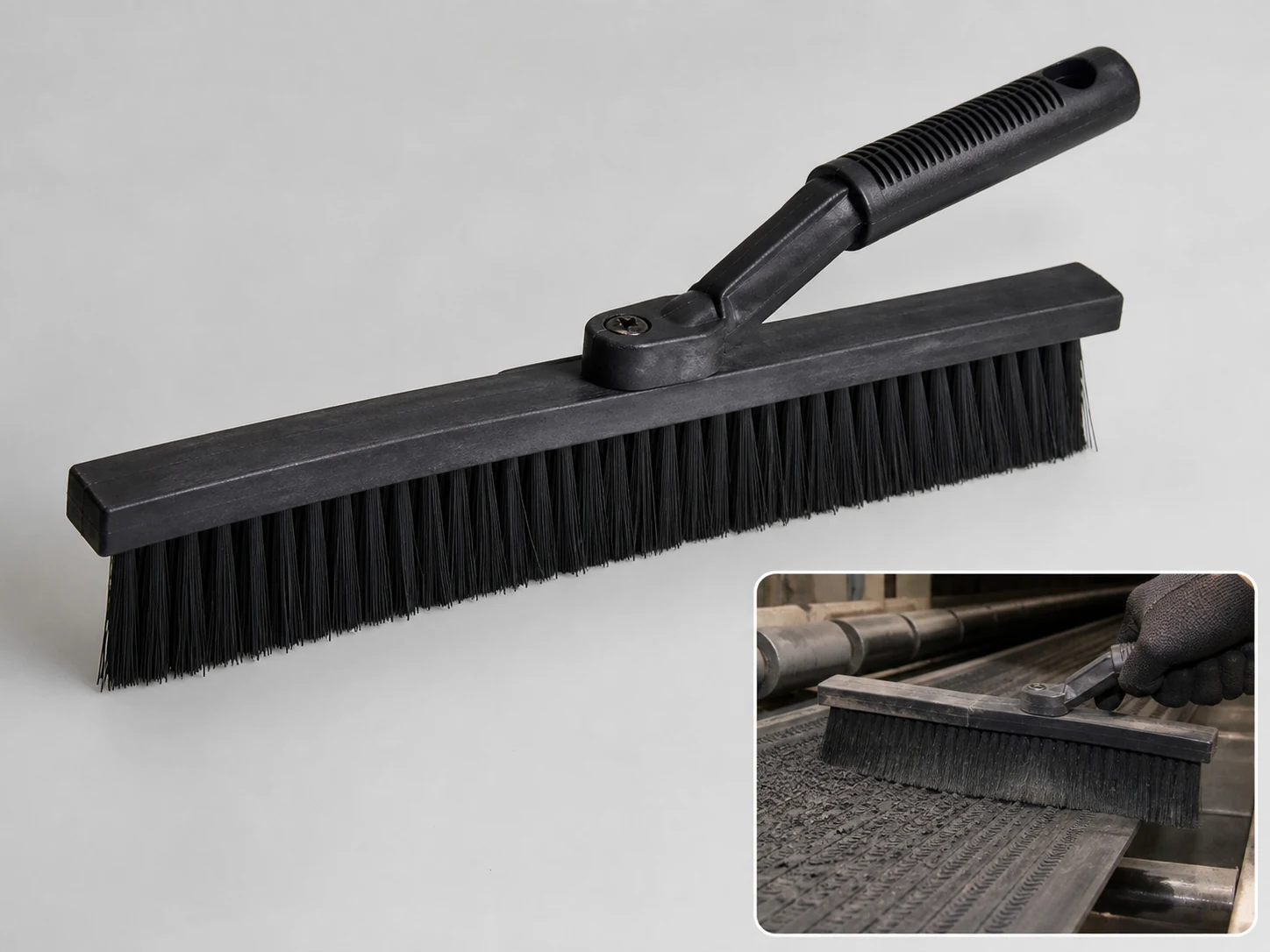
Medium brush
100 pcs
Minimum order
Worked with two hands or on a pole: chimney, gutter and pond-filter brushes, discs, cups and tank brushes.
Production lead time, once the specification is confirmed
- Up to 100 pcsWithin 7 days
- 101–5,000 pcsWithin 14 days
- 5,001–50,000 pcsWithin 21 days
- Over 50,000 pcsConfirmed with your quotation
Peak season can extend these times; the shipping date is confirmed in writing with your quotation. Sampling and shipping are quoted separately.
A dry-use rubber cleaning brush that lifts and collects pet hair, lint, and fine dust from fabric seats, upholstery, carpets, and hard floors through electrostatic attraction and flexible rubber contact — without adhesive sheets or disposable refills.
What can this brush do for you?
Lifts Pet Hair out of Fabric Instead of Pushing It Around
The rubber contact surface develops a surface charge as it moves across textile fibers, so loose hair, fur, lint, and fine dust cling to the head. Short overlapping strokes pull the debris out of the weave rather than just sliding over it.
Collects Hair into Clumps You Can Peel or Rinse Off
Hair gathered on the rubber head sticks to itself and forms a mat that can be pulled off in one piece. Rinsing the head under water releases fine dust and short fibers, so the brush is ready for the next pass without replacement consumables.
Soft Enough for Leather and Upholstery, Firm Enough for Carpet
Rubber bristles or ridges produce a flexible contact that will not scratch coated leather, embossed vinyl, or clear-coated trim. The same head can press into low-pile carpet and seat fabric to reach fibers near the base without tearing or pulling the material.
One Hand Tool Covers Seats, Crevices, and Floor Panels
With the working width selected for the surface, the brush moves from seat bolsters and stitching indentations to door panels, floor mats, and carpeted cargo areas. No batteries, hoses, or adhesive roller refills are part of the job.
Dry Operation Keeps Detailing and Cleaning Steps Simple
The brush is intended for dry or lightly dampened use, so there is no wet residue to dry before vacuuming. It can run before a vacuum pass to collect hair that clogs vacuum nozzles, or as a final pass after vacuuming to catch fine lint.
What is a Rubber Dust Removal Brush?
A Rubber Dust Removal Brush is a hand-guided cleaning tool built around a molded rubber contact face. The working side consists of flexible rubber bristles, tapered nubs, or formed ridges mounted or molded onto a rigid or semi-rigid backing. A short handle suits seat and upholstery work; an extended handle turns the same head into a floor tool. The brush removes particles through two cooperating mechanisms: friction from the rubber flexing against the surface builds a light electrostatic charge, and the natural tack of rubber grips loose material at the point of contact.
Because pickup depends on friction and surface charge, performance changes with humidity and residue type. On very humid days or when the surface is damp, fine dust may not lift as readily. A lightly damp head can sometimes improve pickup on hard flooring, but should be kept away from absorbent fabric where moisture would push dust deeper. This is not a scrubbing brush for wet spills, heavy mud, or sticky residues. Its role is dry collection of hair, fur, lint, and fine dust from accessible surfaces.
Technical Specifications
The values below are typical project ranges. Dimensions and material grades are adjusted to the customer’s surface and handle requirements.
| Parameter | Value / Options |
|---|---|
| Head width | 30–400 mm |
| Rubber bristle / trim length | 25–100 mm |
| Overall length | 150–600 mm |
| Rubber compound | Natural rubber, SBR, EPDM, nitrile, or static-dissipative grade |
| Surface resistivity | 10^3–10^9 Ω, adjustable by compound and loading |
| Rubber hardness | 40–80 Shore A, softer for delicate leather, firmer for carpet |
| Contact pattern | Straight ribs, zigzag ridges, conical nubs, or combined rib-and-nub profile |
| Backing / handle | Wood, PP, aluminum, or stainless steel; overmolded grip or hanging hole options |
| Operating temperature | -20°C to 100°C |
| Working condition | Dry or lightly dampened; non-adhesive pickup method |
| Brush type | Custom Handheld Detail Brushes |
| How it is driven | Hand-guided |
| Cleaning target | vehicle interior, upholstered furniture, and area rug and low-to-medium pile carpet cleaning |
| Surface or part | floors, panels, sheets, tile, fur, edges, profiles, and aluminum |
| Residue or debris | hair, dust, lint, fine dust, adhesive, mud, and particles |
| Mounting / connection | Fixed |
Where does this brush work best?
- Vehicle interiors: seat fabric and leather, carpeted floor mats, door cards, headliners, and trunk liners where pet hair and lint collect before or after vacuuming.
- Upholstered furniture: fabric sofas, chairs, armrests, headrests, office seating, and pet bedding.
- Area rugs and low-to-medium pile carpet: quick hair removal in rooms, hallways, entry mats, and vehicle cargo mats.
- Hard flooring and smooth panels: laminate, vinyl, tile, and rubber mats where fine dust and hair can be swept without scattering.
- Automotive detailing shops and mobile groomers: repeated daily use on multiple vehicles with no consumable refill stock.
How do I choose the right one?
Match the contact pattern to the surface
Ridge or zigzag profiles give strong edge contact for pulling short pet hair out of seat fabric and carpet. Tapered nubs slip into stitching, perforations, and textured trim without grabbing. For delicate coated leather, ask for a softer rubber compound and rounded nubs rather than a sharp rib edge.
Set the head width to the cleaning pass
A 30–80 mm head reaches seat bolsters, crevices, and door card seams with control. A 150–250 mm head clears upholstered panels and furniture faster. A 300–400 mm head suits floor sweeps, vehicle cargo mats, and large commercial areas.
Select rubber grade for the environment and debris
Natural rubber typically provides strong electrostatic pickup and good conformability; EPDM resists ozone, UV, and temperature swings better for vehicles parked outdoors. A static-dissipative compound with higher controlled resistivity can be specified for sensitive electronics or data-center dust control. Choose the hardness by the surface: 40–55 Shore A for coated leather and soft vinyl, 55–70 Shore A for fabric and carpet.
Match handle and backing to the work pattern
Use a short wood or PP handle for handheld seat and upholstery work; choose aluminum or stainless steel for high-volume commercial cleaning and wet-work resistance. A long handled floor version reduces bending but reduces precision in tight vehicle interiors.
When to use another tool
This brush is not for wet spills, heavy dried mud, gum, or sticky residues, which need a scrubbing brush or chemical treatment first. If the target is coarse sand and granular debris, a stiff floor brush or vacuum will move more material faster. If the surface cannot withstand any rubbing contact, a sticky lint roller or vacuum attachment may be the more appropriate choice.
Can I customize this brush?
Rubber dust removal brushes are configured around the surfaces you clean. We will need the surface materials, hair type, use frequency, target dimensions, handle preference, and any temperature or humidity conditions to be covered. A drawing or sample part helps us get the profile right faster.
We can adjust:
- Head geometry: width, length, trim height, contact profile, edge radius, curved or contoured face
- Rubber compound: hardness, resistivity, color, anti-slip additives, UV and ozone resistance
- Backing: wood, PP, aluminum, stainless steel, thickness, mounting holes
- Handle: length, shape, grip material, telescoping option, hanging loop, connector
- Assembly: one-piece molded rubber head, insert-molded, or replaceable head system
- Marking: pad print, laser marking, molded logo, color coding, label
- Packaging: bulk, individual polybag, retail card, color box, mixed sets
If your project requires material declarations, inspection reports, or third-party testing for specific resale channels, we can support those requirements during the customization process.
How long does a rubber dust removal brush last, and how is it cleaned between runs?
Does the rubber brush work on both fabric and leather seats?
Yes. Choose a softer compound (40–55 Shore A) with rounded nubs for coated leather and embossed vinyl. Firmer rubber with rib edges is better for woven fabric and low-pile carpet. Test on a hidden area before full use, especially on light-colored leather where heavy pressure may transfer a rubber mark.
How do I clean the brush head after removing pet hair?
Pull the collected hair mat off by hand. For fine dust and lint, rinse the head under running water and let it air dry. Avoid cleaning solvents that can swell rubber or strip plasticizing compounds. If the head feels slippery or loses pickup, wash it gently with mild soap and water and dry fully.
Why does pickup decrease on very humid or damp days?
Moisture on the surface conducts the charge away and makes fine dust cling to the material instead of the rubber. On high-humidity days, dry the surface before brushing or use a gentle vacuum first. A slightly damp rubber head can be used on hard floors, but avoid using it on absorbent fabric.
Can the brush be used as a sole cleaning step before passengers or guests use the space?
It removes attached hair, lint, and surface dust, but it cannot sanitize or remove deeply embedded fine particles from thick pile. Pair it with a vacuum pass for complete removal and follow your normal disinfection protocol where required.
How can I tell when the rubber head needs replacement?
Look for hardening, cracking, tearing at the base of the nubs, or permanent flattening of the rib profile. If the head no longer has a slight tack, no longer builds a noticeable charge during rubbing, or leaves hair behind on repeated passes, it is time to replace the head or brush.
Is the brush suitable for convertible top fabric?
Use a low-pressure, ridge-style head on dry fabric and work in the direction of the weave. Do not use a damp head on canvas or coated top materials. Heavy scrubbing on older or degraded tops can catch and pull fibers, so keep contact light.
Guides that go deeper on this
Custom Manufacturing RFQ
Describe Your Application
An accurate custom quote starts with the dimensions, working surface, residue, material choice, connection, quantity, and reference files.
Drawing or photo optional — it speeds things up, it does not gate the enquiry.
Custom Brush RFQ
Send Your Brush Project
Upload a drawing, product photo, or sample photo and provide the core dimensions and cleaning conditions.
“We need a brush to remove wet residue from a stainless steel conveyor, about 800mm wide. The current brush wears quickly. We can send photos.”
“We sell drinkware and need a cleaning brush to include with the product. Quantity around 5,000 pieces.”