
Custom Cleaning Brush
Vegetable Cleaning Brush
Hand-held vegetable cleaning brush with tampico, mountain palm, or coconut coir fibers for removing field soil from root crops and firm-skinned produce.
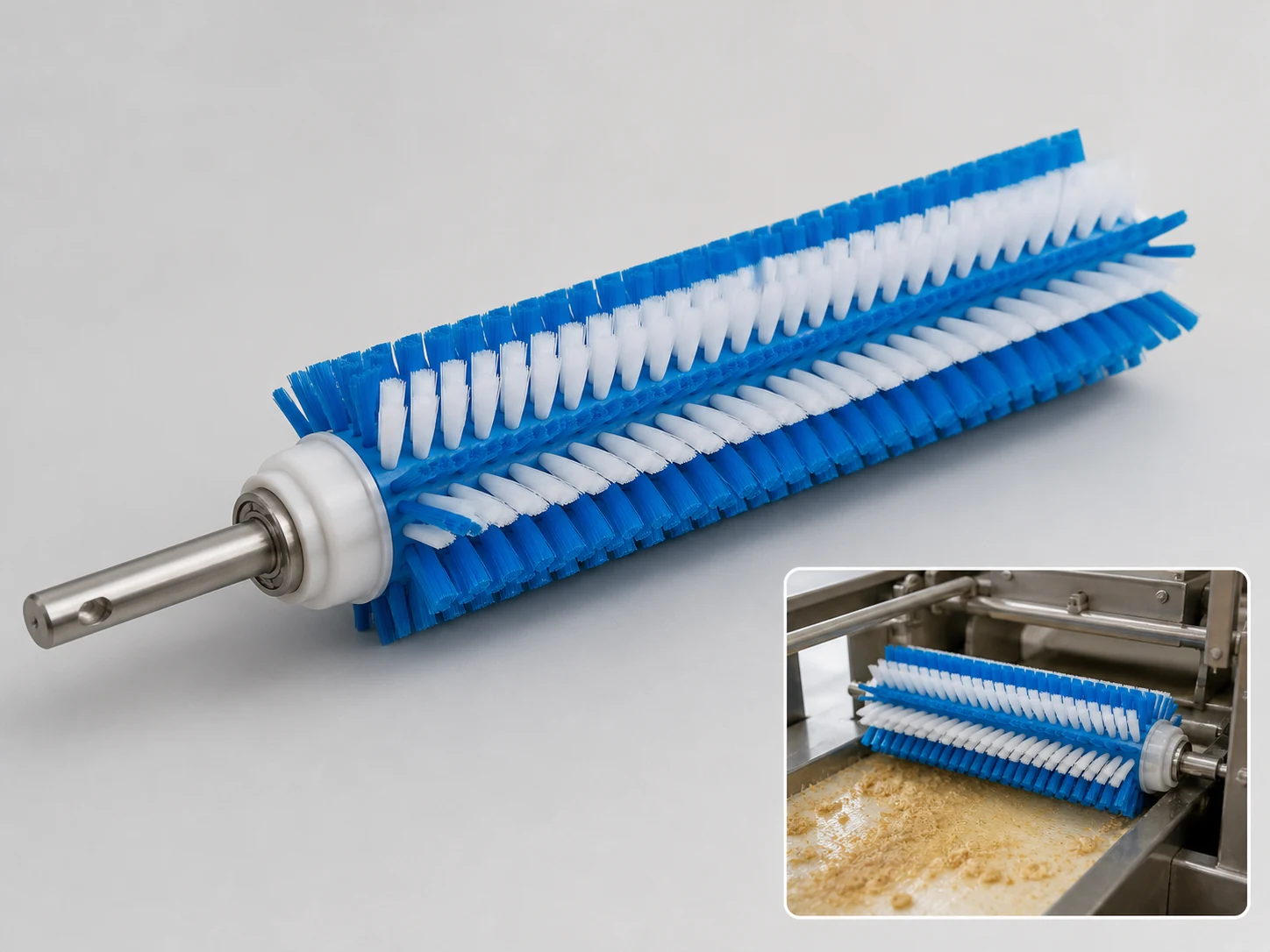
Small brush
500 pcs
Minimum order
Held in one hand: tube, bottle, detail and swab brushes — including long-handled ones with a small head.
Production lead time, once the specification is confirmed
- Up to 500 pcsWithin 7 days
- 501–50,000 pcsWithin 14 days
- Over 50,000 pcsWithin 21 days
Peak season can extend these times; the shipping date is confirmed in writing with your quotation. Sampling and shipping are quoted separately.
A hand-held produce brush built with stiff natural plant fibers that scrub field soil, clay, and surface debris from firm-skinned vegetables and root crops under running water. Available in tampico, mountain palm, or coconut coir contact fills and configurable head, handle, and marking options for commercial kitchens, produce pack lines, and retail programs.
What can this brush do for you?
Scrubs into eyes, folds, and uneven skins
The natural fiber tufts are stiff enough to flex into potato eyes, carrot crevices, and the rough folds of ginger or beet skins, while still releasing the loosened soil instead of packing it into the brush head. A flat sponge or dishcloth skims over these depressions; the fiber ends reach into them.
Removes caked clay without peeling the produce
Coconut coir and mountain palm fibers deliver enough pressure to break up dried field soil on root crops, but the working tips are not as aggressive as wire or a heavy abrasive pad. Configured correctly, the brush cleans the skin rather than stripping it, which keeps more produce intact for sale or cooking.
Built for continuous wet use
Tampico, mountain palm, and coconut coir retain their scrubbing character when wet and rinse free of soil with a quick shake under the water stream. The materials dry faster than sponge-backed scrubbers and do not hold the same level of trapped debris between uses, which reduces the chance of transferring soil from one batch to the next.
Keeps hands clear of the sink and splash
The handle reach and grip cross-section can be selected so the operator scrubs inside a deep sink or colander without knuckles hitting the basin edge. A hanging hole or loop can be added so the brush dries bristles-down at the washing station instead of lying in standing water.
One tool across multiple produce lines
Because the head size, fiber density, and trim profile are adjustable, the same brush design can be scaled for small specialty vegetables, standard root crops, and high-volume prep lines where consistent soil removal matters.
What is a Vegetable Cleaning Brush?
A Vegetable Cleaning Brush is a manual cleaning tool designed for washing firm-skinned produce before peeling, cutting, or cooking. It uses a dense fill of natural plant fibers — tampico, mountain palm, or coconut coir — anchored in a brush block or head, with a handle sized for one-hand scrubbing under running water.
In use, the operator holds the vegetable in one hand and works the brush over the skin with short back-and-forth or circular strokes. The fibers flex to follow curved skins, enter surface depressions, and dislodge soil that plain rinsing leaves behind. The brush removes attached dirt and debris; it does not peel, sterilize, or replace washing and sanitizing steps in a food safety program.
This is a produce-contact tool, not a general pot scrubber. It is intended for firm-skinned items such as potatoes, carrots, beets, turnips, and similar crops. Soft fruit, leafy greens, mushrooms, and other delicate produce require a softer wiping or sponge method instead.
Technical Specifications
| Parameter | Specification / Options |
|---|---|
| Fiber contact material | Tampico fiber, mountain palm fiber, coconut coir fiber, or a project-specified blend |
| Fiber stiffness | Selectable by material and fill density: coconut coir (firmest), mountain palm (medium-firm), tampico (medium) |
| Head width | 40–55 mm |
| Working head length | 30–60 mm |
| Overall length / reach | 100–250 mm |
| Grip / body cross-section | 40–55 mm |
| Handle / block material | Wood, polypropylene, or other project-suitable material |
| Fiber trim profile | Flat, contoured, or split-tip trim to match produce shape and crevice depth |
| Moisture / rinse performance | Fibers selected to resist matting and release soil under potable water rinse |
| Storage feature | Optional hanging hole or loop for drip-dry storage |
| Brush type | Custom Handheld Detail Brushes |
| How it is driven | Hand-guided |
| Cleaning target | root vegetable prep, high-volume produce washing station, and farm-to-table and meal-kit operation cleaning |
| Surface or part | potatoes, carrots, root vegetables, holes, profiles, wood, and pots |
| Residue or debris | fiber, clay, and leaves |
| Mounting / connection | Fixed |
Head dimensions, handle length, fiber selection, and trim profile can be changed to fit the produce line and operator requirement. Provide the produce type, soil condition, and washing station layout when specifying.
Where does this brush work best?
- Root vegetable prep in commercial kitchens: potatoes, carrots, beets, turnips, parsnips, and similar crops before peeling or roasting.
- High-volume produce washing stations: pack lines and prep kitchens that need repeated, consistent soil removal from firm skins under running water.
- Farm-to-table and meal-kit operations: removing field soil from mixed produce boxes before portioning or cooking.
- Retail kitchen tool programs: private-label or branded produce brushes for home use on firm-skinned vegetables.
How do I choose the right one?
Start with the soil load and skin thickness you actually handle. Heavy clay or dried field soil on thick-skinned crops calls for coconut coir or a dense mountain palm fill. Lighter soil on thinner-skinned items such as new potatoes or cucumbers does better with tampico, which is more flexible and less likely to remove the outer skin layer.
Then check the contact area. A smaller head width gives better control on small or irregular vegetables; a wider head covers flat, large surfaces faster. The trim profile matters too — a contoured or split-tip trim reaches around curved roots and into eyes better than a flat trim.
Match the handle to the washing station. A shorter overall length gives more direct pressure for one-hand scrubbing; a longer reach keeps hands clear of deep sinks and splash. If the brush will rest in a wet area between uses, select a polypropylene or treated wood handle and include a hanging hole so the fiber dries properly.
For delicate produce, this brush is the wrong tool. Soft berries, leafy greens, mushrooms, and thin-skinned tomatoes need a soft sponge, cloth, or repeated rinsing rather than fiber scrubbing. If the operator also needs to remove heavy abrasives or burned-on material, use a separate stiff brush for equipment and keep produce brushes dedicated to food contact.
| Produce / soil condition | Recommended fiber orientation |
|---|---|
| Heavy clay on thick-skinned root crops | Coconut coir, higher fill density |
| General root crop washing | Mountain palm or tampico, medium density |
| Lighter soil on firmer thin-skinned produce | Tampico, lower density or softer trim |
| Soft or delicate produce | Not recommended — use sponge or cloth |
Can I customize this brush?
This produce brush is configurable around the specific vegetables, soil type, and washing volume of the project. To define a custom build, we need the produce types and skin condition, the typical soil load, the washing method (hand under running water, dunk tank, colander, prep sink), the operators’ hand size and grip preference, and any branding or packaging requirement. A sample vegetable or photo of the washing station helps confirm geometry.
We can adjust:
- Fiber contact: tampico, mountain palm, coconut coir, or a blend; fill density and tuft pattern; trim profile and length.
- Head geometry: head width, working length, block shape, rounded or contoured face.
- Handle and grip: overall length, cross-section, finger grooves or texture, material (wood, polypropylene, or other), color.
- Storage and marking: hanging hole or loop position, molded or printed brand mark, color coding for produce lines.
- Packaging: bulk, individually bagged, shelf-ready retail sleeve, private-label packaging.
If the project requires material documentation, inspection support, or third-party testing specific to your produce handling process, we can assist with those requirements during customization.
How long does a vegetable cleaning brush last, and how is it cleaned between runs?
How should I clean the brush between produce batches?
Rinse the fiber under running water while scrubbing lightly to release trapped soil, then shake out excess water and store bristles-down or on a hanging hook. If the handle is wood, avoid soaking it for extended periods. For commercial use, follow your produce washing station’s sanitation schedule for food-contact tools.
Will the natural fibers scratch or skin the vegetables?
Firm natural fibers can remove the outer surface of very thin-skinned or delicate produce. On thick-skinned root crops this is generally acceptable and even desirable. For thinner-skinned produce, choose tampico with a softer trim and lower fill density, and test on a sample batch before full rollout.
Can I use sanitizing solutions with this brush?
Mild food-contact sanitizers and detergents can be used, but prolonged soaking in strong chemicals may degrade natural fiber and some handle materials. Rinse the brush after chemical contact and select the handle material for the sanitizing agents used in your process.
How do I know when the brush needs to be replaced?
Check for flattened or matted fiber that no longer springs back, debris packed at the base of the tufts, loose tufts, or cracks in the handle/block. If the brush no longer reaches into potato eyes or crevices, or if fibers stay bent after drying, it has reached the end of its useful life.
Does brushing remove pesticide residues or sanitize the produce?
No. The brush removes attached soil and some surface debris, but it does not replace washing, rinsing, peeling, or any other step required by your food safety program. Brushing is one part of preparation, not a substitute for produce washing or sanitizing protocols.
Which fiber is best for small, irregular vegetables like ginger?
For ginger and similar irregular shapes, a tampico or mountain palm fill with a split-tip or contoured trim reaches into folds without being so stiff that it tears the skin. Coconut coir is better for smooth, thick-skinned root crops covered in heavy clay.
Guides that go deeper on this
We have not written a guide specific to this one yet. The material that covers selection, filament, dimensions, maintenance and sourcing is collected in the technical resources library.
RELATED BRUSH RESOURCES
Recommended Reading & Related Brush Resources
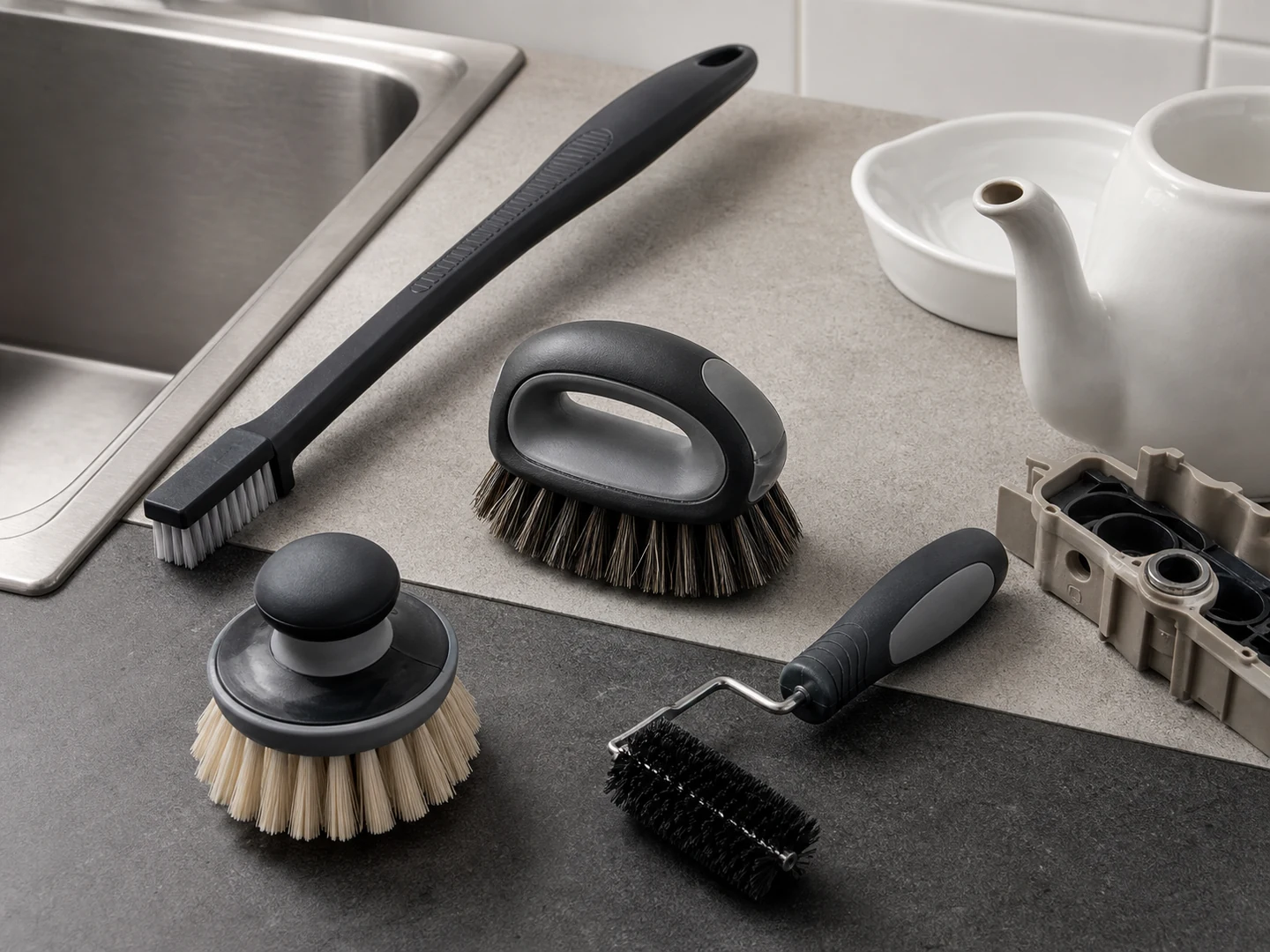
Custom Handheld Detail Brushes
Choose a handheld detail brush when you need direct control in seams, recesses, fittings,…
See how this type is built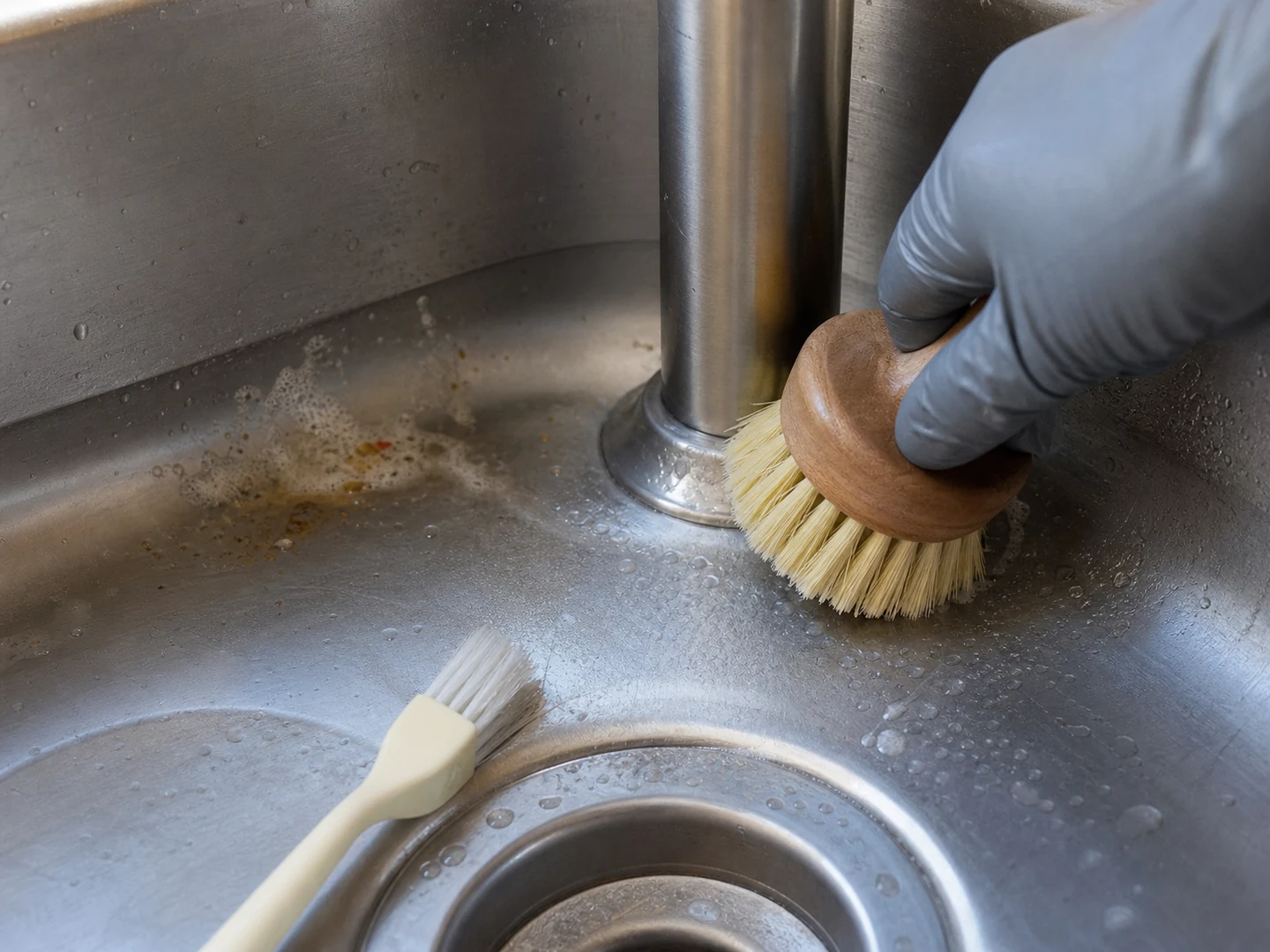
Sink & Kitchen Detail Cleaning
For Sink & Kitchen Detail Cleaning, the brush must reach the working area, disturb…
See the cleaning job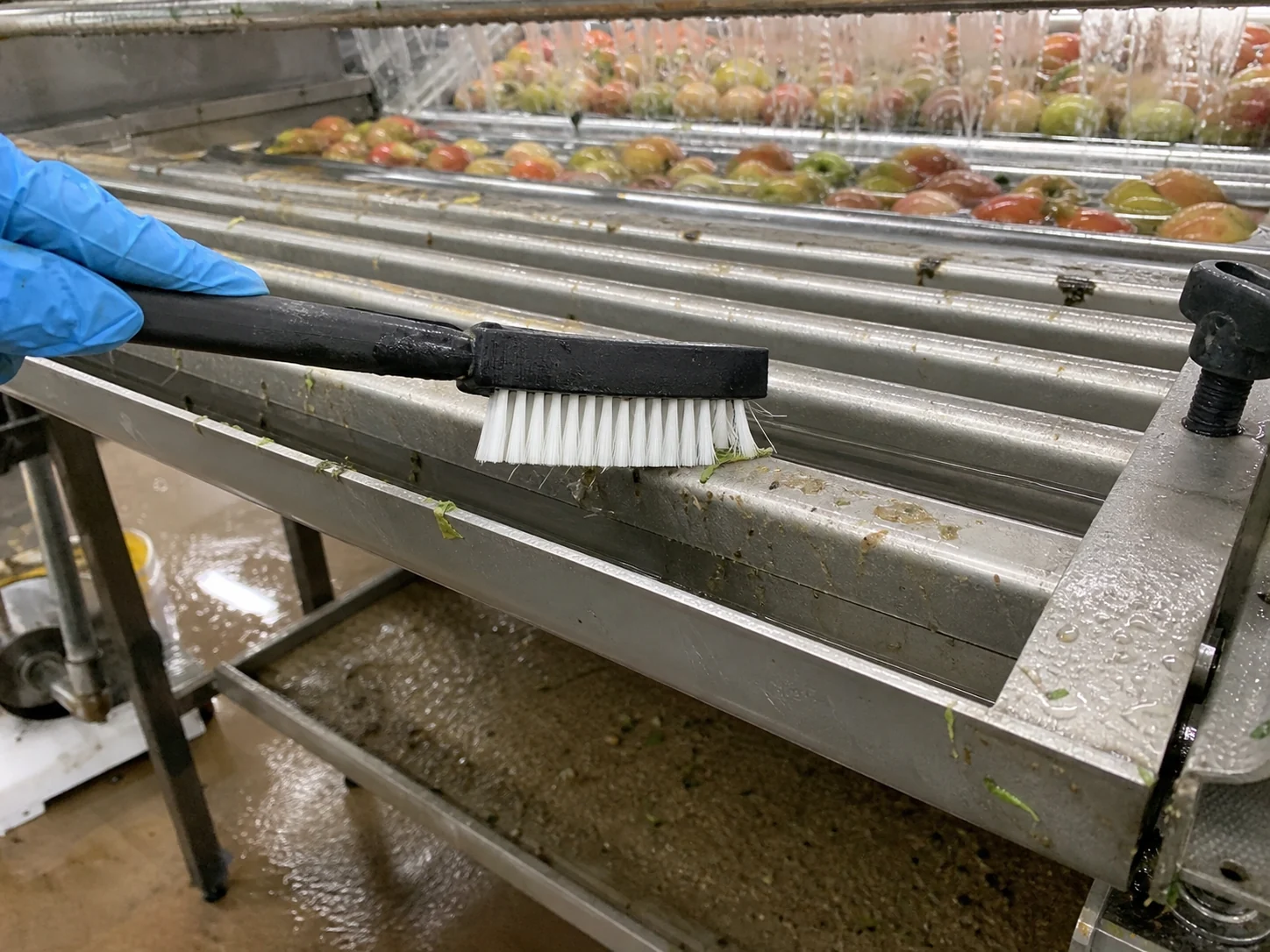
Fruit and Vegetable Washing Line Soil Removal
For Fruit and Vegetable Washing Line Soil Removal, the brush must reach the working…
See the cleaning job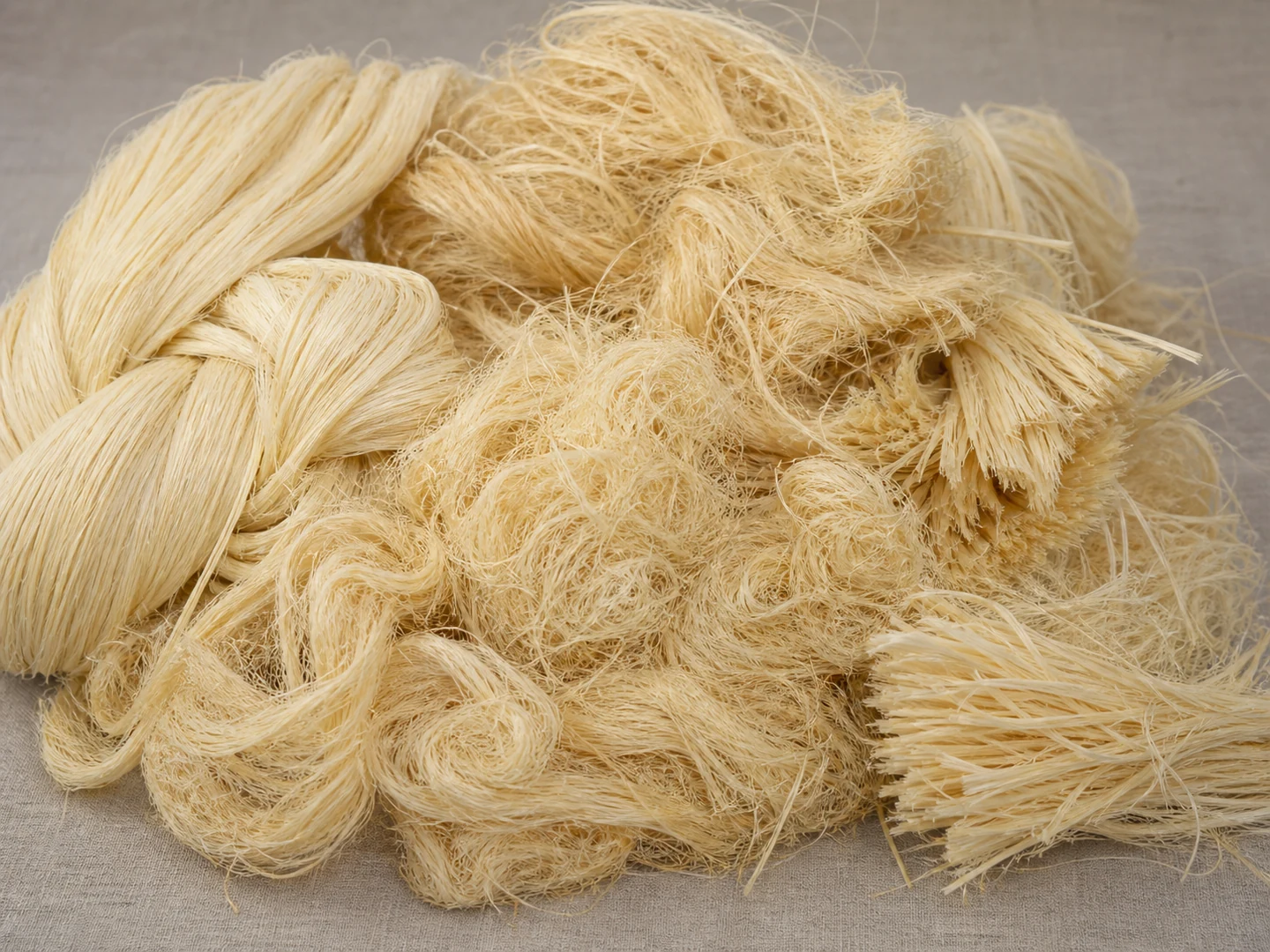
Tampico Fiber
Choose Tampico Fiber based on its stiffness, recovery, wear, wet-service, chemical, and temperature behavior.…
Compare this materialCustom Manufacturing RFQ
Describe Your Application
Please include the main sizes, application, residue, preferred material, interface, quantity, and any drawing or sample available.
Drawing or photo optional — it speeds things up, it does not gate the enquiry.
Custom Brush RFQ
Send Your Brush Project
Upload a drawing, product photo, or sample photo and provide the core dimensions and cleaning conditions.
“We need a brush to remove wet residue from a stainless steel conveyor, about 800mm wide. The current brush wears quickly. We can send photos.”
“We sell drinkware and need a cleaning brush to include with the product. Quantity around 5,000 pieces.”