
Custom Cleaning Brush
Welding Bevel Cleaning Brush
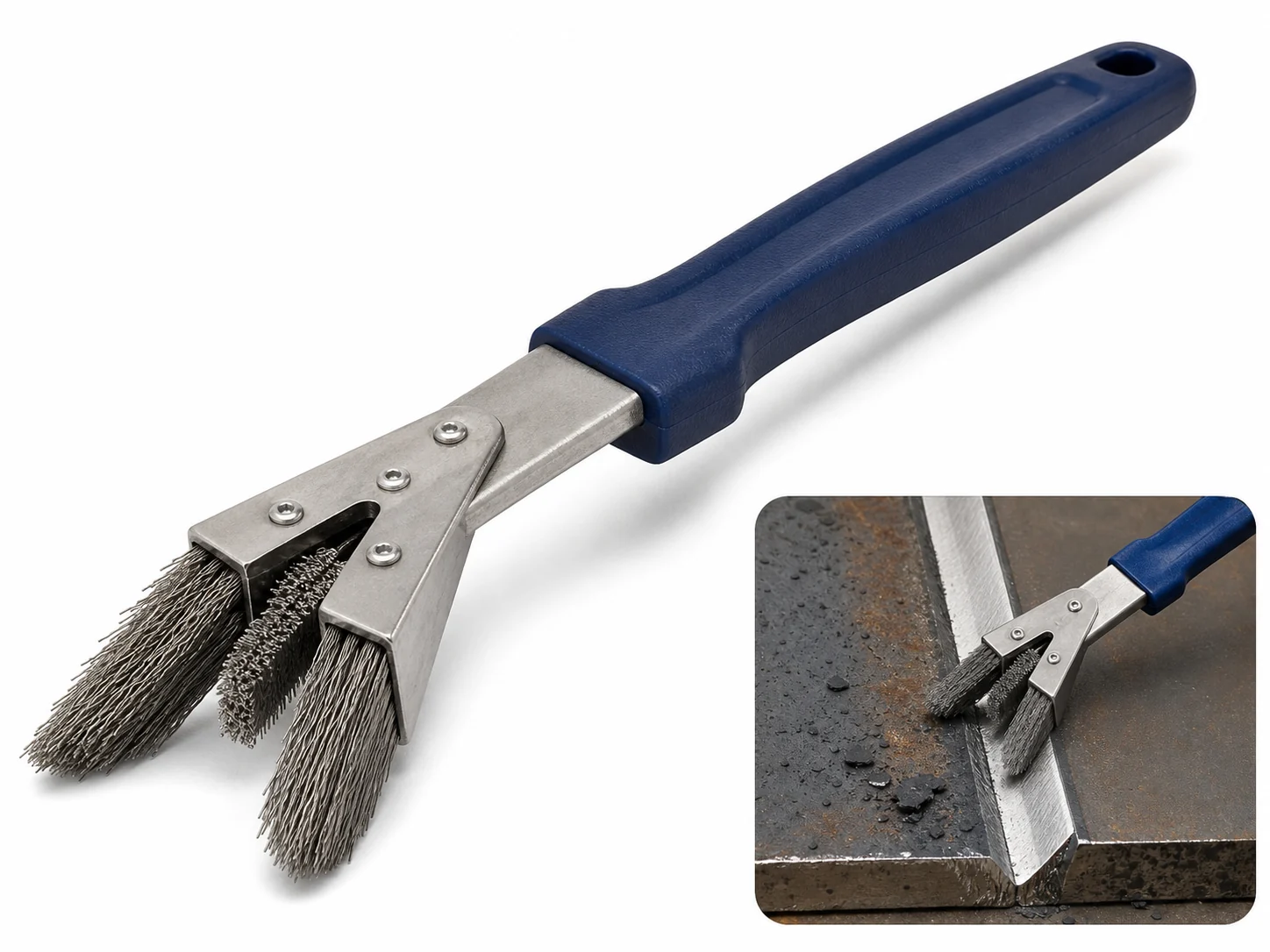
Custom welding bevel cleaning brushes for removing chips, coolant, oil, scale, oxide, and spatter from weld prep surfaces.
Small brush
500 pcs
Minimum order
Held in one hand: tube, bottle, detail and swab brushes — including long-handled ones with a small head.
Production lead time, once the specification is confirmed
- Up to 500 pcsWithin 7 days
- 501–50,000 pcsWithin 14 days
- Over 50,000 pcsWithin 21 days
Peak season can extend these times; the shipping date is confirmed in writing with your quotation. Sampling and shipping are quoted separately.
A wire-filled brush built to reach the angled faces of weld bevels and remove beveling chips, coolant, oil, rust, oxide, scale, and light spatter before fit-up and welding. Available with carbon steel or 316 stainless steel wire and hand-held, shank, or machine-mount interfaces.
What can this brush do for you?
Cleans the Root Face and Both Bevel Walls
The brush face and trim length are configured to enter the V, J, or U groove so the wire tips contact the prepared bevel faces and root face, not just the plate surface. This removes debris that would otherwise become porosity, lack of fusion, or embedded inclusions in the finished weld.
Removes Oil, Coolant, Scale, and Spatter Without Changing Joint Geometry
Using the tips only, the brush loosens and lifts machining chips, cutting-fluid residue, protective oil, rust film, mill scale, and light weld spatter. Wire brushing does not cut the base metal the way a grinding disc does, so the prepared bevel angle and root land stay closer to tolerance when the brush is used correctly.
Stainless Wire Option Protects Stainless Joints
For 300-series stainless and other corrosion-resistant alloys, a 316 stainless steel wire fill keeps carbon steel from being transferred into the joint. Carbon transfer can cause rust blooms and reduced corrosion resistance along the weld. A dedicated stainless brush, clearly marked or color-coded, reduces contamination risk in shops that process both carbon and stainless.
Hand or Powered Interface Matches the Production Rate
The same brush family can be built as an angled hand brush for fit-up areas, a shank brush for right-angle drills, or a cup or wheel form for long bevel seams. A machine-driven option removes spatter and oxidation faster on sustained weld preparation; the hand version gives more control in corners, overhead work, and repair pockets.
What is a Welding Bevel Cleaning Brush?
A welding bevel cleaning brush is a wire brush designed for the prepared edge of a welded joint after beveling, milling, or thermal cutting and before fit-up and welding. It cleans the angled faces of the bevel, the root face, and sometimes the adjacent plate or pipe surface, removing chips, coolant, oil, rust, oxide, scale, and light spatter that can undermine weld quality.
The brush may take several forms depending on joint access: a flat or angled block brush for plate edges, a cup or wheel brush for open butt seams, or a reduced-head or tube-style brush for narrow root gaps and pipe bores. The fill is metal wire, normally carbon steel or 316 stainless steel; the block or handle is typically PA (nylon) or PP with a steel ferrule or a machinable shank.
In hand use, the operator moves the brush along the bevel length with strokes that follow the groove, letting the wire tips scrub oil films, loose oxide, and spatter from the prepared surfaces. In powered use, a cup or wheel on a drill or grinder provides the cleaning motion. The important operating point is to let the wire tips do the work: heavy side pressure bends the wire and damages the brush without improving cleaning.
This is a surface-preparation tool, not a material-removal tool. It removes loose or lightly adherent residue from an already machined or cut bevel. Tightly adherent mill scale, deep rust, or carbonized deposits may require grinding or abrasive blasting before final wire brushing.
Technical Specifications
Typical construction and available ranges for custom weld bevel cleaning brushes.
| Parameter | Value / Options |
|---|---|
| Brush head form | Flat block, angled block, cup, wheel, tube, or custom profile |
| Head face width / diameter | 100–150 mm for standard block and cup forms; smaller or larger by design |
| Working length / reach | 20–350 mm, selected from groove depth and operator access |
| Wire material | Carbon steel wire or 316 stainless steel wire |
| Wire diameter | 0.08–0.80 mm, thinner for fine oxide and oil films, thicker for spatter and scale |
| Free trim length | 8–60 mm, longer trim conforms into root gaps, shorter trim provides stiffer scale removal |
| Fill configuration | Crimped or knotted; crimped for lighter residue, knotted for heavier scale and spatter |
| Handle / shank interface | Hand grip (PP/PA with steel ferrule), 3–10 mm shank, bore mount, threaded arbor, or customer holder |
| Operating environment | Dry hand use or use with compatible degreasers/solvents; material grade matched to the project |
| Brush type | Custom Wheel Brushes |
| How it is driven | Machine-driven, mounted in the equipment |
| Cleaning target | structural steel plate bevel, pipe end bevel and root face, and u groove joint preparation cleaning |
| Surface or part | welds, grooves, carbon steel, joints, pipes, edges, tubes, and weld bevels |
| Residue or debris | carbon, spatter, scale, rust, oxide, chips, oil, and coolant |
| Mounting / connection | Hand grip (PP/PA with steel ferrule), 3–10 mm shank, bore mount, threaded arbor, or customer holder |
Where does this brush work best?
- Structural steel plate bevels before butt and fillet welding, where machining chips, cutting fluid, and loose mill scale remain on the prepared edges.
- Pipe end bevels and root faces before pipe welding; narrow-head and tube variants reach into the groove without disturbing the prepared land.
- V, J, and U groove joint preparation in pressure vessels, boilers, pipelines, and shipyard fabrication, where rust, oxide, and light spatter must be removed before the root pass.
- Multi-pass repair work after arc gouging or weld removal, cleaning remaining oxide and spatter from the re-prepared bevel.
- Stainless steel weld preparation where 316 stainless wire avoids carbon contamination and preserves corrosion performance.
How do I choose the right one?
Check joint access and groove geometry
Measure the bevel angle, root gap, root face width, and total groove depth. A flat block is efficient on open plate edges; an angled face follows 30° and 37.5° pipe bevels; a cup or wheel suits long open seams; and a narrow head or tube form is needed for tight root gaps and internal bores.
Match the wire material to the base metal
Use carbon steel wire for mild and low-alloy steel preparation. Use 316 stainless steel wire for stainless and other corrosion-resistant alloys. Never run a carbon steel brush on stainless and then return it to carbon work; use separate dedicated brushes with clear marking or color coding.
Select wire diameter and trim length by the residue
Thinner crimped wire from 0.08 to 0.30 mm is suited to oil films, coolant residue, and loose oxide. Thicker wire from 0.35 to 0.80 mm or knotted fill removes adherent scale, rust, spatter, and burrs. Longer trim length of 30 to 60 mm conforms into deep grooves, while shorter trim of 8 to 25 mm gives stiffer tips for scale but wears faster.
Decide between hand and powered operation
Choose an angled hand brush for controlled work in corners, vertical and overhead positions, and short repair seams. Choose a 3–10 mm shank or threaded arbor cup/wheel form for high-volume or long bevel seams. Powered brushes work faster, but they require secure work positioning and an appropriate machine guard and speed.
Apply only tip pressure
Operate the brush so the wire tips contact the bevel faces. Heavy side pressure against the handle or ferrule bends the wire, increases fatigue, and shortens brush life without increasing cleaning action.
If mill scale is dense and tightly adherent, or the bevel is heavily rusted, wire brushing alone may not produce a clean substrate. Use a flap disc, grinding wheel, or abrasive blasting first, then finish with the wire brush. If the root gap is too small for the brush to enter, use an abrasive cord, tube brush, or a custom reduced-head configuration instead.
Can I customize this brush?
Weld bevel cleaning brushes are usually configured to a specific joint because bevel angle, root gap, base metal, and production method all vary. To define a custom brush, provide the groove profile or bevel angle, root face width, base material, residue to remove, joint length, hand or powered operation, shank or arbor specification, and any solvent or degreaser exposure. A drawing, photo, or sample part helps us confirm the head geometry faster.
We can adjust:
- Head geometry — width, diameter, face angle, profile shape, reduced head, or tube form to fit the groove
- Wire fill — carbon steel or 316 stainless steel, wire diameter, crimped or knotted, trim length and density
- Handle / shank — material, length, angle, ergonomic grip, steel ferrule, 3–10 mm shank, bore mount, threaded arbor, or customer-designed holder
- Color and marking — custom color, molded identification, pad print, laser marking, or color coding for material separation
- Packaging — bulk, individual bag, retail sleeve, kit, or project-specific packing
If your project requires material certification, inspection documentation, or third-party testing support, we can assist with those requirements during the customization process.
Which filament survives the cleaning chemicals a welding bevel cleaning brush meets?
How do I know the bevel is clean enough to weld?
After brushing, inspect the root face, bevel walls, and adjacent zone under bright light. The surfaces should look bright metal with no visible oil sheen, loose scale, or spatter. A final wipe with a clean, lint-free cloth and an approved solvent should show little or no dark residue. If wiping still transfers black or brown film, repeat brushing or move to a more aggressive wire configuration.
Can I use the same brush on carbon steel and stainless steel?
No. Carbon steel wire bristles can transfer iron particles into stainless steel joints, which can cause rust blooms and reduced corrosion resistance. Use a dedicated 316 stainless steel wire brush for stainless work and keep it labeled or color-coded so it is never interchanged with carbon steel brushes.
Does this brush remove all mill scale and rust?
It removes loose or lightly adherent scale, rust film, oxide, oil, and spatter. Tightly adherent mill scale and deep, pitted rust usually require grinding, flap disc, or abrasive blasting before wire brushing. The brush is best used as the final cleaning step after those heavier removal processes.
What should I inspect before each use?
Check the wire fill for flattened, bent, or missing bristles, and confirm the trim length still reaches the root face. Check the handle, ferrule, shank, or arbor for looseness or damage. On powered forms, make sure the mount is secure and the brush runs without excessive vibration before touching the joint.
Can this brush be used with a solvent or degreaser?
Yes. Select a solvent or degreaser that is compatible with both the base metal and the brush materials for the project. After solvent-assisted cleaning, allow the brush to dry and inspect for loosened wire before returning it to dry service.
How should the brush be stored between jobs?
Hang or store the brush in a dry area away from grinding dust and moisture. Keep stainless steel wire brushes separated from carbon steel brushes and protect the wire fill from impact. This preserves trim straightness, prevents cross-contamination, and reduces the chance of shed bristles during the next use.
Guides that go deeper on this
Angle Grinder Wire Wheel Brush Mistakes in Weld Cleanup
Read this guideGuideCar Wheel Brush: Material and Size for Weld Cleanup
Read this guideGuideCup Brush vs Wheel Brush: Which One to Use
Read this guideGuideHow to Choose Wire Wheel Brush
Read this guideGuideWheel Brush vs Standard Brushes: Weld Cleanup
Read this guideGuideAbrasive Nylon Grit and Filament Selection
Read this guideGuideBrush Speed, Engagement, and Heat
Read this guideCustom Manufacturing RFQ
Describe Your Application
For an accurate quotation, please provide the main dimensions, material preference, working surface, residue, quantity, and a drawing or photo.
Drawing or photo optional — it speeds things up, it does not gate the enquiry.
Custom Brush RFQ
Send Your Brush Project
Upload a drawing, product photo, or sample photo and provide the core dimensions and cleaning conditions.
“We need a brush to remove wet residue from a stainless steel conveyor, about 800mm wide. The current brush wears quickly. We can send photos.”
“We sell drinkware and need a cleaning brush to include with the product. Quantity around 5,000 pieces.”