
Custom Cleaning Brush
3D Printer Nozzle Cleaning Brush
Brass or copper wire and silicone-tip brushes for external 3D printer nozzles, heat blocks and hotend parts. 0.5–20 mm heads, 80–250 mm handles.
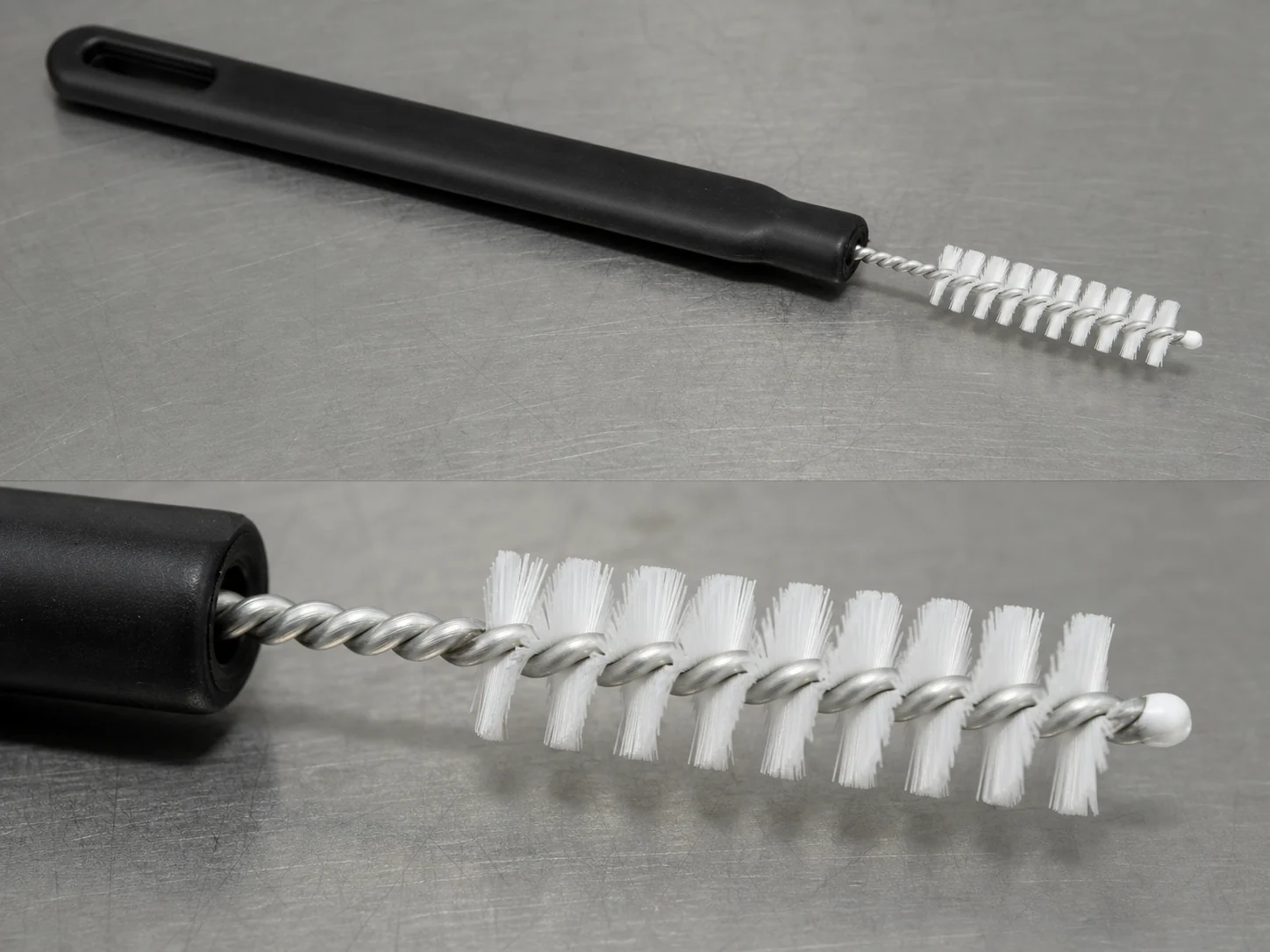
Small brush
500 pcs
Minimum order
Held in one hand: tube, bottle, detail and swab brushes — including long-handled ones with a small head.
Production lead time, once the specification is confirmed
- Up to 500 pcsWithin 7 days
- 501–50,000 pcsWithin 14 days
- Over 50,000 pcsWithin 21 days
Peak season can extend these times; the shipping date is confirmed in writing with your quotation. Sampling and shipping are quoted separately.
A compact brass-wire hand brush for cleaning external 3D-printer nozzles, heat blocks, and hotend surfaces — designed to remove softened, stuck, or burnt filament residue without gouging brass and copper nozzle parts.
What can this brush do for you?
Removes burnt-on filament without scarring the nozzle
Brass wire is stiff enough to scrape away carbonized polymer, but softer than hardened steel and less aggressive than steel bristles. When you brush a brass or plated copper nozzle, the wire gives way before the nozzle surface does, so routine cleaning leaves only a clean surface, not deep scratches.
Reaches around the heat block and hotend wiring
The 3 mm round head slips between the heater cartridge, thermistor wires, and nozzle shoulder. That tight clearance is where residue builds up and where larger brushes cannot go, but this head profile lets you clean the entire accessible hotend without disassembling it.
Lifts softened residue before it carbonizes
Use the brush while the nozzle is warm — around 60–100°C — and the plastic is still pliable. Fresh filament wipes off easily, so you spend less time scraping and reduce the heat cycles that harden residue into stubborn carbon.
Cleans more than just the nozzle tip
The same round wire head works on heat block faces, around the nozzle threads, under the silicone sock rim, and on heat break surfaces. One hand tool covers the hotend areas that a nozzle needle or cold pull cannot reach.
Holds up to routine shop use
Brass bristles spring back after repeated flexing, and the fixed connection between head and handle prevents loosening during use. The polypropylene handle resists common cleaning solvents and gives you a controlled grip for fine work around a printer.
What is a 3D Printer Nozzle Cleaning Brush?
A 3D Printer Nozzle Cleaning Brush is a small hand tool with a round head of brass wire bristles attached to a fixed plastic handle. It is used to clean the exterior of an FDM/FFF printer’s hotend — the nozzle, heat block, heater cartridge, and thermistor area — rather than the inside of the nozzle bore.
During a typical maintenance pass, the user warms the nozzle to soften residue, switches the printer off or disconnects live wiring, and strokes the nozzle exterior and heat block surfaces with the wire head. The brass bristles scrape away softened filament, burnt drips, and loose debris without requiring the hotend to be removed from the printer. The fixed connection transfers hand pressure directly to the head, which helps when working in the confined space around a mounted hotend.
This is a surface-cleaning tool, not a bore-cleaning tool. It does not replace a nozzle-cleaning needle or a cold pull for clearing the inside of the nozzle, and it is not designed to power through large molten blobs. Its job is controlled residue removal on external hotend surfaces, especially between prints, during filament changes, and before or after a nozzle swap.
Technical Specifications
The table lists the standard configuration. Dimensions, materials, and wire parameters can be adjusted to match your specific printer or maintenance program.
| Parameter | Standard Value / Options |
|---|---|
| Bristle material | Brass wire (stainless steel, copper, or nylon available on request) |
| Bristle wire diameter | 0.10–0.15 mm, selected for residue type and surface sensitivity |
| Head shape | Round |
| Head diameter | 3 mm (custom from 2 mm to 6 mm available) |
| Head length | 50 mm |
| Handle material | Polypropylene (PP) |
| Handle length | 100 mm (custom lengths available) |
| Grip diameter | 7 mm |
| Connection | Fixed head-to-handle connection |
| Overall length | Approximately 150 mm |
| Operating temperature | Brass bristles withstand nozzle cleaning temperatures; avoid prolonged handle contact above 80°C |
| Brush type | Custom Handheld Detail Brushes |
| How it is driven | Hand-guided |
| Cleaning target | fdm/fff hotend and nozzle, heater block and operator tooling, and end-of-print and pre-print maintenance cleaning |
| Surface or part | nozzles, hotend, thread, metal, plastic, nozzle bores, profiles, heater block, and bores |
| Residue or debris | filament residue, light residue, loose debris, carbon, carbonized filament, curled filament, and carbon layer |
| Mounting / connection | Fixed head-to-handle connection |
Where does this brush work best?
- FDM/FFF 3D printer hotends: external nozzle surfaces, nozzle flats, threads, heat blocks, heater cartridges, and thermistor wires.
- Removing softened, stuck, or lightly burnt filament after a failed print, filament leak, or nozzle oozing.
- End-of-print and pre-print maintenance where removing residue before it bakes on keeps prints clean and extends nozzle life.
- Before and after nozzle changes, when threads and seats need to be clean for proper thermal contact and sealing.
- Cleaning heat breaks, throats, and other small metal components during hotend teardown or ultrasonic cleaning preparation.
- Other small metal parts in a maker space or repair bench that need a soft metallic brush for light residue removal.
How do I choose the right one?
Start with the nozzle and hotend materials
Brass wire is the right default for brass, copper, plated, and hardened steel nozzles. It is soft enough to avoid deep scratching, yet firm enough to lift burnt polymer. If your nozzle has a delicate coating or you are cleaning a polished surface, choose a finer wire diameter or a softer nylon option. If you are dealing with extremely hard carbonized layers, a stainless steel wire head will be more aggressive — but it can mark softer nozzle metals, so use it only when the surface can tolerate it.
Match the head size to the access space
Measure the clearance around the heat block, the gap between the nozzle and the silicone sock, and the spaces where the heater cartridge and thermistor wires sit. The standard 3 mm round head fits most common hotends, but compact or enclosed toolheads may need a smaller custom diameter. A head that is too large will not reach into crevices; one that is too small will require more passes and less controlled contact.
Select wire diameter and density by residue type
Thinner brass wire (about 0.10 mm) conforms better to nozzle threads and curved surfaces, and is less likely to leave visible marks. Thicker wire (0.15 mm and above) provides more stiffness for scraping away partially carbonized residue. Higher bristle density increases the number of contact points, which speeds up removal of thin films. For heavy, baked-on carbon, preheat the residue and remove the bulk with a scraper before finishing with the brush.
Consider handle length and grip for your setup
The standard 100 mm handle gives close control on a bench, but if your printer has an enclosed frame or you need extra reach, a longer handle can be supplied. The 7 mm grip diameter is comfortable for fingertip control; larger diameters are available if operators wear gloves or prefer a fuller hold.
When to use a different tool
Use a nozzle-cleaning needle or a cold pull to clear the inside of the nozzle orifice — this brush only cleans exterior surfaces. Use a scraper or heat gun first to remove large molten blobs or heavy buildup. For very delicate coated or anodized hotend parts, test a fine brass wire on a hidden area or switch to a nylon brush. If the residue is extremely hard, an ultrasonic cleaner or a stainless steel wire brush may be more effective, at the cost of greater surface marking risk.
Can I customize this brush?
Yes. This brush is built to the cleaning routine, not the other way around. To configure it for your application, we typically need the nozzle size and material, the hotend model or part dimensions, the type of residue you routinely remove, the cleaning temperature, and any handle or grip preferences.
Commonly adjusted parameters include:
- Bristle material: brass, stainless steel, copper, nylon, or a blend
- Wire diameter: finer for delicate surfaces, thicker for stubborn residue
- Head diameter, head length, and bristle density
- Head shape: round, flat, conical, or custom profile
- Handle material: PP, wood, aluminum, or ESD-safe polymer
- Handle length, grip diameter, and handle color
- Connection type: fixed or replaceable head
- Marking: pad printing, laser marking, or molded identification
- Packaging: bulk, individual sleeve, or retail presentation
If your project requires material documentation, inspection reports, or third-party testing, we can assist with those requirements during the customization process.
How long does a 3D printer nozzle cleaning brush last, and how is it cleaned between runs?
Can I clean the nozzle while it is still hot?
Clean while the nozzle is warm, not at full printing temperature. Let it cool to around 60–100°C so the residue softens but the polypropylene handle does not. Always switch the printer off and disconnect or isolate live wiring before brushing near the heater cartridge and thermistor.
Will this brush scratch my hardened steel or plated copper nozzle?
Brass is softer than hardened steel and most plated coatings, so light brushing removes residue without scratching those surfaces. On brass nozzles, brass-on-brass contact can still polish or lightly mark the surface if you press hard. Use light pressure and test in an inconspicuous spot first.
How do I remove a large burnt-on blob before brushing?
Heat the nozzle to soften the blob, then carefully remove the bulk with a non-marring scraper or pliers while the material is pliable. Use the brass brush afterward to take off the remaining thin residue and carbonized film. Trying to force the brush through a thick blob will bend the bristles and may overheat the handle.
How can I tell when the brush needs replacement?
Inspect the head regularly. If the bristles are flattened, permanently bent, or splayed so they no longer reach into crevices, the brush is no longer cleaning effectively. Also check the handle for cracks, heat damage, or looseness at the connection. A worn brush requires more pressure and increases the chance of leaving residue or marking the nozzle.
Is the brush conductive? Do I need to worry about short circuits?
Yes, brass wire is conductive. Always power off the printer and disconnect the power or isolate live wiring before brushing around the heater cartridge, thermistor leads, or any exposed electrical contacts. This protects both the operator and the printer’s control board.
How should I clean the brush after use?
Remove loose debris by tapping the head or picking it out with a small tool. Wash the head with warm soapy water or isopropyl alcohol, then dry thoroughly before storage. Do not soak the polypropylene handle in strong solvents such as acetone or aggressive hydrocarbons for long periods, as they can degrade the plastic.
Guides that go deeper on this
Custom Manufacturing RFQ
Describe Your Application
To prepare the correct quotation, provide the dimensions, cleaning task, residue, material, mounting details, quantity, and a drawing or photo.
Drawing or photo optional — it speeds things up, it does not gate the enquiry.
Custom Brush RFQ
Send Your Brush Project
Upload a drawing, product photo, or sample photo and provide the core dimensions and cleaning conditions.
“We need a brush to remove wet residue from a stainless steel conveyor, about 800mm wide. The current brush wears quickly. We can send photos.”
“We sell drinkware and need a cleaning brush to include with the product. Quantity around 5,000 pieces.”