
Custom Cleaning Brush
Boar Bristle Bottle Brush
Soft natural boar bristle bottle brush for scratch-free cleaning of narrow-neck bottles, decanters, and laboratory glassware.
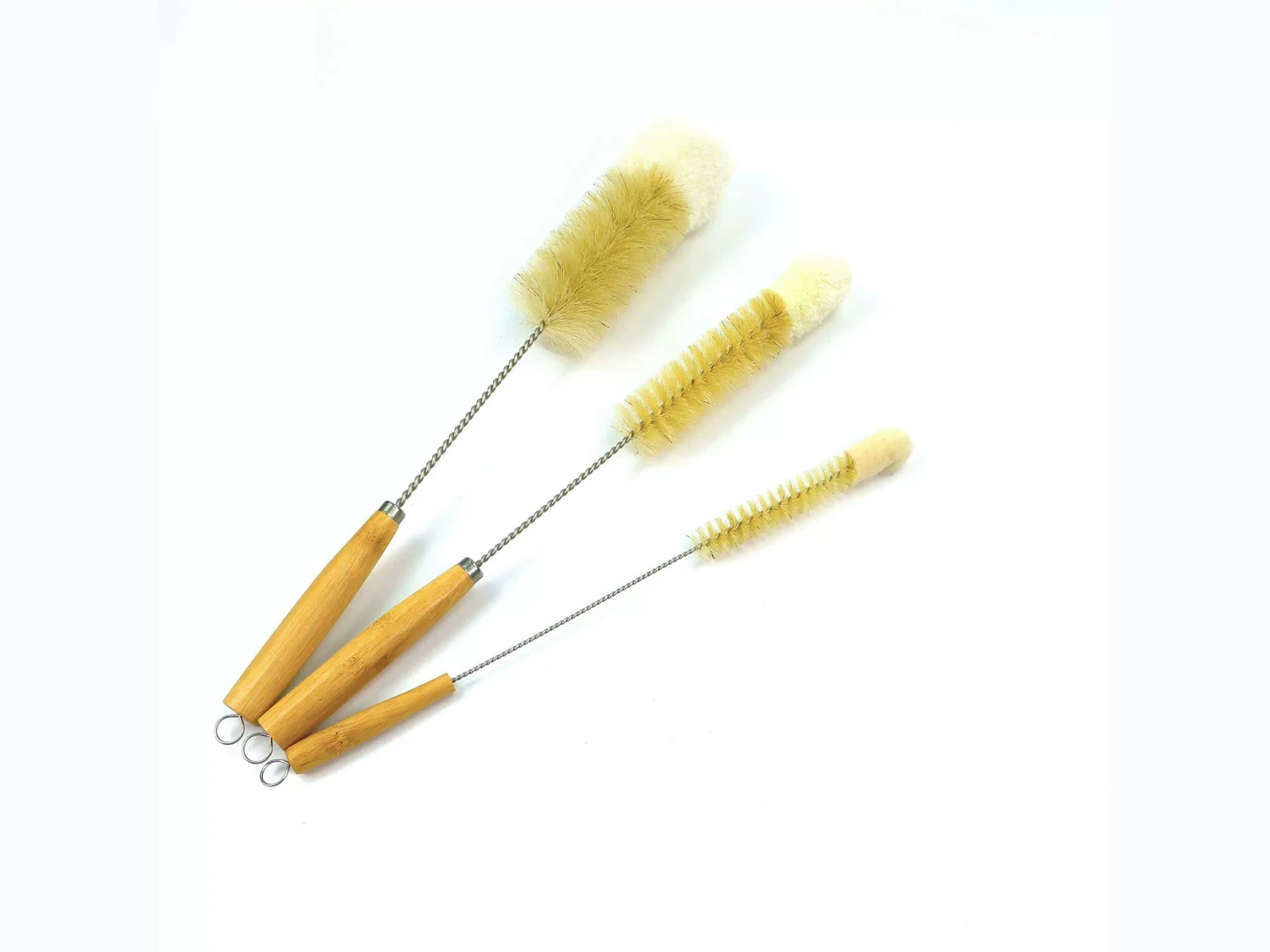
Small brush
500 pcs
Minimum order
Held in one hand: tube, bottle, detail and swab brushes — including long-handled ones with a small head.
Production lead time, once the specification is confirmed
- Up to 500 pcsWithin 7 days
- 501–50,000 pcsWithin 14 days
- Over 50,000 pcsWithin 21 days
Peak season can extend these times; the shipping date is confirmed in writing with your quotation. Sampling and shipping are quoted separately.
A soft, natural-fiber bottle brush with boar bristles for scratch-free interior cleaning of narrow-neck containers. It reaches sidewalls, shoulders, bases, threads, and narrow openings to remove liquid films, soft residues, and odor deposits without marking delicate surfaces.
What can this brush do for you?
Wipes away soft films without scratching interior surfaces
Boar bristle has naturally tapered, flagged tips that apply gentle, even pressure across glass, coated metal, polished stainless steel, and fine plastic interiors. The soft contact removes beverage film, light oils, and soft deposits while preserving surface clarity and coating integrity.
Holds detergent and water against vertical sidewalls
Unlike solid synthetics, boar bristle absorbs and holds cleaning solution. As you scrub, the bristles release water and detergent onto the bottle’s interior, increasing contact time on vertical surfaces where liquid would otherwise run off. This improves removal of sugars, films, and odor-causing residues.
Reaches the neck, threads, and narrow transitions
The flexible bristle tufts and slim core let the brush work into bottle necks, cap threads, valve seats, and the transition from neck to shoulder. These are the areas where larger or rigid brushes leave residue behind.
Follows curved profiles without creating dead spots
Because boar bristle is flexible, the tufts bend and recover as the brush moves. The head maintains contact with the shoulder curve and base transition, reducing the need to reposition the brush or switch tools.
Releases residue with a simple rinse
Soft residues do not lodge permanently in natural boar bristle. A rinse under running water while flexing the bristles removes most particles and film, so the brush can be reused quickly without carrying contamination to the next container.
What is a Boar Bristle Bottle Brush?
A Boar Bristle Bottle Brush is a hand-guided cleaning tool that uses natural boar hair filaments set into a stem, core, or handle to clean the inside of bottles and narrow-neck containers. Boar bristle is chosen specifically when the cleaning job needs softer contact than nylon, PBT, or wire can provide, and when surface preservation matters more than aggressive scrubbing power.
The brush works by inserting the head through the bottle opening, then using push, pull, and rotating strokes to wipe the sidewall, shoulder, and base. Because boar bristle is absorbent, it carries water and detergent into the container and releases it during cleaning, which helps remove liquid films, beverage residues, light powders, and odor sources.
This is a specialty cleaning tool, not a heavy-duty scrub brush. Boar bristle is a natural material with a smooth cuticle and flagged tips. It performs best with mild detergents and warm or cool water. Prolonged hot-water exposure, strong alkalis, bleach, or solvents will degrade the fiber and shorten brush life. After use, the brush should be rinsed and air-dried with the bristles facing downward.
Technical Specifications
The table below lists the parameters most buyers check before ordering. All dimensions can be adjusted to your container.
| Parameter | Specification / Options |
|---|---|
| Head diameter | 20–70 mm, selected to pass the neck and contact the interior wall |
| Working length | 120–300 mm, matched to the depth of the container |
| Overall length | 200–450 mm, including handle |
| Bristle material | Natural boar bristle |
| Filament diameter | 0.10–0.50 mm, finer for soft wiping, thicker for slightly firmer contact |
| Stem / core | Twisted galvanized wire, 304 stainless steel wire, or plastic-coated wire |
| Handle material | Polypropylene (PP), wood, stainless steel, or overmolded grip |
| Head profile | Cylindrical, tapered, tufted end, or custom molded shape |
| Neck clearance | Fits openings from about 15 mm ID upward, depending on head diameter and bristle compression |
| Operating temperature | Up to 60–70°C for brief contact; not intended for boiling water or steam |
| Chemical compatibility | Mild detergents, neutral pH cleaners; avoid strong acids, alkalis, bleach, and solvents |
| Brush type | Custom Bottle & Container Brushes |
| How it is driven | Hand-guided |
| Cleaning target | Narrow-neck bottles and containers with delicate interiors |
| Surface or part | Sidewalls, shoulders, bases, threads and narrow openings |
| Residue or debris | Liquid film, soft residue and odor-causing deposits |
| Mounting / connection | Fixed |
For custom projects, we need the minimum neck opening, internal body diameter, and depth to set the head and stem dimensions correctly.
Where does this brush work best?
- Glassware and decanters — wine glasses, carafes, and laboratory glassware where even fine scratches can affect clarity or test results. Boar bristle removes film without hazing.
- Beverage containers — narrow-neck water bottles, growlers, kombucha bottles, and cider jugs with sugar films, yeast residues, and odor deposits.
- Baby bottles and feeding accessories — glass and selected plastic bottles where gentle cleaning is needed; the brush must be rinsed and dried thoroughly after each use.
- Cosmetic and perfume bottles — small-neck bottles with delicate interior coatings or decorative finishes that a stiff brush could scratch.
- Coffee and tea equipment — carafes, teapots, French press beakers, and milk steaming pitchers with soft residue and staining.
- Laboratory and sample containers — reagent bottles, sample vials, and narrow-mouth jars where cross-contamination risk must be minimized with a cleanable brush.
How do I choose the right one?
Start with the container’s narrowest opening. Measure the minimum internal neck diameter; the brush head must pass through it without jamming, while still being large enough to contact the sidewall. A head that is too large will bind at the neck; one that is too small will leave an uncleaned ring around the middle of the bottle.
Next, check the surface sensitivity. Boar bristle is softer than nylon or PBT. If the interior is polished glass, coated metal, or has a surface you need to keep flawless, boar bristle is the safer choice. If the surface can withstand more aggressive scrubbing, a synthetic brush may last longer and cost less.
Consider the residue. Boar works well on liquid films, sugars, light oils, beverage residues, and soft deposits. For dried-on food crust, hard water scale, or carbonized buildup, choose a nylon, PBT, or wire brush — boar bristle will not generate enough cutting force.
Evaluate the environment. Will the brush be cleaned in hot water, an ultrasonic bath, or a sanitizing solution? Boar bristle should not be exposed to temperatures above about 70°C or strong chemicals. If your process requires high heat or aggressive detergents, select silicone, nylon, or PBT instead.
Finally, choose the stem and handle. For containers where metal contact with the interior is acceptable, twisted stainless steel wire is durable and rust-resistant. For bottles where a metal core could scratch the neck, use a plastic-coated or polymer core. The handle should allow a comfortable grip and enough reach for the operator.
| If your cleaning job needs… | Use this brush type |
|---|---|
| Soft film removal on scratch-sensitive surfaces | Boar bristle bottle brush |
| Dried food, scale, or heavy residue | Nylon or PBT bottle brush |
| High-temperature sterilization or chemical resistance | Silicone bottle brush |
| Aggressive scrubbing on durable surfaces | Wire or abrasive bottle brush |
Can I customize this brush?
Yes. Boar bristle bottle brushes are usually configured to the container, not picked from a fixed catalog. To define the right build, we will ask for the neck opening, internal body diameter, internal depth, surface material, residue type, cleaning solution, water temperature, and how often the brush will be used. A drawing, photo, or sample container speeds up the process.
We can adjust these variables:
- Head geometry — diameter, length, taper, tufted end, or a custom profile to match the bottle shape
- Bristle fill — boar bristle grade, length, filament diameter, tuft density, and stiffness (soft, medium, firm)
- Stem / core — length, wire gauge, material (galvanized, stainless, coated), or a polymer core for metal-free use
- Handle — length, straight or ergonomic shape, material, color, hanging loop, or custom branding
- Packaging — bulk, individual polybag, retail sleeve, or project-specific labeling
Which filament survives the cleaning and still lasts on a boar bristle bottle brush?
How can I check that the brush head will fit through my bottle neck?
Measure the minimum inside diameter of the neck with calipers. Compare it to the brush head diameter: the head should pass through with slight resistance as the bristles compress, but it should not require force. If it jams or folds over and does not spring back, the head is too large. If it slides through with a visible gap, it is too small to clean the sidewall.
Can I use this brush with boiling water or in a dishwasher?
Boar bristle is a natural fiber and will soften, curl, or degrade when exposed to boiling water, steam, or dishwasher cycles. Use warm or cool water with mild detergent, and rinse the brush after each use. Air-dry with the bristles facing down.
Will the boar bristle shed into the bottle?
A small amount of loose fiber may appear during the first few uses. After initial break-in, shedding is minimal if the bristle fill is properly trimmed and anchored. If visible bristle fragments continue after several uses, the brush may be overflexed or the tuft density is too low for the application.
How should I dry the brush to prevent odor or mold?
Rinse the bristles thoroughly, shake out excess water, and hang the brush with the bristle end downward in a ventilated area. Do not store a damp brush in a closed bag, drawer, or sealed container. Natural fibers hold moisture, and inadequate drying can cause musty odors.
What cleaning agents are safe with natural boar bristle?
Use mild, pH-neutral detergents or soaps. Diluted vinegar or citric acid at low concentration is acceptable for light mineral film. Avoid bleach, strong alkaline degreasers, acidic descalers, and organic solvents, as they will break down the natural fiber structure.
When should I switch to a synthetic bristle bottle brush?
Switch to nylon, PBT, or silicone if the container requires high-temperature washing, aggressive chemical exposure, or frequent sanitization cycles. Synthetics also work better if you need a firmer scrub action on dried residue, or if the brush will be subjected to heavy industrial use where a natural fiber would wear too quickly.
Guides that go deeper on this
Continue Exploring
Recommended Reading & Related Brush Resources
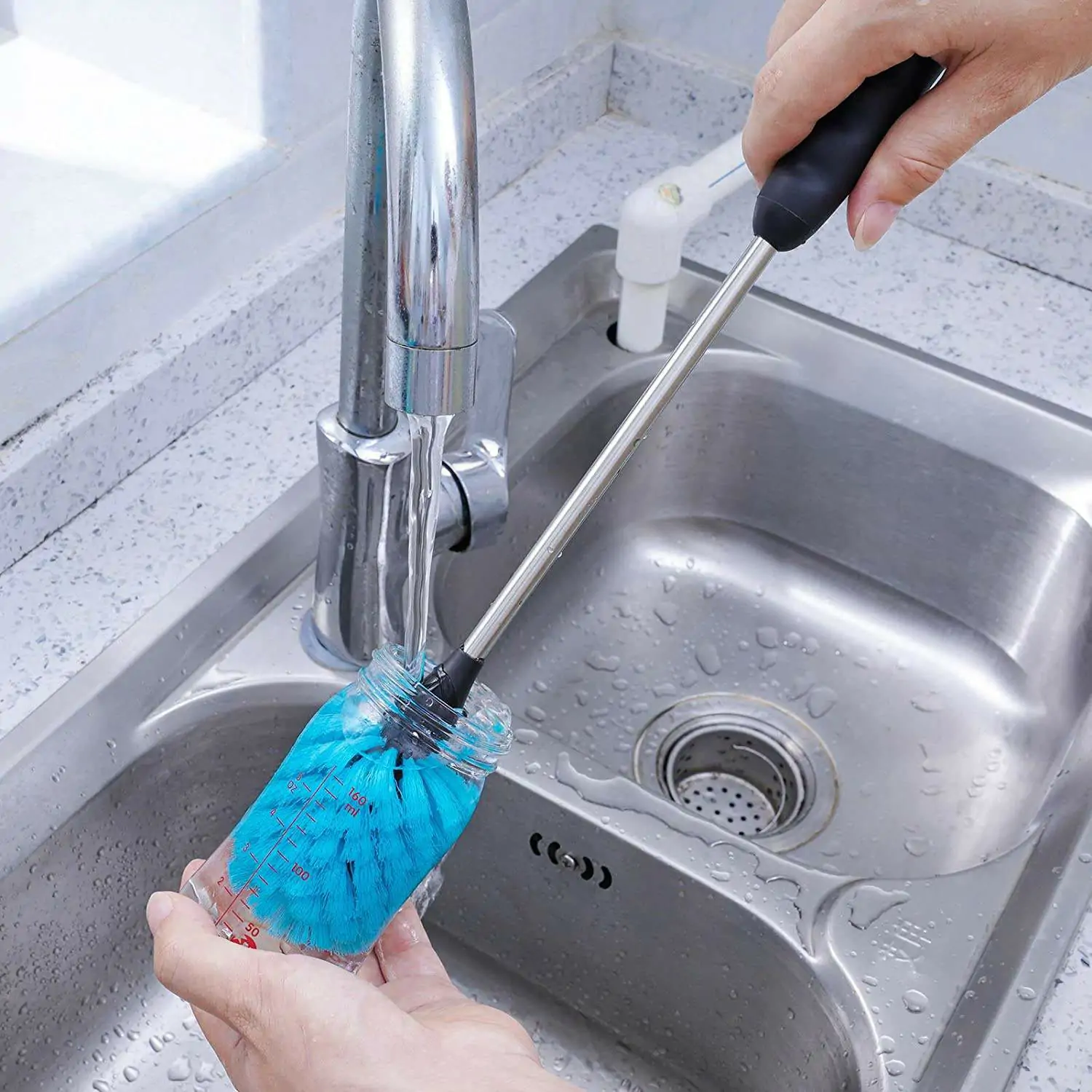
Custom Bottle & Container Brushes
A bottle or container brush goes in through an opening and then cleans a body that is wider than the way in: the wall, the shoulder under the neck and…
See how this type is builtBottle & Container Cleaning
A bottle brush is sized to the neck, not the body.
See the cleaning job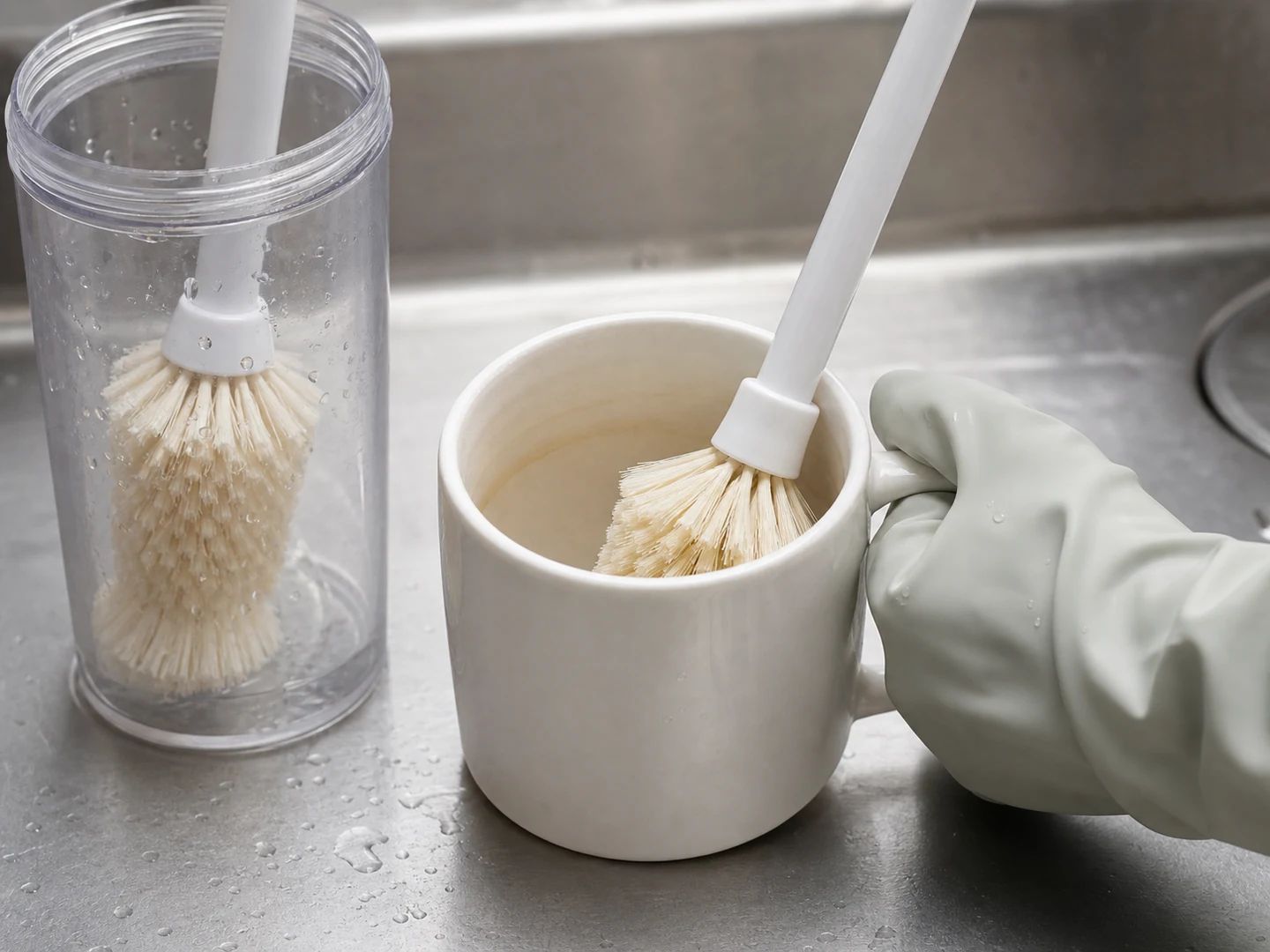
Cup & Mug Cleaning
Mugs and cups are cleaned with a short round brush whose fill reaches the base corner, where the coffee and tea ring survives a sponge.
See the cleaning job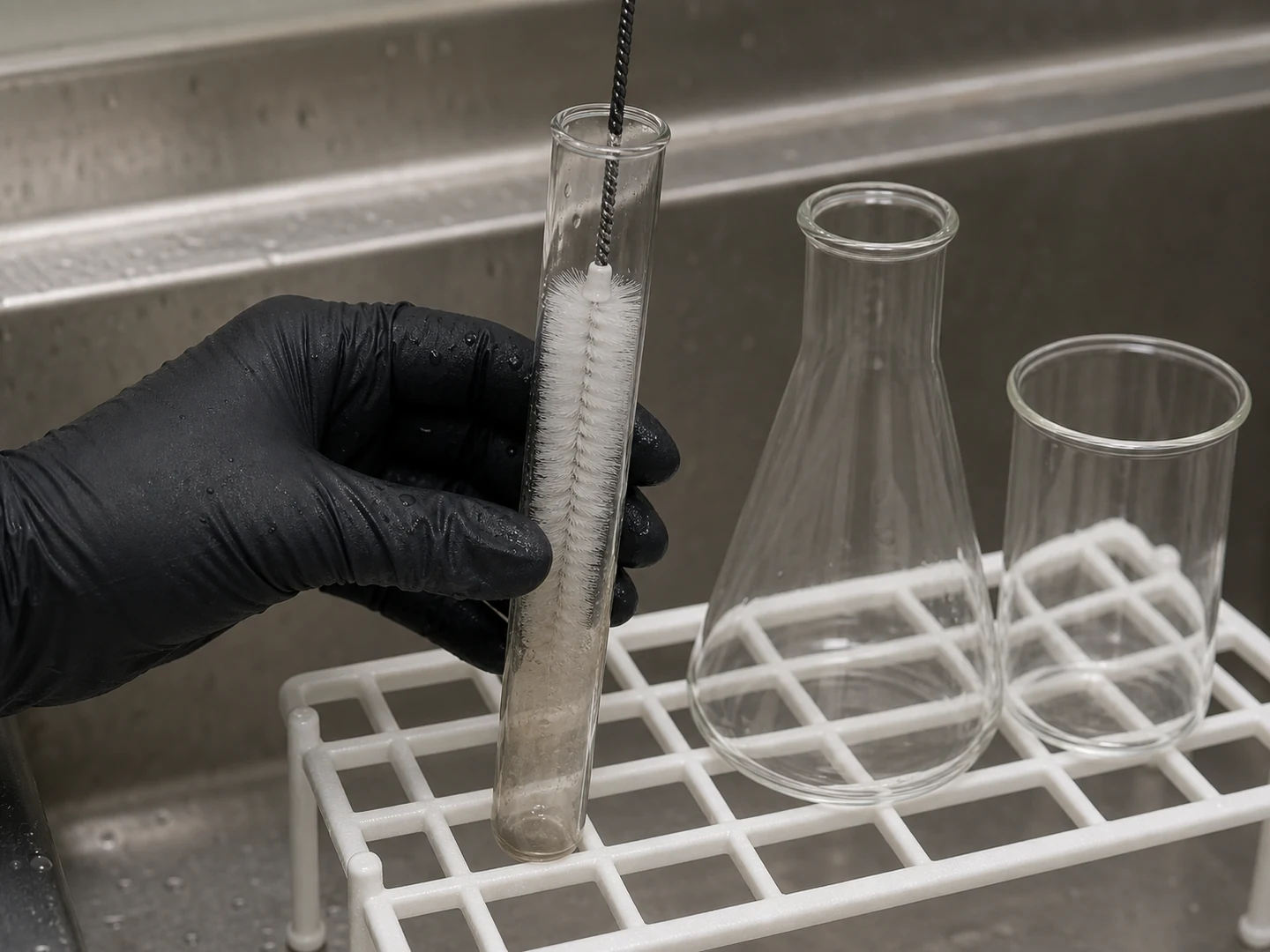
Laboratory Tube Cleaning
Lab glassware is cleaned with a brush for each shape: a test tube brush with a tufted tip that reaches the round bottom, a tapered tip for centrifuge cones.
See the cleaning job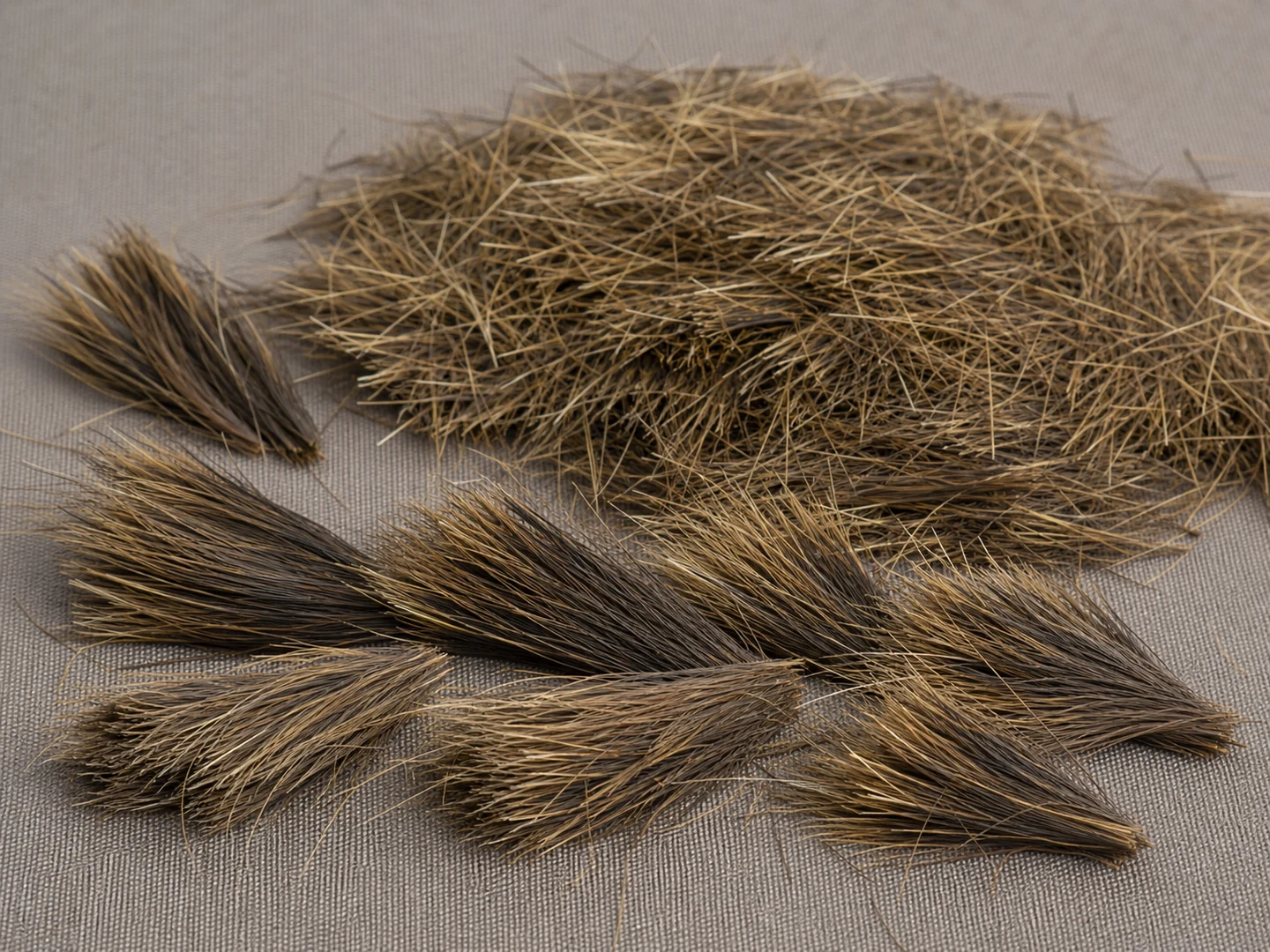
Boar Bristle
Boar bristle is a natural, tapered bristle with split tips. It is stiffer than horsehair and softer than nylon or wire, and its split tips hold and spread liquids.
Compare this material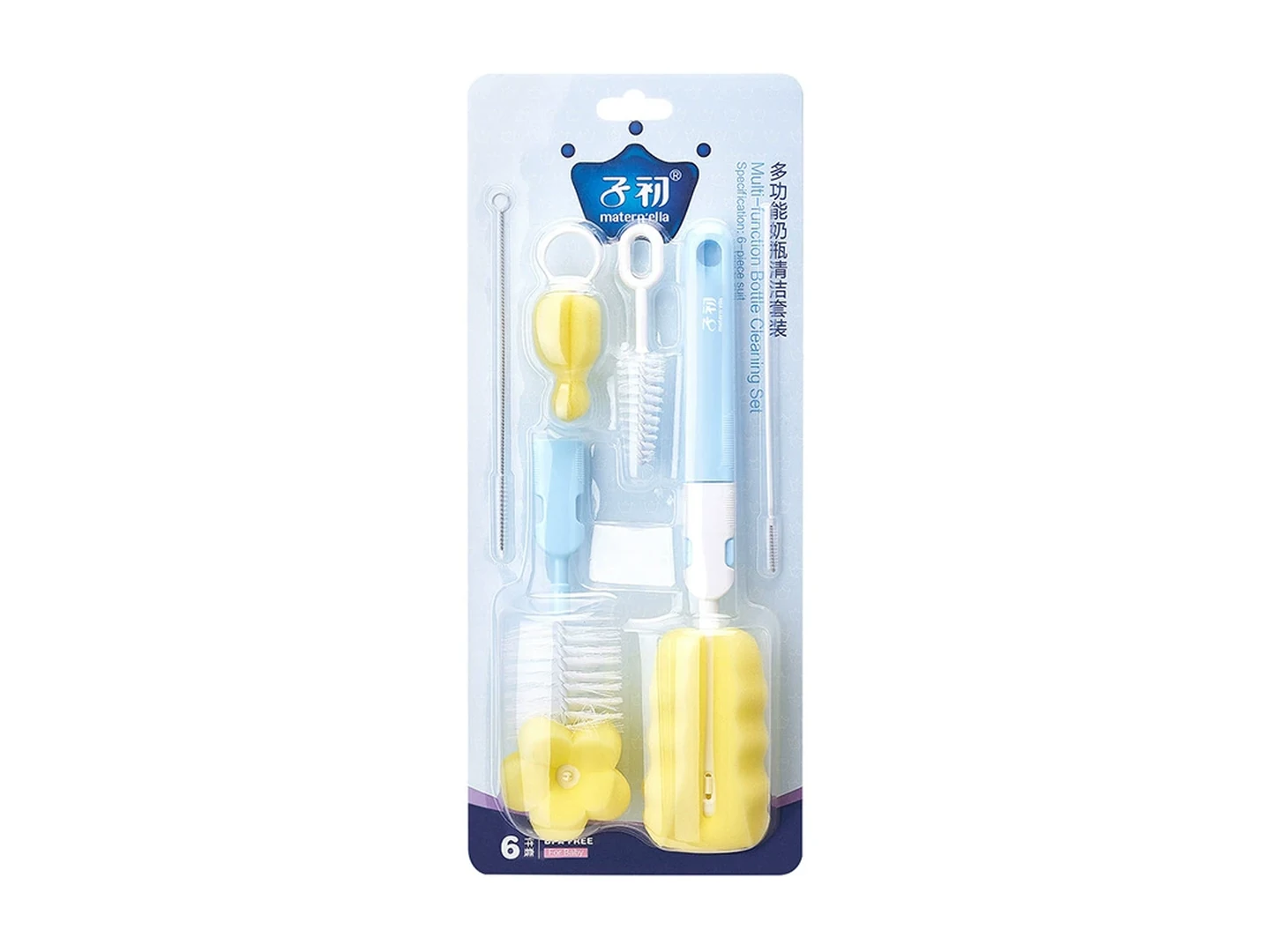
Baby Bottle Brush
Custom baby bottle brush for feeding products. Soft PBT or silicone bristles, sterilizable design, optional nipple brush.
Compare the specification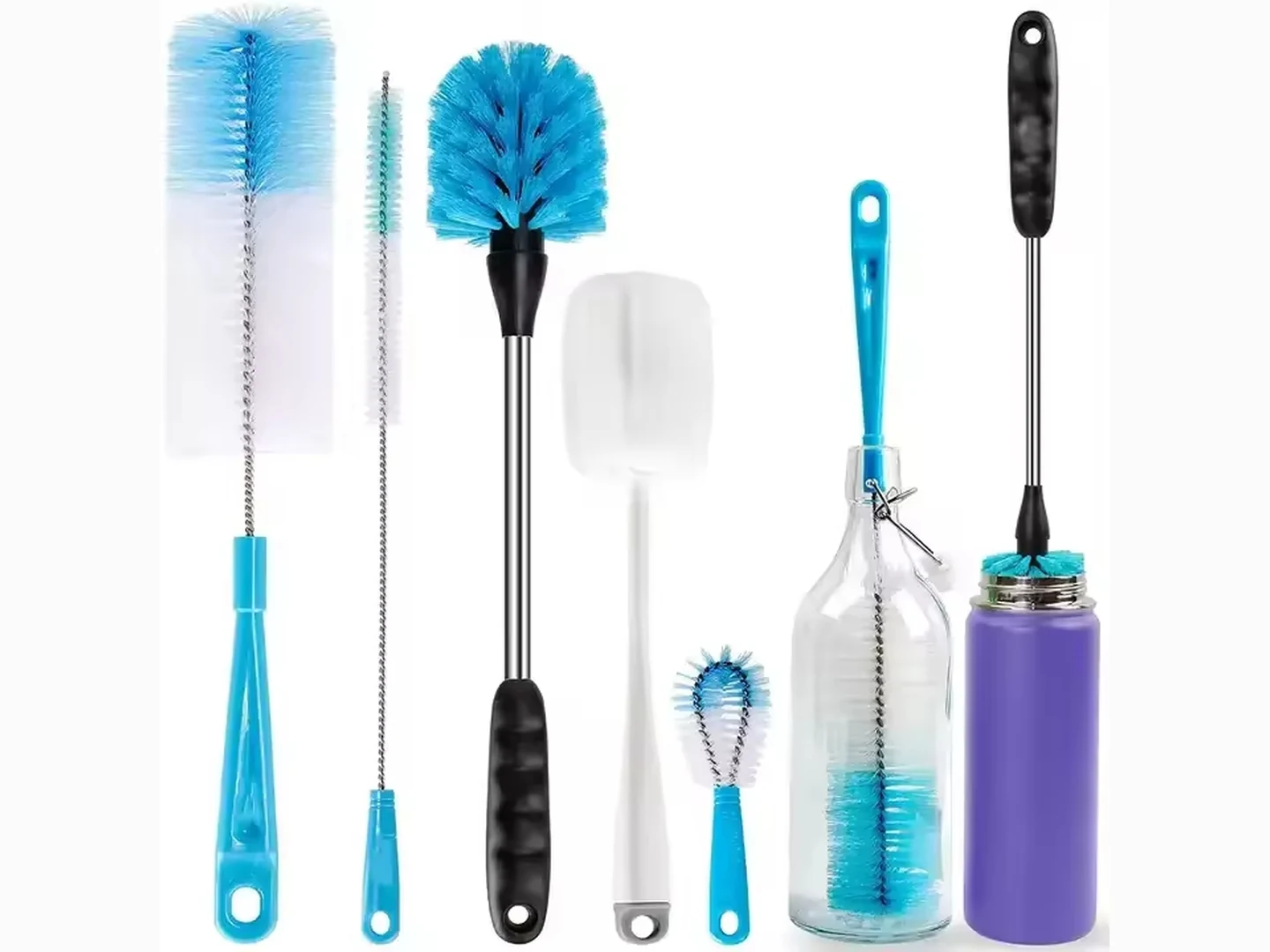
Bottle Cleaning Brush
Custom bottle cleaning brush for narrow-neck bottles. Filament head 20–70 mm cleans sidewalls, bases, and neck threads; PP, PA, PBT, or boar fill.
Compare the specification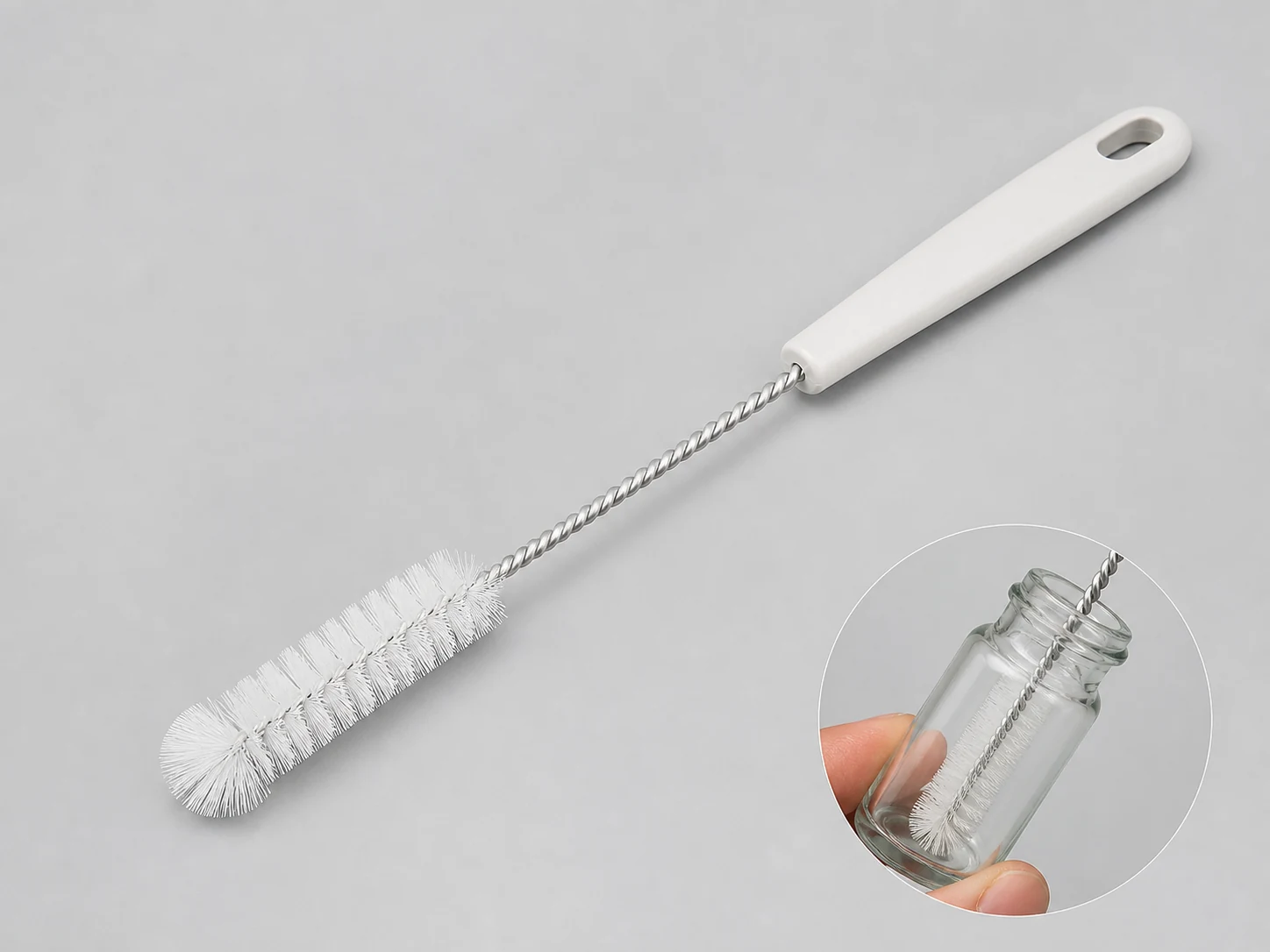
Small Container Bottle Cleaning Brush
Custom small container bottle cleaning brush with 20–70 mm head diameter, tufted or sponge heads, and PP, PBT, nylon, or PU fill.
Compare the specificationCustom Manufacturing RFQ
Describe Your Application
For an accurate quotation, please provide the main dimensions, material preference, working surface, residue, quantity, and a drawing or photo.
We reply to every request within 24 hours, with a quotation or with the questions we need answered first. If the brush can be made on our existing tooling, we make the sample directly. If it needs new tooling, we quote a sample fee and a tooling fee, and the sample fee is credited against the bulk order. Need an NDA first? We sign yours before you send drawings, and the files you send are never shown to other customers.
- MOQ500 pcs for small hand-held brushes, 100 pcs for medium and large ones
- SampleTypically 3–7 days
- ProductionFrom 7 days after sample approval, by size and quantity
- Payment30% deposit and 70% before shipment above US$10,000; smaller orders on agreed terms
Have the old brush? Send a photo on WhatsApp
Drawing or photo optional — it speeds things up, it does not gate the enquiry.
“We need a brush to remove wet residue from a stainless steel conveyor, about 800mm wide. The current brush wears quickly. We can send photos.”
“We sell drinkware and need a cleaning brush to include with the product. Quantity around 5,000 pieces.”