
Custom Cleaning Brush
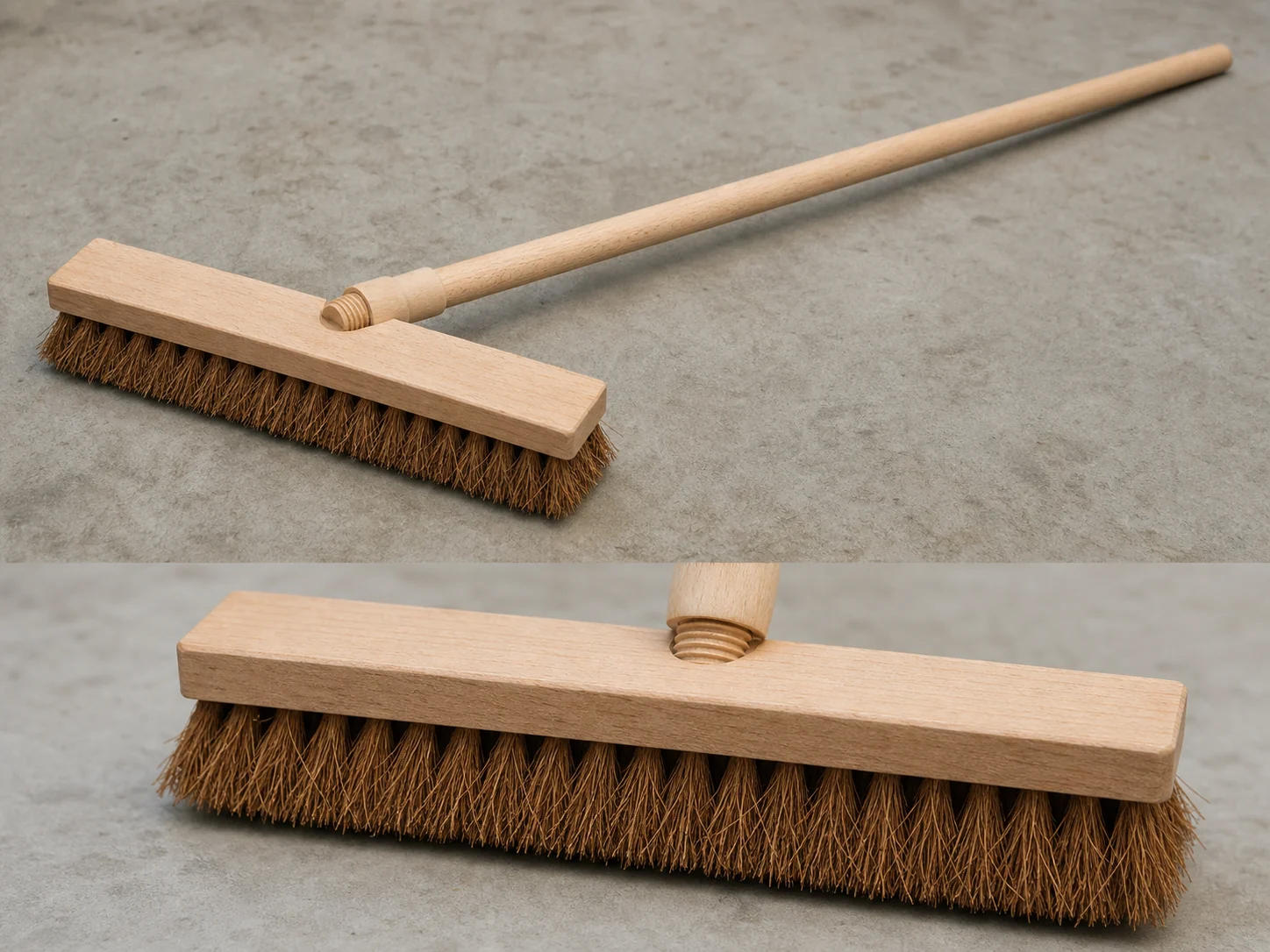
Coconut Heavy Floor Hand Brush
Stiff coconut fiber floor hand brush, 220 mm head and 1200 mm handle, for wet scrubbing concrete, tile, epoxy and stone. Lifts grease, tire marks and soil.
Small brush
500 pcs
Minimum order
Held in one hand: tube, bottle, detail and swab brushes — including long-handled ones with a small head.
Production lead time, once the specification is confirmed
- Up to 500 pcsWithin 7 days
- 501–50,000 pcsWithin 14 days
- Over 50,000 pcsWithin 21 days
Peak season can extend these times; the shipping date is confirmed in writing with your quotation. Sampling and shipping are quoted separately.
A stiff natural coconut fiber floor hand brush for aggressive wet scrubbing on concrete, textured tile, epoxy, stone, and other hard industrial floors. The 220 mm rectangular beech wood head and 1200 mm threaded handle give standing leverage and controlled pressure to break up grease, tire marks, soil, and embedded grime without powered equipment.
What can this brush do for you?
Wet Scrub Stiffness That Doesn’t Collapse
Coconut fiber keeps its scrubbing stiffness after the floor is wetted and detergent is applied, so the brush continues to attack packed soil, grease film, and tire marks instead of laying flat. Dense staple-set tufts present thousands of coarse fiber tips to the surface for fast soil removal.
Detergent and Degreaser Compatible
The fiber tolerates normal water-based detergents, soaps, and mild alkaline degreasers used in floor cleaning. A sealed beech wood head and lacquered handle are built for wet hand scrubbing; rinsing and drying after use protects the wood block from prolonged soaking.
Long Handle and Standing Leverage
The 1200 mm handle with 30 mm grip lets operators scrub floors standing and transfer body weight through the brush instead of relying on arm force alone. Push-pull strokes stay controlled, and the reach helps get under low equipment and into areas a kneeling scrub pad cannot cover comfortably.
Rectangular Face for Open Floors and Straight Edges
The 220 mm x 70 mm brush face covers open floor area quickly while square corners and edge-trimmed tufts work into expansion joints, grout lines, baseboard transitions, and stair treads. Rotating the brush lets the side tufts sit into the floor-wall seam.
Replaceable Threaded Head
The head screws onto the handle, so when bristles wear down the head block can be replaced without discarding the handle. For maintenance crews and distributors, this lowers repeat purchase cost and reduces waste compared with a one-piece brush.
What is a Coconut Heavy Floor Hand Brush?
A coconut heavy floor hand brush is a manual wet-scrubbing tool built around a dense block of natural coconut coir fiber set into a rigid beech wood head. The head screws onto a long wooden handle, and the operator guides the brush across the floor with push-pull strokes while applying downward pressure. Unlike a sweeping broom, this brush is designed to sit down into the soil and drive fiber tips into surface texture, pores, and joints to dislodge attached residue.
The brush is normally used wet. The floor is pre-wetted and detergent or degreaser is applied, then the operator scrubs before rinsing or mopping away the loosened slurry. Coconut fiber has a naturally rough, springy structure that scrapes and agitates without exposed wire or sharp metal, so it does not leave rust marks on the floor. Its water resistance makes it suitable for continuous wet work that would flatten or soften many synthetic fibers.
Operating considerations matter with this tool. Wetting the fiber ends before first use reduces initial shedding. After use, the brush should be rinsed, shaken out, and hung or stood with the bristles facing down so moisture drains away from the wood block. Brushing loosens and carries residue, but a separate mop, squeegee, or wet vacuum is still needed to remove the dirty solution from the floor.
Technical Specifications
Dimensions and materials below reflect the standard configuration. All parameters can be adjusted for a project.
| Parameter | Standard Configuration / Options |
|---|---|
| Brush face length | 220 mm, adjustable 160–300 mm |
| Brush face width | 70 mm, adjustable 40–100 mm |
| Bristle material | Natural coconut fiber (coir), stiff grade |
| Bristle trim length | 45 mm standard; 35–70 mm available for different scrub depth |
| Tuft pattern | Dense staple-set tufts across the full face; density configurable |
| Head block | Sealed beech wood; PP block available for high-soak conditions |
| Handle | Lacquered beech wood; 1200 mm standard, 900–1500 mm project range |
| Grip diameter | 30 mm |
| Connection | Threaded removable joint between head and handle |
| Working environment | Wet floors with water, neutral detergents, and mild alkaline degreasers; not for acids, solvents, or prolonged immersion |
| Brush type | Custom Handheld Detail Brushes |
| How it is driven | Hand-guided |
| Cleaning target | factory concrete floor, commercial kitchen quarry tile and textured non-slip, and loading dock cleaning |
| Surface or part | floors, wood, tile, concrete, stone, joints, epoxy, and corners |
| Residue or debris | fiber, grease, tire marks, sand, mud, oil, dried mud, and embedded dirt |
| Mounting / connection | Threaded removable joint between head and handle |
Where does this brush work best?
- Warehouse, workshop, and factory concrete floors — removes tire marks, oil and grease stains, mud, sand, and packed soil from unpolished concrete where a damp mop alone cannot break the surface film.
- Commercial kitchen quarry tile and textured non-slip tile — stiff fiber works grease and embedded dirt out of tile texture and grout lines, especially around cook lines, dish areas, and entryways.
- Loading docks, garages, and parking aprons — scrubbing packed sand, road film, oil spots, and dried mud from hard, slip-resistant surfaces.
- Outdoor concrete, brick, and stone patios — heavy scrubbing for soil, algae, moss film, and embedded sand where the surface can tolerate stiff natural fiber.
- Epoxy and coated floors with hard cured finishes — suitable after a spot test; thin clear coats or high-gloss decorative finishes may require a softer fiber brush.
- Floor edges, drains, expansion joints, and stair treads — the rectangular corners and side tufts reach areas that machine floor scrubbers and wide mop heads commonly miss.
How do I choose the right one?
Start with the floor surface
Coconut fiber is deliberately coarse. It is right for unpolished concrete, quarry tile, rough stone, brick, and similar hard surfaces. On glazed tile, polished stone, coated wood, or high-gloss sealed floors it can dull the finish or leave visible scratch marks. If surface appearance matters, test in an out-of-the-way spot or choose a softer tampico, nylon, or PBT scrub brush.
Match trim and tuft density to the soil
Longer trim of 60–70 mm gives more flex and fluid carry for film, light grease, and general soil. Shorter trim of 35–45 mm exposes stiffer fiber ends for packed dirt, tire marks, and dried deposits. Higher tuft density spreads force over more fiber tips and helps prevent uneven wear. For oily or heavily greasy floors, chemical dwell time is just as important as brush stiffness.
Check chemical and temperature conditions
Water-based neutral detergents and mild alkaline degreasers are compatible with coconut fiber and a sealed beech wood head. Strong acids, solvents, concentrated bleach, and caustic strippers can degrade the natural fiber and attack the wood seal. If the floor program includes acid etching or solvent degreasing, switch to a synthetic PBT or PP fiber brush with a plastic block. Continuous hot-water scrubbing above about 60°C may dry and crack the wood head, so a PP head is the better structure for high-temperature washdown work.
Set handle length and head size for the area
The 1200 mm handle suits most standing scrub work. Choose 900–1100 mm for shorter operators, tight aisles, or work under counters; choose 1400–1500 mm for wide open warehouse aisles or longer reach under machinery. For large open floors, a wider head reduces cleaning time. For stair treads, floor drains, and narrow joints, a narrower face is easier to control. On very large production areas, a powered floor scrubber is faster, with a hand brush reserved for edges, corners, and stubborn spots.
When this brush is not the right fit
Use a softer natural or synthetic fiber brush on polished or gloss-sealed floors. If the floor carries hardened cement, rust bloom, or mineral scale that coconut fiber cannot cut, consider a wire brush or mechanical grinder brush — but only if the surface can tolerate metal contact. Do not use this brush as a dry dust broom; it is built for wet or damp scrubbing, not for moving loose dry debris efficiently.
Can I customize this brush?
This brush is built to project requirements. To define the correct configuration, provide the floor surface type, residue, cleaning chemical, wet or damp use, preferred head width and reach, and the operator handle length. A sample or drawing of the current brush also speeds up the specification.
- Head block — length, width, thickness, wood species, PP alternative, rounded or chamfered corners, drainage holes, or custom branding area.
- Bristle system — trim length, tuft density, fiber grade, cleaned coconut fiber selection, tuft row layout, and edge trim configuration.
- Handle — length, grip diameter, straight or contoured grip, D-grip end, hanging hole, sealed finish, and threaded ferrule material.
- Connection — thread size and direction, quick-release design if needed, or an adapter to existing broom and extension handles.
- Marking — heat branding, laser marking, pad printing, or a label on the handle or head block.
- Packaging — bulk crate, bundle wrap, hang tag, individual box, or master carton; export wood-treatment support available on request.
- Project support — material declarations, inspection support, third-party testing, and customer-specific documentation can be arranged during the customization process.
When does a worn a coconut heavy floor hand brush become unsafe to keep using?
How should I break in a new coconut fiber brush?
Soak only the fiber tips in water for 10–15 minutes before first use, then flex the bristle face against the floor to help set the tufts and shake out loose fiber. Keep water below the wood block. This reduces initial shedding and lets the bristles settle into their working position.
Will this brush damage my tile or coated floor?
On polished tile, glazed ceramic, clear-coated concrete, or decorative sealed surfaces, coconut fiber can leave dulling or light scratch marks. Test in a hidden area before full use. If the test shows any surface change, switch to a softer fiber brush. On unpolished concrete, quarry tile, and textured stone, the stiff contact is normally acceptable.
Are acids or solvents safe to use with this brush?
No. Strong acids, solvents, concentrated bleach, and caustic strippers can break down coconut fiber and damage the wood head. Use water-based neutral detergents or mild alkaline degreasers, rinse the brush after use, and dry it with the bristles facing down. For acid or solvent cleaning, choose a synthetic-fiber brush with a compatible plastic block.
How can I tell when the brush head is worn out?
Check the tuft height against a new head. When usable trim length is reduced by roughly half, the tufts flatten substantially, or the block begins sitting close to the floor, the scrubbing force is no longer reliable. Also inspect the threaded socket for wobble or stripped threads. Replace the head before the connection fails and damages the handle thread.
Can I use this brush to sweep dry dust?
No. This is a wet floor scrub brush, not a dry broom. Loose dust and debris should be removed with a broom, dust mop, or vacuum before wet scrubbing. Using this brush on dry loose debris pushes material around and clogs the tufts without cleaning effectively.
What is the best way to store the brush?
Rinse the bristles and head after each use, shake out excess water, and hang or stand the brush with the bristles facing down. Keep it out of direct sun and away from heat sources. Dry the wood block fully between uses; prolonged soaking or standing water will swell the wood and eventually loosen the fiber set.
Guides that go deeper on this
We have not written a guide specific to this one yet. The material that covers selection, filament, dimensions, maintenance and sourcing is collected in the technical resources library.
Custom Manufacturing RFQ
Describe Your Application
Please include the main sizes, application, residue, preferred material, interface, quantity, and any drawing or sample available.
Drawing or photo optional — it speeds things up, it does not gate the enquiry.
Custom Brush RFQ
Send Your Brush Project
Upload a drawing, product photo, or sample photo and provide the core dimensions and cleaning conditions.
“We need a brush to remove wet residue from a stainless steel conveyor, about 800mm wide. The current brush wears quickly. We can send photos.”
“We sell drinkware and need a cleaning brush to include with the product. Quantity around 5,000 pieces.”