
Custom Cleaning Brush
Die Casting Mold Cleaning Brush
Brass wire is softer than hardened die steel, so it works baked release agent, carbon and flash off cavities and parting lines without gouging.
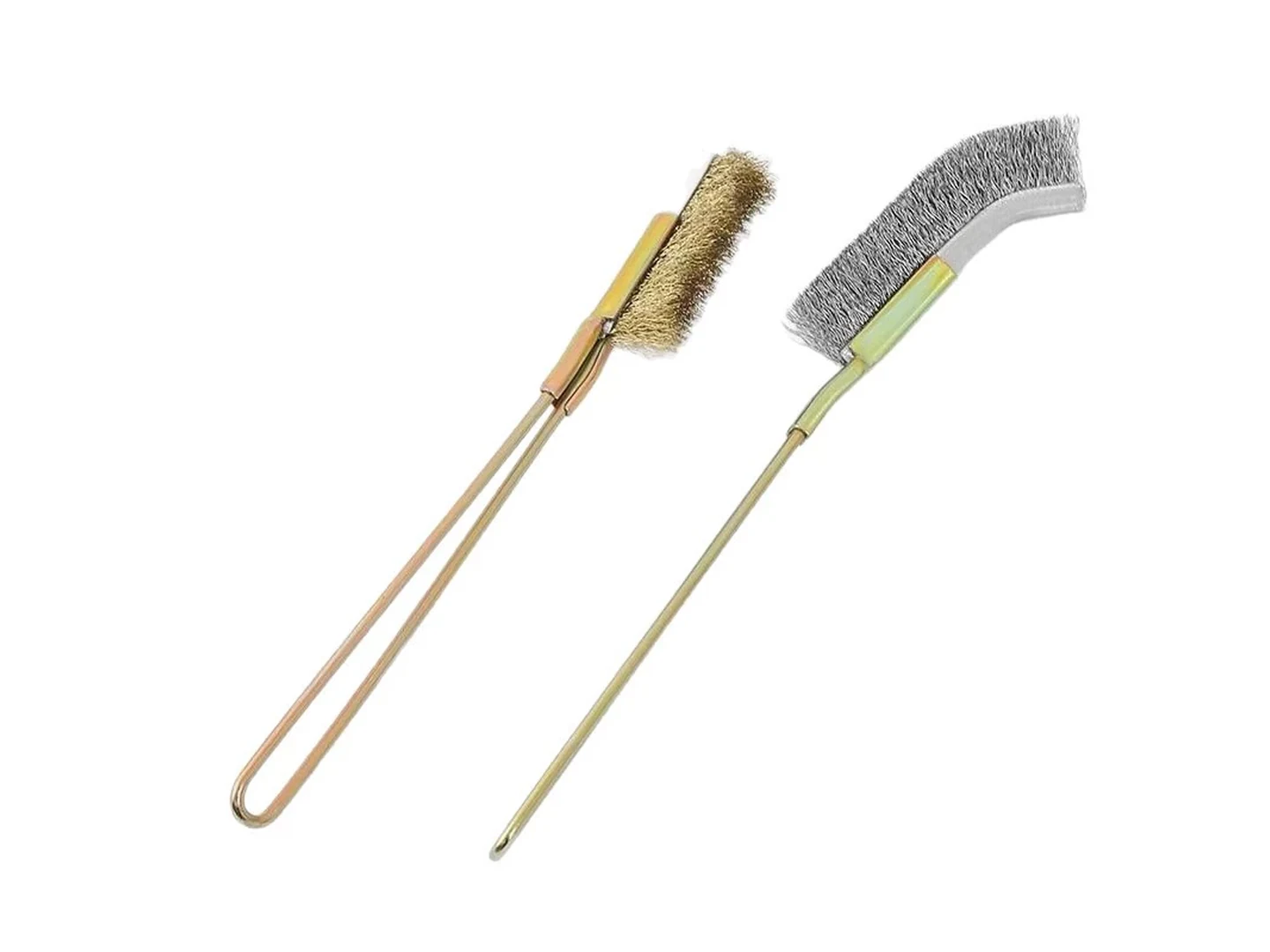
Small brush
500 pcs
Minimum order
Held in one hand: tube, bottle, detail and swab brushes — including long-handled ones with a small head.
Production lead time, once the specification is confirmed
- Up to 500 pcsWithin 7 days
- 501–50,000 pcsWithin 14 days
- Over 50,000 pcsWithin 21 days
Peak season can extend these times; the shipping date is confirmed in writing with your quotation. Sampling and shipping are quoted separately.
A hand-guided brass wire brush built for everyday die casting mold maintenance—removes baked release agent, burned-on carbon, and flash from cavities, parting lines, vents, and textured surfaces without gouging hardened tool steel.
What can this brush do for you?
Protects polished cavities and sharp parting edges
Brass wire is softer than most hardened die steels, so the bristles work the deposit off the surface rather than cut into it. Operators can scrub release agent and carbon build-up on polished cavity faces without leaving scratch marks, shine spots, or rounded edges on the parting line.
Reaches into narrow vents, ribs, and undercuts
The brush head is produced in strip, channel, angled, and toothbrush-style forms, so the wire fill can be matched to the opening it needs to enter. A thin strip reaches into vent slots and ejector pin bores, while an offset head follows sidewalls and undercuts that a straight block brush cannot touch.
Breaks up baked deposit without soaking downtime
Crimped brass wire lifts layers of heat-hardened release agent, carbonized lubricant, and oxide film through direct mechanical contact. This reduces reliance on long chemical soak cycles and lets mold maintenance continue between production runs.
Leaves no ferrous particles on the mold face
Because the working fill is brass, not steel, the brush does not transfer steel slivers or fragments onto the mold surface. That lowers the risk of rust spotting on the die and keeps the next spray lubricant application from carrying metal debris into the shot.
Stays controllable in the operator’s hand
The brush is designed for manual pressure and short, controlled strokes. This lets the operator work around critical shut-off areas, polished lettering, and thin tool sections instead of relying on a rotary tool that can build heat or over-brush one spot.
What is a Die Casting Mold Cleaning Brush?
A Die Casting Mold Cleaning Brush is a hand tool whose working face is filled with brass wire and configured for maintenance work inside die casting dies. It is used after the die is opened and cooled enough for safe contact, when the technician needs to remove release agent films, light flash, carbon smut, oxide, and lubricant residue from the tool surface.
In practice, the operator works the brush over cavity faces, parting line lands, vents, ejector pins, and textured areas with short linear or circular strokes. The brass wire scrubs the deposit free while being soft enough to give the mold steel priority over the bristle. Handle geometry, wire gauge, and head shape are selected so the brush follows the die’s actual geometry rather than forcing the operator to adapt.
This tool covers routine mechanical surface cleaning. It does not replace carbide scrapers, abrasive stones, media blasting, or ultrasonic cleaning when hard aluminum smears, deep scoring, or embedded metal must be removed. For those conditions, the brush is one step in the cleaning sequence, not the only step.
Technical Specifications
| Parameter | Typical Range / Options | Selection Note |
|---|---|---|
| Wire material | Brass wire, CuZn37 or CuZn30 (65/35 or 70/30) | Non-ferrous; softer than die steel to reduce marking |
| Wire diameter | 0.10–0.50 mm (0.004–0.020 in) | Finer for polished or textured surfaces; heavier for thick baked residue |
| Bristle trim | Crimped or straight | Crimped retains shape longer; straight gives more aggressive scraping action |
| Head type | Block, strip, channel, angle/offset, toothbrush pattern | Selected from cavity geometry and narrowest access opening |
| Working face width | 10–50 mm typical, custom to target area | Narrower for vents and ribs; wider for large flat cavity faces |
| Overall length | 150–350 mm hand brush | Longer handles for deep cavities; shorter for control near parting line |
| Handle | Hardwood, plastic, or stainless steel core with ergonomic grip | Matched to operator comfort, chemical exposure, and reach |
| Fill density | Standard, dense, extra dense | Dense fill increases contact and service life on flat surfaces |
| Operating conditions | Manual use on cooled molds; wet or dry surfaces | Bristles tolerate brief warm contact, but operator-safe temperature governs hand use |
| Brush type | Custom Handheld Detail Brushes | |
| How it is driven | Hand-guided | |
| Cleaning target | aluminum and zinc die casting die, parting line and ejector pin, and vent channel and overflow well cleaning | |
| Surface or part | molds, cavities, parting lines, vents, aluminum, channel, pins, and dies | |
| Residue or debris | mold, carbon, release agent, oxide, lubricant, oxide film, overspray, and leaves | |
| Mounting / connection | Fixed |
Where does this brush work best?
- Aluminum and zinc die casting dies during scheduled mold cleaning, removing release agent build-up from cavity faces and core surfaces before re-spraying.
- Parting lines and ejector pins, clearing thin flash, lubricant films, and light carbon without rounding the shut-off edges.
- Vent channels and overflow wells, keeping gas escape paths open and preventing porosity-related casting defects.
- Textured and draw-polished surfaces, removing carbon smut and oxide films while preserving the grain or draw mark finish.
- Cores, slides, and inserts during preventive maintenance, reaching tight runs where overspray and carbon accumulate between production shifts.
How do I choose the right one?
Start with the mold steel and current surface finish
If the die face is polished, textured, or has fine EDM detail, choose a finer brass wire diameter and a lower fill density first. Brass wire still burnishes, but a finer gauge applies less aggressive contact and leaves fewer visible marks on sensitive finishes.
Match wire diameter to the deposit
Light oxide or release agent film works well with 0.10–0.15 mm wire. Baked release agent and carbon call for 0.20–0.30 mm wire. Thick aluminum or zinc smears may need 0.35–0.50 mm wire, though the wire remains softer than the die steel. Always test the first brush on a non-critical area before use on customer-visible surfaces.
Choose head geometry from the narrowest access point
Measure the vent width, rib gap, or cavity opening the brush must enter. A strip or channel head should be no wider than that passage. Use a block head for large flat faces, an angled or offset head for sidewalls and undercuts, and a toothbrush pattern for lettering and small features.
Adjust the handle for reach and operator control
A short handle gives maximum pressure and fingertip control near the parting line. A longer handle reaches into deeper cavities. An offset or bent neck reduces wrist strain when the operator works on horizontal parting faces for long periods.
When brass is not the right choice
Brass wire will not cut through heavy weld spatter, deeply embedded aluminum that has smeared into the steel, or hard mineral scale. Those conditions require carbide scrapers, abrasive stones, or media blasting. For rapid large-area cleaning, a power-driven brass cup or wheel brush may be considered, but it adds heat and increases the risk of glossing a polished surface. If the die finish is extremely delicate, a fiber or nylon brush may be safer than any metal wire.
Can I customize this brush?
Every die geometry is different, so the brush should be built around the mold. To define the right configuration, provide the cavity drawing or clear photos, the narrowest aperture the brush must enter, the residue type, the mold steel and surface finish, and the preferred handle length and angle.
- Head shape and working face: block, strip, channel, angle, bent-neck, toothbrush pattern, or custom trim profile.
- Brass wire fill: wire diameter, crimp style, trim height, fill density, and restricted fill patterns for specific areas.
- Handle: wood, plastic, stainless steel core, ergonomic grip shape, length, angled neck, or hanging feature.
- Color and marking: custom handle color, molded identification, pad print, or laser marking for tool crib control.
- Packaging: bulk carton, individual sleeve, maintenance-kit packing, or project-specific labeling.
If your project requires material declarations, inspection reports, or third-party testing for plant qualification, we can support those requirements during the customization process.
Which filament survives the cleaning and still lasts on a die casting mold cleaning brush?
Will brass wire remove material from hardened die steel?
Brass wire is softer than most hardened die steels and normally removes only the deposit, not the underlying steel. On softer mold steels or fine polished surfaces, brass can still produce a burnished or brightened appearance. Test the brush on a non-visible area first, especially if the mold has a high-gloss finish.
What brush shape works best for narrow vent channels?
Use a thin strip or channel brush whose working face is no wider than the vent opening. A slightly offset or bent-neck head helps the operator follow the vent path without dragging the handle across surrounding polished lands.
How do I know when the brush should be replaced?
Inspect the working face before each shift. If the brass wire rows are splayed, flattened, or shortened so the brush no longer returns to its original fill shape, replace it. Loose or bent bristles can break off into the mold, so any visible wire loss is a replacement signal.
Can this brush be used on a power tool or spinning shaft?
No. This product is constructed for hand-guided use. Hand brush construction is not designed for high RPM and can shed wire if mounted on a rotary tool. For power applications, specify a brass wire cup, wheel, or end brush built for the spindle speed and tool type involved.
Will brass bristles contaminate the die lubricant or the next casting?
Brass is non-ferrous and normally visible if a fragment is left behind, but best practice is to blow off or rinse the mold area after brushing and before the next spray application. This removes both loosened deposits and any fine wire particles from the working zone.
Is brass wire safe to use around oils and solvent residues?
Brass is generally considered non-sparking, which reduces spark risk compared with steel wire, but it does not eliminate the need to follow plant solvent-handling and hot-work rules. Always use the brush in a well-ventilated area and follow your site’s required PPE and housekeeping procedures.
Guides that go deeper on this
Custom Manufacturing RFQ
Describe Your Application
Send the key measurements, cleaning requirement, residue, material direction, mounting method, quantity, and drawing or photo.
Drawing or photo optional — it speeds things up, it does not gate the enquiry.
Custom Brush RFQ
Send Your Brush Project
Upload a drawing, product photo, or sample photo and provide the core dimensions and cleaning conditions.
“We need a brush to remove wet residue from a stainless steel conveyor, about 800mm wide. The current brush wears quickly. We can send photos.”
“We sell drinkware and need a cleaning brush to include with the product. Quantity around 5,000 pieces.”