What Are the Main Baby Bottle Brush Materials?
The useful comparison for baby Bottle Brush Selection: Sponge vs Nylon vs Silicone is not simply which option sounds stronger or cheaper. Start with residue type, food-contact area, cleanability, storage, and cross-contamination risk. Then compare cleaning access, material compatibility, service life, and the point where brushing creates more risk than benefit.
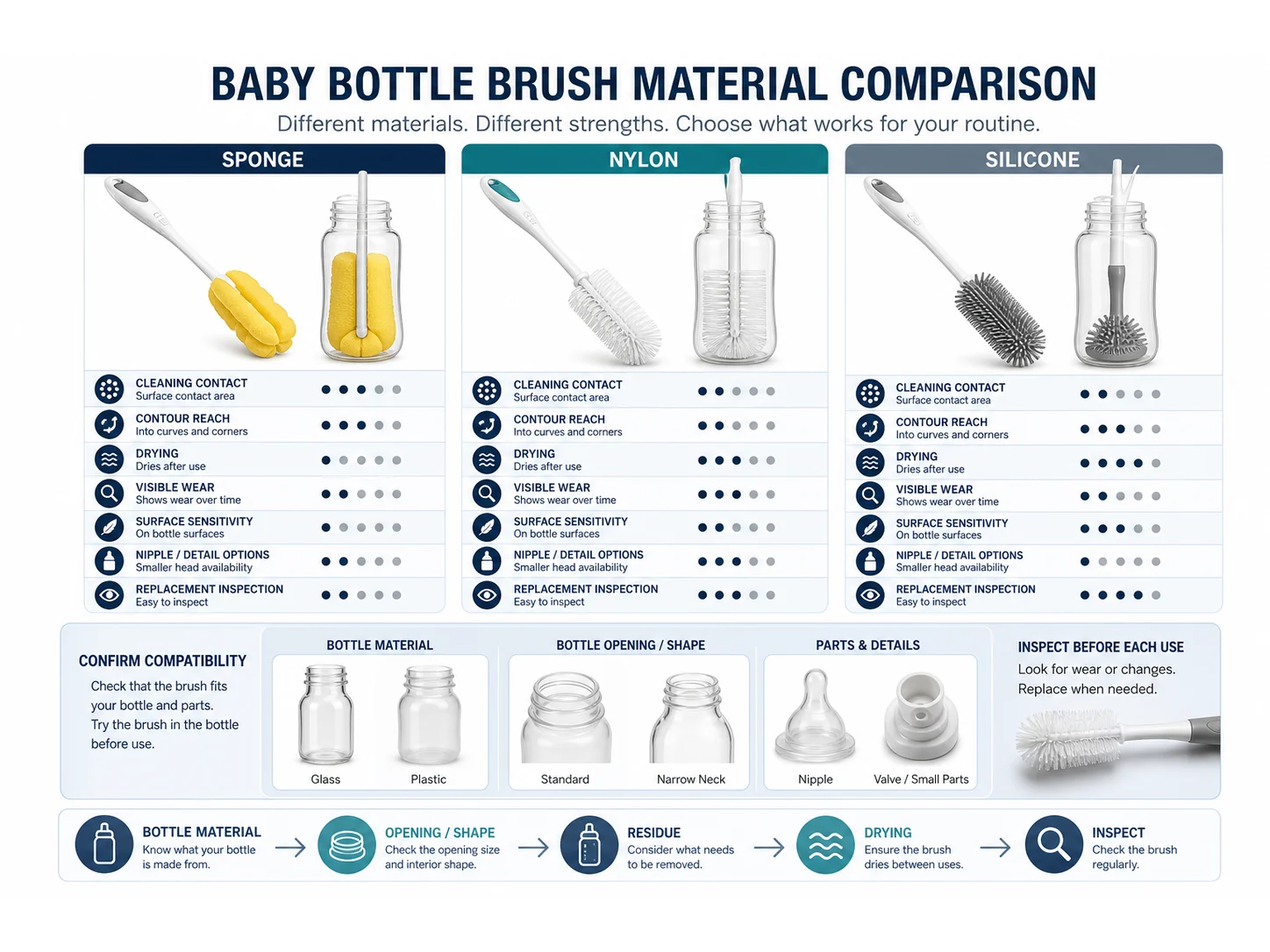
Baby bottle brushes come in three primary materials, each with its own cleaning characteristics and care requirements:
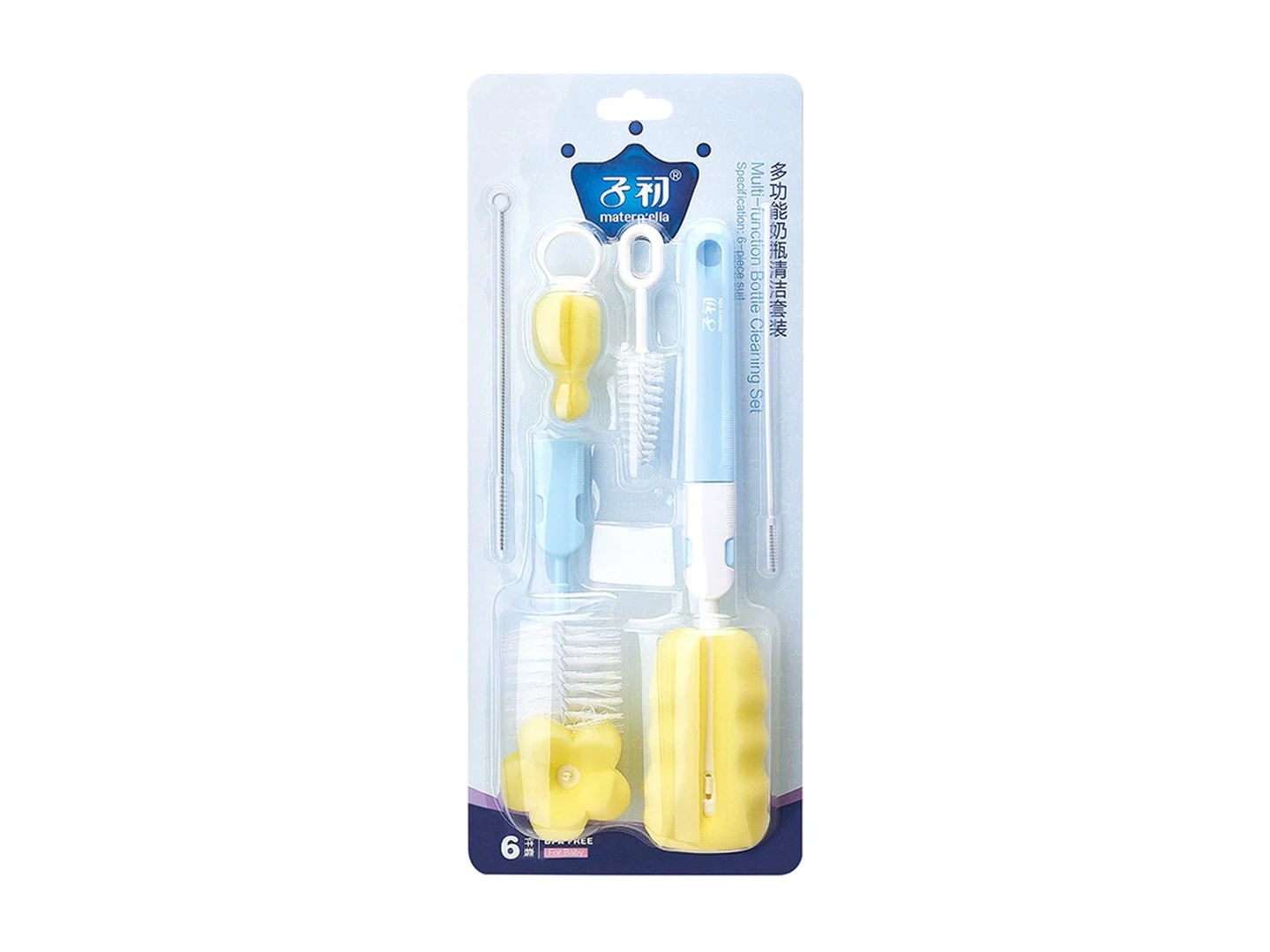
- Sponge: Soft and absorbent, sponge brushes are gentle on all surfaces, making them ideal for plastic bottles that scratch easily. However, sponges are porous and can harbor bacteria if not dried thoroughly. Some models feature replaceable sponge heads.
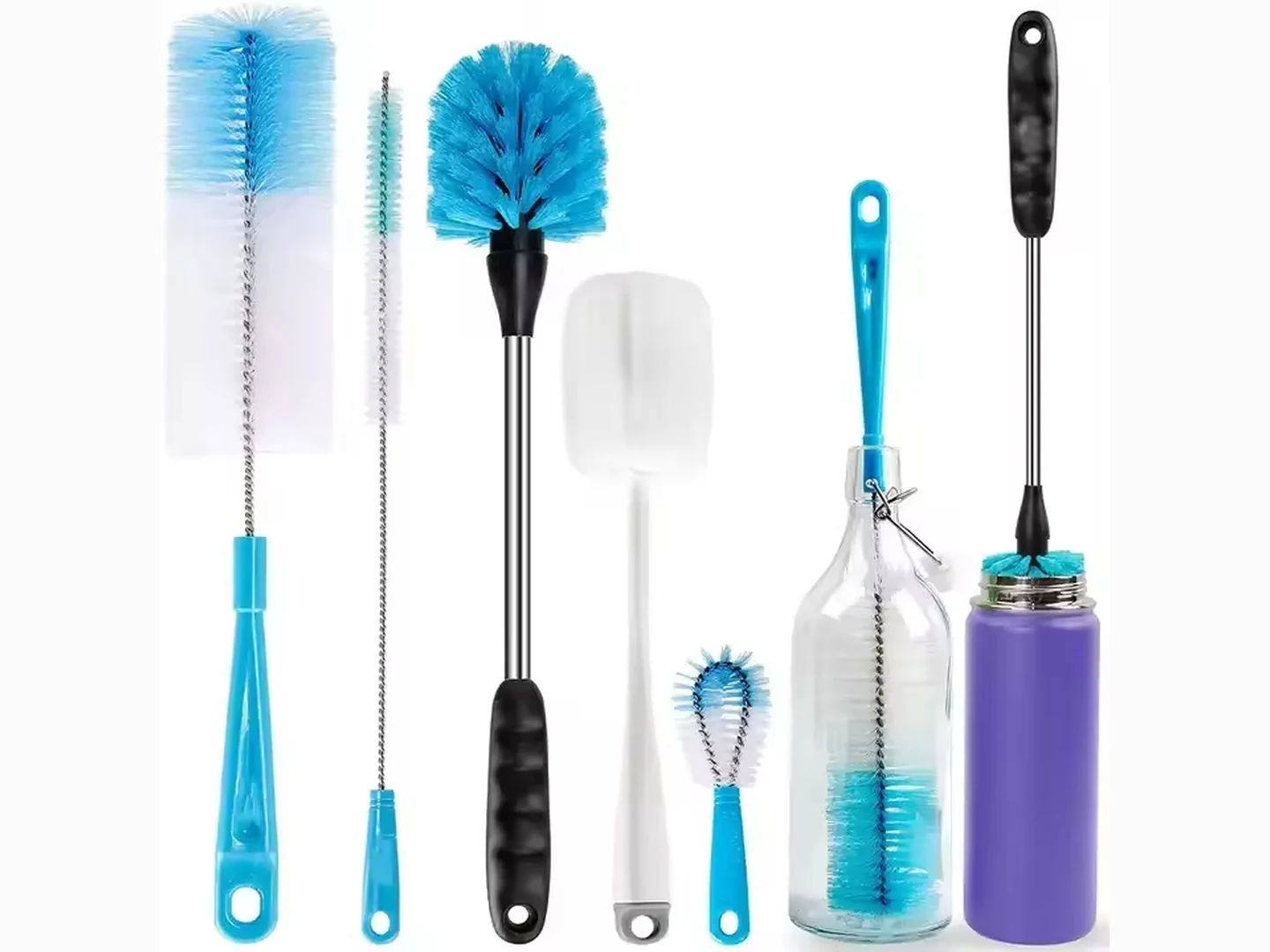
- Nylon: Nylon bristles offer strong scrubbing power and excellent durability. They are effective at removing stubborn milk residue but can cause micro-scratches on softer plastics over time. Nylon is a good match for glass bottles and is often used in combination with a sponge tip for nipple cleaning.
- Silicone: Silicone brushes are non-porous, flexible, and naturally hygienic. They resist bacterial growth and are gentle on all bottle materials, including plastic and glass. Silicone is also heat-resistant, making it easy to sterilize. Many silicone brushes include integrated nipple cleaners.
Sponge vs Nylon vs Silicone: A Comparison Table
| Material | Best for | Scratch Risk | Hygiene | Durability | Nipple Cleaning |
|---|---|---|---|---|---|
| Sponge | Plastic bottles, delicate surfaces | Very low | Lower (porous, retains moisture) | Moderate (replace head frequently) | Often includes a small sponge tip |
| Nylon | Glass bottles, heavy residue | Moderate on plastic; low on glass | Moderate (dry quickly, but can trap debris) | High | May require separate nipple brush |
| Silicone | All bottle types, daily use | Very low | Excellent (non-porous, easy to sanitize) | Very high | Often has built-in silicone nipple cleaner |
How to Choose Based on Bottle Material and Nipple Type
For baby-bottle and infant-feeding items, the article avoids giving medical advice and anchors hygiene cautions to CDC — Preventing Cronobacter in Infants.
For kitchen cleaning examples, the FDA — Food Safety in Your Kitchen supports the distinction between normal cleaning, food handling, and hygiene habits.
For general foodborne-illness prevention language, the CDC — Preventing Food Poisoning is used as the public-health reference.
For the material or regulatory boundary in this section, the supporting reference is eCFR — 21 CFR 177.1500 Nylon Resins.
For material-selection language, this section is supported by British Plastics Federation — Thermoplastics.
For brush terminology and construction language, this section references American Brush Manufacturers Association — Brush Lingo.
The right brush depends on what you’re cleaning:
- Glass bottles: Any material works, but nylon’s scrubbing power handles tough residue, while silicone provides a gentle, long-lasting option.
- Plastic bottles: Avoid stiff nylon brushes that can scratch—micro-scratches trap bacteria. Choose sponge or silicone instead.
- Silicone nipples: Silicone brushes clean effectively without damaging the material. Sponge tips may struggle with milk film, and nylon can be too abrasive.
- Narrow-neck bottles: A flexible brush with a long handle, especially silicone or a bendable nylon brush, reaches corners without scratching.
- Bottle + nipple cleaning: Look for brushes with a smaller tip (sponge or silicone) for nipples, or use a dedicated nipple brush.
Common Mistakes When Selecting a Baby Bottle Brush
- Ignoring drying and storage: Sponge brushes must be thoroughly dried after each use. Storing them damp breeds mold and bacteria.
- Using the wrong material for the bottle: Nylon on soft plastic can lead to scratches, while a sponge on heavy residue may not clean well enough.
- Overlooking brush head size: Too large a head won’t fit into narrow-neck bottles; too small makes cleaning tedious.
- Not replacing brushes regularly: Replace based on wear condition, operating load, and the equipment maintenance plan, or sooner if bristles deform, sponge tears, or odors develop.
- Assuming all brushes are dishwasher safe: Many sponge and nylon brushes cannot withstand high heat; silicone is typically dishwasher safe. Always check the manufacturer’s guidelines.
When the Dishwasher Might Be a Better Option
If you have a dishwasher with a sanitize or bottle wash cycle, you can often skip manual scrubbing for lightly soiled bottles. However, a bottle brush is still useful for removing stuck-on formula or milk before the dishwasher cycle. For families that exclusively use dishwasher-safe bottles and a reliable steam cycle, a brush may see less use. In such cases, a simple silicone brush as a backup is a practical compromise.
Final Takeaway: Selecting the Right Brush for Your Needs
The best baby bottle brush balances material, hygiene, and compatibility with your bottles. For everyday use and peace of mind, a silicone brush offers durability and cleanliness with minimal maintenance. If you prefer a soft touch for plastic bottles, a sponge brush with replaceable heads works well—just prioritize drying. Nylon remains a strong choice for glass bottles but use caution on plastic. Ultimately, the right brush supports a safe, efficient cleaning routine without damaging your investment in baby feeding gear.
Practical Use Note
In daily use, the practical test is simple: check whether the brush reaches the full contact area, removes the target residue, and leaves the surface in the required condition. Record what changes when residue type, food-contact area, cleanability, storage, and cross-contamination risk changes, because many brush failures are caused by the working condition shifting rather than by the brush body alone.
Frequently Asked Questions
How often should I replace my baby bottle brush?
Replace your bottle brush every 2 to 3 months, or sooner if the bristles are frayed, the sponge develops an odor, or you notice any discoloration. Frequent replacement ensures effective cleaning and hygiene.
Is a silicone bottle brush more hygienic than a sponge brush?
Yes, silicone is non-porous and resists bacterial growth. Sponge brushes can harbor bacteria if they stay damp, so silicone is generally the more hygienic choice.
Can I put my baby bottle brush in the dishwasher?
It depends on the material. Most silicone brushes are dishwasher safe (top rack). Nylon brushes may be dishwasher safe but check the manufacturer’s advice. Sponge brushes typically should not go in the dishwasher because high heat can degrade the sponge.
Which bottle brush is best for plastic baby bottles?
Silicone and sponge brushes are both excellent for plastic bottles because they are gentle and won’t scratch the surface. Avoid stiff nylon bristles on soft plastics.
Do nylon bottle brushes scratch glass bottles?
No, nylon bristles will not scratch glass. Glass is much harder than nylon, so a nylon brush can safely scrub away residue without causing damage.
What’s the difference between a bottle brush and a nipple brush?
A bottle brush typically has a larger head for cleaning the inside of the bottle, while a nipple brush has a smaller, often softer tip designed to clean the inside of bottle nipples without tearing them. Some bottle brushes include a built-in nipple cleaner.
Can I use a bottle brush with a sponge tip on silicone nipples?
Yes, but the sponge tip may wear out faster against the sticky silicone nipple. Silicone nipple cleaners (found on many silicone brushes) are often more effective and durable for this purpose.