
Custom Cleaning Brush
Tangle-Free Brush Roll
Anti-wrap filament segments with rubber or TPU wiper edges lift hair and lint without letting long fibers wind around the robot vacuum roller core.
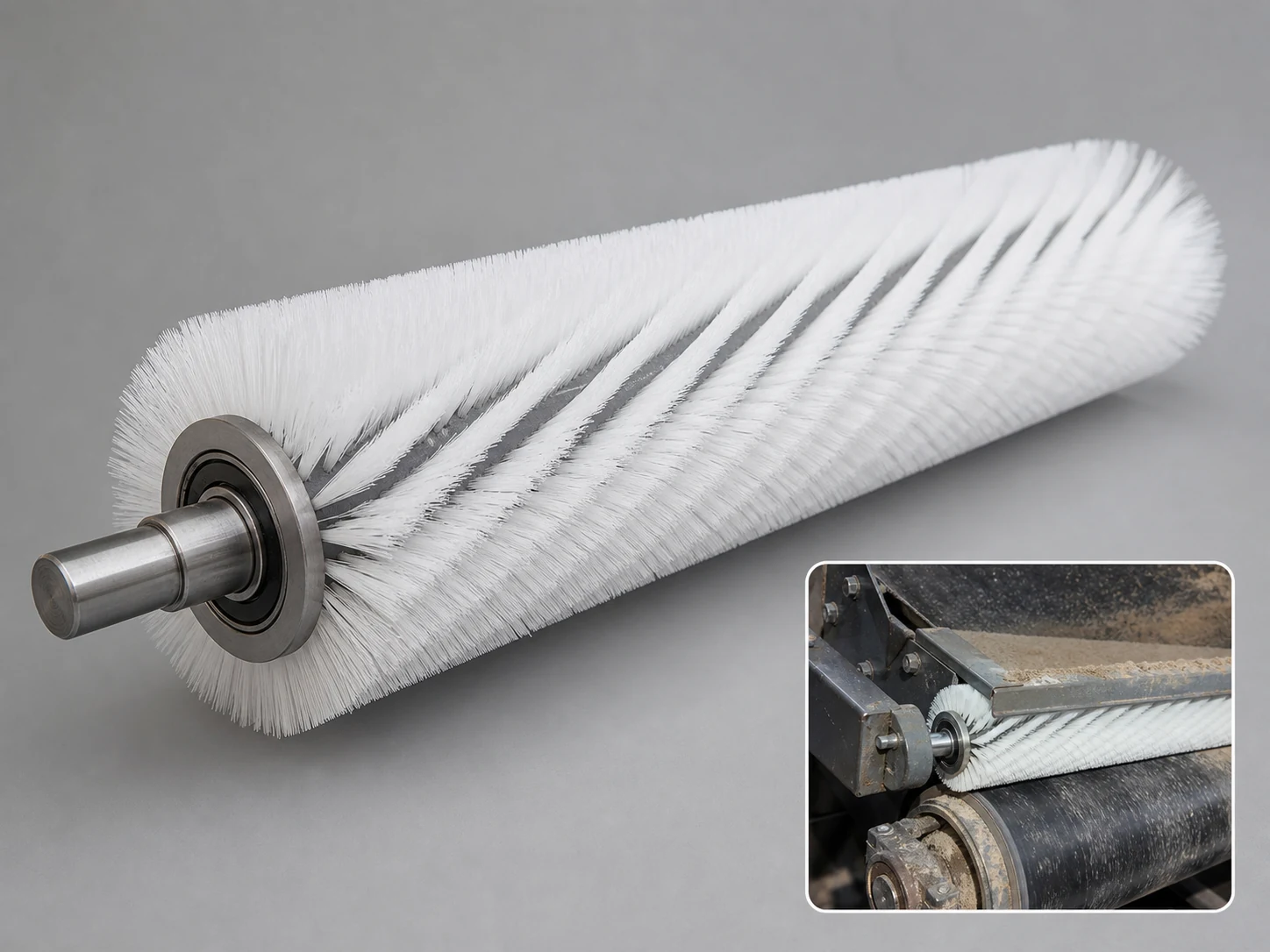
Medium brush
100 pcs
Minimum order
Worked with two hands or on a pole: chimney, gutter and pond-filter brushes, discs, cups and tank brushes.
Production lead time, once the specification is confirmed
- Up to 100 pcsWithin 7 days
- 101–5,000 pcsWithin 14 days
- 5,001–50,000 pcsWithin 21 days
- Over 50,000 pcsConfirmed with your quotation
Peak season can extend these times; the shipping date is confirmed in writing with your quotation. Sampling and shipping are quoted separately.
A Tangle-Free Brush Roll is a custom-built main brush roll for robotic vacuum cleaners, engineered to lift hair, pet hair, lint, dust, fibers, and surface crumbs without letting long fibers wind around the roller core. It combines anti-wrap filament segments, rubber or TPU wiper edges, and optional microfiber contact strips to keep the brush chamber clean and the vacuum working consistently across hard floors and low-pile carpet.
What can this brush do for you?
Interrupted Fill Geometry Keeps Hair Moving Into the Suction Path
Continuous spiral brush rows invite hair to wrap. This roller uses offset bristle blocks, chevron segments, and open clean-out grooves so long human hair and pet fur are constantly peeled, lifted, and released into the vacuum’s airflow instead of tightening around the core. The result is fewer interruptions, less manual hair removal, and more consistent floor contact over the full service interval.
Bristle and Wiper Combination Holds Contact on Hard Floors Without Excessive Drag
Nylon PA bristle rows lift dust, crumbs, and short fibers out of tile joints and floor texture. Rubber or TPU wiper blades placed between the bristle rows wipe fine film and hair off smooth flooring while limiting carpet drag. The fill ratio, trim length, and blade projection are balanced for the robot’s motor torque, so the roller agitates low-pile carpet without stalling the brush motor or draining the battery abnormally.
Built to the Original Brush Chamber, Not a Universal Fit
The roller length, working diameter, drive-end geometry, and bearing positions are matched to a specific robotic vacuum brush chamber. This preserves the original sweep width, sensor clearances, and suction inlet relationship. We can reproduce gear, D-shaft, hex, molded tab, or screw-plate interfaces from a sample, drawing, or photo set.
Anti-Wrap Geometry That Still Works When the Robot Reverses
Many robot vacuums reverse roller rotation briefly to shed hair or clear obstructions. The fill layout is designed so bristle tufts and wiper blades stay anchored during direction changes and do not fold under the core. This protects the roller and the brush-chamber end caps from jammed fibers.
Materials Selected for Moisture, Temperature, and Cleaning Chemistry
Nylon PA, rubber, TPU, and microfiber grades are chosen for the robot’s real operating conditions: warm floors, mop-related moisture, detergents, and operating temperatures from 5°C to 100°C. The roller does not soften, shed bristles, or degrade when the robot alternates between dry vacuuming and damp cleaning tasks.
What is a Tangle-Free Brush Roll?
A Tangle-Free Brush Roll is the cylindrical main brush installed inside a robotic vacuum cleaner’s brush chamber. It sits behind the robot’s suction inlet and is driven by a motor through an end coupling, usually a gear, D-shaft, hex socket, molded tab, or screw plate. As the robot moves, the roller rotates against the floor, combing debris out of flooring texture and into the suction stream.
What makes this roller tangle-free is not a single material; it is the layout. Instead of one continuous spiral of bristle filament, the fill is divided into offset blocks, chevron segments, or alternating bristle-and-blade rows. Hair that catches on one segment is released at the next open groove or cutout, where airflow can carry it away before it wraps. Rubber or TPU wiper blades add a second release point: they trap loose fiber at their tips, and the passing airflow strips it off.
The roller is normally specified around four working dimensions: the brush-chamber width, the original working diameter, the trim length of the fill, and the clearance between the roller tip circle and the chamber walls or sensors. A correctly configured roller keeps 0.5–2.0 mm clearance around housing and sensor points so it cleans to the chamber edges without scraping or triggering floor detection errors.
This is a frequent-maintenance contact component, not a heavy-duty brush for industrial debris. It is intended for daily or scheduled vacuuming of dust, hair, lint, fibers, and small crumbs. Large stones, wet plaster, adhesive residue, or heavy sand loads should be picked up with a different machine or pre-cleaned before the robot operates.
Technical Specifications
Final dimensions are matched to your robot’s brush chamber and drive coupling. The table below shows the standard range for this product.
| Parameter | Value / Options |
|---|---|
| Main roller length | 150–350 mm, cut to brush-chamber width and end-support fit |
| Main roller working diameter | 20–50 mm, matched to original roller so floor contact and suction geometry stay unchanged |
| Bristle / filament trim length | 5–30 mm, selected for floor type and desired agitation |
| Fill materials | Nylon PA bristles, rubber or TPU wiper blades, microfiber strips, or mixed fill |
| Anti-wrap layout | Segmented rows, chevron or offset bristle blocks, open clean-out grooves, alternating wiper blades |
| Rubber / TPU wiper hardness | Shore A 40–75, softer for hard floors, firmer for low-pile carpet agitation |
| Drive interface | Gear, D-shaft, hex, molded tab, or screw plate; tooth count, module, and flat dimensions matched to the gearbox |
| End caps / bearings | Molded nylon or POM supports; sealed bearing option for damp cleaning environments |
| Operating temperature | 5–100°C |
| Contact clearance | 0.5–2.0 mm from housing walls, wheel wells, cliff sensors, and suction inlet edges |
| Brush type | Custom Roller and Conveyor Brushes |
| How it is driven | Machine-driven, mounted in the equipment |
| Cleaning target | robotic vacuum model, hard-surface layout, and low-pile carpet and rug cleaning |
| Surface or part | roller, floors, chambers, edges, gears, grooves, stone, and rolls |
| Residue or debris | hair, fiber, dust, crumbs, lint, fine dust, sand, and adhesive residue |
| Mounting / connection | Gear, D-shaft, hex, molded tab, or screw plate; tooth count, module, and flat dimensions matched to the gearbox |
Where does this brush work best?
The Tangle-Free Brush Roll is specified where robot vacuums must maintain floor contact over mixed hard flooring and low-pile carpet without turning into a hair-wrapped spindle. Typical places include:
- Robotic vacuum models used in households with pets, where pet hair and human hair load is high and users expect long unattended runtimes.
- Hard-surface layouts such as tile, laminate, vinyl, hardwood, and stone, where fine dust, lint, and loose crumbs sit close to the surface and need low-noise, low-drag contact.
- Low-pile carpets and rugs where the roller must agitate fibers enough to lift embedded lint without consuming excessive motor torque.
- Mixed-floor homes and light commercial spaces where the robot crosses hard floor, carpet edge strips, and thin rugs in a single cleaning cycle.
- Aftermarket and service replacement programs that require model-specific brush rolls with the OEM drive interface and chamber fit, rather than universal trims that must be cut on site.
How do I choose the right one?
1. Start with the brush-chamber fit, not the room size
Measure the usable length between end supports, the original roller working diameter, the end-cap bore or snap detail, and the drive coupling. Provide the gear tooth count and module, or a clear photo of the D-shaft or hex end. If you are replacing a worn or wrapped roller, send the used sample itself so we can copy the exact end geometry and tip circle.
2. Match the contact mix to the floor and the hair load
- Mostly hard floors with long hair: use a lower-density nylon PA bristle fill with alternating rubber wiper blades. The blades wipe the floor, the open grooves release hair, and drag stays low.
- Hard floor plus low-pile carpet with pet hair: use a mixed fill of nylon PA bristles, segmented rubber or TPU ribs, and a microfiber strip when fine dust pickup is the priority.
- Heavy hair load on mostly hard floors: increase the depth and spacing of the clean-out grooves and reduce the continuous blade length. More segmentation means shorter fiber wrap paths.
3. Check the motor’s available torque and rotation behavior
A denser fill picks up more, but it also draws more current. If the robot’s brush motor is small or the battery capacity is fixed, specify a fill density and blade height that agitate the floor without stalling. If the robot periodically reverses the roller, the tuft anchoring and blade orientation must work in both directions.
4. Confirm the operating environment
Wet/dry robot vacuums, floor-washing hybrids, and warm operating environments require material grades that hold up under moisture, detergent, and temperatures up to 100°C. Rubber, TPU, and nylon PA versions can be selected accordingly. If the robot uses aggressive cleaning fluids, provide the chemistry before sampling.
When a different brush or method is the better choice
If the floor is high-pile carpet that loads the roller continuously, or the debris includes heavy sand, gravel, wet debris, or sticky residues, a tangle-free brush roll will not solve the problem. Use a vacuum with stronger suction, a robot designed for that debris class, a rubber-only roller on hard floors, or manual pre-cleaning for the heavy fraction. Also consider a side brush-only path if the main chamber cannot physically accept the required roller length.
Can I customize this brush?
Tangle-free brush rolls are configured around the robot’s brush chamber, its drive coupling, and the type of floor debris the robot is expected to run over. The more we know about the existing roller and the failure mode, the closer the custom sample will be to a drop-in replacement.
Project information we use to define the roller:
- Existing roller sample, brush chamber drawing, or photos showing both ends and the underside of the roller
- Roller length, working diameter, trim length, and the original material mix
- Drive-end type and dimensions: gear, D-shaft, hex, molded tab, or screw plate
- Floor types, hair and fiber load, and whether the robot runs dry, wet, or with cleaning solution
- Motor rotation direction, reverse-shed behavior, and any quiet-mode requirements
Adjustable product variables:
- Roller length, core diameter, working diameter, and trim length
- Fill materials: nylon PA bristles, rubber or TPU wiper blades, microfiber strips, and mixed ratios
- Anti-wrap layout: segment width, chevron angle, groove depth, blade spacing, and clean-out slot positions
- Drive and support geometry: gear module and tooth count, D-shaft flat orientation, hex socket, molded tab, or screw-plate end
- Core and end-support materials: aluminum or reinforced nylon core, molded nylon or POM end caps, sealed bearing options
- Color, marking, and identification: custom body color, molded marks, pad-print or laser marking, part number coding
- Packaging: bulk pack, individual bag, service-kit packing, or retail-ready sleeve
If your project requires material documentation, inspection reports, third-party testing, or certification support for the specific robot model, we can assist during the customization process.
How do you confirm a tangle-free brush roll has actually cleaned the surface?
How can I tell whether the anti-wrap layout is actually working before the roller ships?
Check the segmentation pattern on a pre-production sample: there should be visible open grooves or blade gaps at regular intervals, and no single continuous bristle row running from end to end. A qualified sample can also be run in a felt-lined test channel with long fiber; after the run, the fiber should collect in the chamber’s suction path, not tighten around the roller core. If fiber stays on the roller after normal rotation, ask for a wider groove or different blade spacing.
What should I check before installing a custom tangle-free brush roll?
Inspect the end caps and drive coupling for correct orientation. Confirm the roller length leaves the specified 0.5–2.0 mm clearance at both ends, rotate the roller by hand to check for high spots or rubbing against the chamber, and verify that the drive end engages fully with the gearbox or output shaft without forcing. Then run one complete cleaning cycle on the intended floor type and inspect the roller for new wear marks, lifted fibers, or unintended noise.
Does a tangle-free brush roll remove the need to clean the roller at all?
No. The design reduces hair and fiber wrap substantially, but fibers, threads, and very fine debris can still accumulate around the end bearings and in the clean-out grooves over long service intervals. The roller should still be inspected and wiped on the robot’s regular maintenance schedule. A tangle-free roller turns hair removal from a knife-and-scissors job into a quick wipe.
How can I tell if the custom roller is overloading the robot’s brush motor?
Compare the motor current or run time against the original roller on the same floor. If the robot returns to the dock earlier than normal, the brush motor runs hot, or the main brush warning appears without a physical jam, the fill density, blade height, or working diameter may be too aggressive. Reducing the bristle density, shortening the trim, or using a softer wiper usually brings the load back in line.
Can this roller be used in a robot vacuum that also mops?
It can, provided the material grades are specified for damp conditions. Rubber or TPU blades and nylon PA bristles handle occasional moisture well, but microfiber strips act like a sponge and hold water, so they are generally not recommended in wet-mop hybrid paths unless the roller is specified for dry pickup only. Tell us whether the robot operates wet, dry, or both, and we will remove or reposition the moisture-sensitive fill accordingly.
What is the practical lower limit for roller length with this tangle-free design?
The segmented chevron and clean-out groove layout needs enough axial space for at least two complete anti-wrap modules. Below approximately 150 mm, the available pattern space shrinks and the brush starts to behave more like a plain cylindrical roller. For small spot-cleaning robots under that size, a shorter segmented rubber-only roller or a different fill schedule is usually the more practical recommendation.
Guides that go deeper on this
Custom Manufacturing RFQ
Describe Your Application
Please share the brush dimensions, working area, residue type, material direction, quantity, and a drawing or photo for quotation.
Drawing or photo optional — it speeds things up, it does not gate the enquiry.
Custom Brush RFQ
Send Your Brush Project
Upload a drawing, product photo, or sample photo and provide the core dimensions and cleaning conditions.
“We need a brush to remove wet residue from a stainless steel conveyor, about 800mm wide. The current brush wears quickly. We can send photos.”
“We sell drinkware and need a cleaning brush to include with the product. Quantity around 5,000 pieces.”