
Custom Cleaning Brush
Vacuum Cleaner Brush Attachment
Custom vacuum cleaner brush attachment for dry debris pickup on furniture, floors, vents, and delicate surfaces.
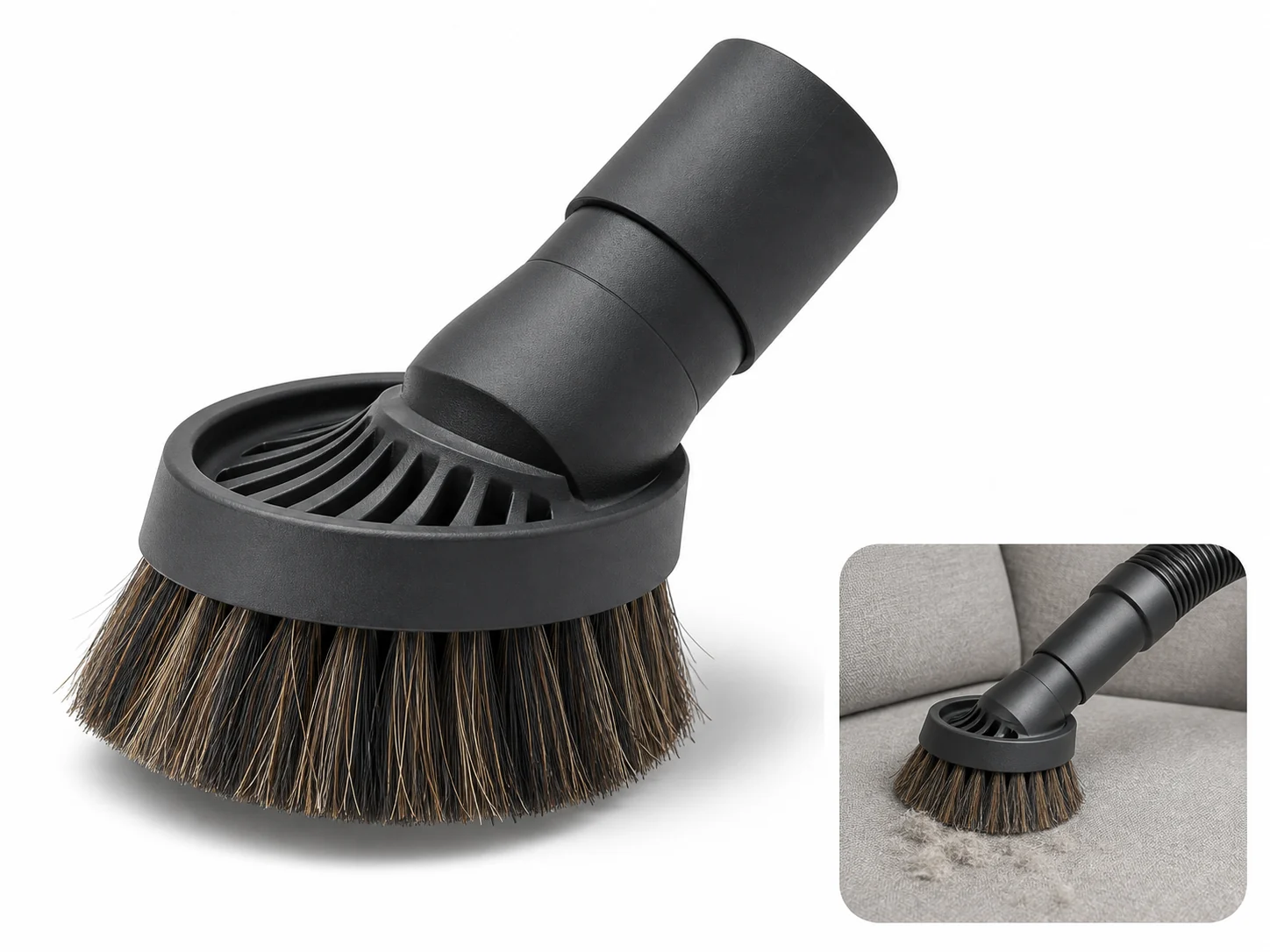
Medium brush
100 pcs
Minimum order
Worked with two hands or on a pole: chimney, gutter and pond-filter brushes, discs, cups and tank brushes.
Production lead time, once the specification is confirmed
- Up to 100 pcsWithin 7 days
- 101–5,000 pcsWithin 14 days
- 5,001–50,000 pcsWithin 21 days
- Over 50,000 pcsConfirmed with your quotation
Peak season can extend these times; the shipping date is confirmed in writing with your quotation. Sampling and shipping are quoted separately.
A custom-configured vacuum cleaner brush attachment that agitates dry dust, lint, hair, crumbs, and loose particles so the vacuum’s airflow can carry them away. Designed for furniture, upholstery, floors, shelves, vents, and delicate surfaces through a standard 32 mm or 35 mm connector.
What can this brush do for you?
Lifts Debris the Airflow Alone Leaves Behind
Suction pulls loose surface dust, but embedded lint, hair, and fine particles often stay locked in fabric weave, carpet fibers, or textured plastic. The nylon PA or PBT bristles on this attachment break that surface bond while the vacuum runs, so the debris releases and moves into the airstream instead of being pressed deeper.
Cleans Upholstery, Screens, and Finished Surfaces Without Scraping
The filament tips and head geometry are selected for controlled, non-scratch contact. The working face maintains a consistent 0.5–2.0 mm clearance from housings, sensors, vents, and surrounding trim, which protects both the surface being cleaned and the vacuum attachment itself from rubbing or impact wear.
Plugs Into the Vacuum Equipment You Already Run
A 32 mm or 35 mm connector diameter covers the most common vacuum hose and wand ends. Swapping the brush head takes seconds, so one attachment can move between uprights, canisters, shop vacuums, or central vacuum systems that share the same interface size.
Handles Dry, Loose, and Fibrous Debris Without Tangling or Clogging
Nylon PA and PBT filaments resist matting and tangling when they pick up hair, lint, and fibrous fluff. Rubber fill options are available for delicate or high-texture surfaces where softer, more compliant contact improves pickup. The open brush geometry lets airflow pass through evenly, so the vacuum keeps its suction instead of choking on a clogged head.
One Attachment Family for Floors, Furniture, Shelves, and Vents
Fixed, retractable, turbo, rotating, floor, upholstery, and dusting head styles let you match agitation type and bristle density to the surface. A wide floor head clears open areas quickly, while a narrow dusting head reaches between electronics, slats, and cabinet tops without pulling loose cables or shifting objects.
What is a Vacuum Cleaner Brush Attachment?
A vacuum cleaner brush attachment is a brush head that connects to a vacuum hose or wand and combines mechanical bristle agitation with vacuum airflow. It is designed for dry cleaning only: dust, lint, hair, crumbs, and loose particles. As the user moves the head over a surface, the bristles dislodge material that suction alone would miss, and the vacuum carries the loosened debris through the brush into the machine.
The attachment’s value depends on four factors: the connector diameter and fit, the bristle material and stiffness, the head style and size, and the clearance between the brush face and the surface or surrounding components. A properly matched attachment improves pickup efficiency, reduces the number of passes needed, and protects both the surface and the vacuum from damage.
This is not a wet-cleaning tool, a deep-extraction carpet brush, or a substitute for a powered beater bar in a motorized vacuum head. It is a precision brush interface for dry debris pickup on accessible surfaces.
Technical Specifications
The values below are standard project ranges. We adjust width, depth, connector size, bristle material, and head style to match the specific vacuum model, surface, and debris.
| Parameter | Value / Options |
|---|---|
| Head width | 120–320 mm, selected for the surface area and vacuum airflow |
| Head depth | 50–180 mm, matched to brush footprint and reach |
| Connector diameter | 32 mm or 35 mm, standard vacuum hose/wand interface |
| Overall length | 150–400 mm, from connector base to working face |
| Roller diameter | 20–60 mm, for rotating or turbo brush configurations |
| Head style | Fixed, retractable, turbo, rotating, floor, upholstery, or dusting |
| Contact clearance | 0.5–2.0 mm from housings, sensors, and surrounding surfaces |
| Operating temperature | 5–100°C, covers normal indoor and light commercial use |
| Fill materials | Nylon PA, PBT, rubber, or mixed configurations |
| Brush type | Custom Roller and Conveyor Brushes |
| How it is driven | Machine-driven, mounted in the equipment |
| Cleaning target | furniture and upholstery, hard floor and edge line, and electronic cleaning |
| Surface or part | floors, connectors, vents, housings, edges, grilles, plastic, and screens |
| Residue or debris | hair, lint, dust, particles, loose particles, crumbs, dry debris, and loose dust |
| Mounting / connection | 32 mm or 35 mm, standard vacuum hose/wand interface |
Where does this brush work best?
- Furniture and upholstery: sofa cushions, armrests, chair backs, and fabric seams where lint and pet hair settle into the weave. Soft nylon or PBT filaments with a medium density head pull debris without fraying threads.
- Hard floors and edge lines: wood, laminate, tile, and vinyl where the brush follows baseboards and transition strips. A wider head with short, stiff bristles works on open areas; a narrower head reaches edges.
- Shelves, cabinets, and electronics: tops of bookcases, stereo equipment, computer towers, and studio gear where loose dust accumulates. A dusting-style head with soft, non-conductive filaments prevents scratching and static buildup.
- Vents, grilles, and registers: HVAC louvers, speaker grilles, appliance intake screens, and machine cabinets. A narrow head with longer bristles reaches between slats and removes accumulated lint without bending metal fins.
- Delicate or textured surfaces: lamp shades, window blinds, car dashboards, and molded plastic housings. Rubber or very soft nylon fills conform to contours and lift dust without leaving marks.
How do I choose the right one?
Start with the connector, then work outward to the surface and debris.
Confirm the connector size first. Measure the inner diameter of the vacuum hose or wand opening where the brush attaches. Most equipment accepts 32 mm or 35 mm fittings, but some brands use a taper or clip lock. A mismatched connector will either fall off or fail to seat, destroying suction at the joint. If your vacuum has a proprietary end, tell us the make and model and we can match the geometry.
Match the head style to the cleaning motion. A fixed head is the simplest and most durable for direct, push-pull passes. A retractable head lets you pull the bristles back to expose a crevice tool or reduce contact when moving around fragile obstacles. A turbo or rotating head uses airflow or auxiliary drive to spin a roller brush, which is useful for embedded pet hair in carpets or high-traffic upholstery. A floor head covers area with wide bristle coverage, while an upholstery head concentrates bristles for fabric contact.
Choose filament material and stiffness by surface sensitivity and residue type. Nylon PA offers good abrasion resistance and spring recovery for general dry debris. PBT holds its shape well when exposed to higher temperatures or repeated flexing, and it resists moisture absorption, which helps in humid environments or when the brush is frequently cleaned. Rubber fills provide a soft, non-scratch grip on polished or coated surfaces. For delicate finishes, request a softer filament or rounded bristle tips.
Set the contact clearance carefully if the brush runs near sensors or moving parts. The working face should stay 0.5–2.0 mm away from housings, detection sensors, and other attached components. Too little clearance risks interference and rubbing; too much clearance reduces bristle contact and leaves debris on the surface. Provide a drawing or sample of the vacuum head area if clearance is critical.
Know when a different tool is better. This brush attachment is built for dry, loose particles. Do not use it for wet spills, caked-on sludge, adhesive residue, or heavy grease, which require a wet pickup tool, a scrub brush with a cleaning solution, or a specialized extractor. If the vacuum itself has very low airflow, a brush with aggressive agitation will not help much because there is not enough suction to carry the debris away. In that case, fix the vacuum first or choose a powered brush head with its own motor.
Can I customize this brush?
Yes. The attachment is built to your vacuum, surface, and debris requirements. To configure a custom brush, we need the vacuum make and model, hose or wand inner diameter, the surfaces you will clean, the primary debris type, and any clearance constraints around the brush mounting area. Photos or drawings of the mounting point speed up the design.
We can adjust:
- Head geometry — width, depth, overall length, working angle, and footprint shape (rectangular, oval, angled, or custom).
- Connector interface — 32 mm, 35 mm, tapered, stepped, clip-lock, or custom-molded end to match the vacuum.
- Head style — fixed, retractable, turbo, rotating, floor, upholstery, dusting, or a combination for multi-purpose use.
- Filament material and layout — nylon PA, PBT, rubber, mixed tufts, stiffness level, bristle length, tip shape, and density pattern.
- Roller configuration — roller diameter, bearing or bushing type, drive interface for powered heads, and bristle strip mounting.
- Clearance and interference control — specific standoff height, side shields, or non-contact zones around sensors and moving parts.
- Color, marking, and packaging — custom color, molded-in logo, pad print, laser marking, or identification coding; bulk, individual bag, or retail-ready packaging.
If your project requires material declarations, inspection reports, or third-party testing support, we can assist with those requirements during the customization process.
How is a vacuum cleaner brush attachment mounted, and how long does it last?
How do I verify the 32 mm or 35 mm connector is correct for my vacuum?
Measure the inner diameter of the hose end or wand opening where the brush attaches. If it falls between 31 mm and 33 mm, use a 32 mm connector; between 34 mm and 36 mm, use a 35 mm connector. If the opening has a taper, measure at the point where the connector would seat. Send that measurement and a photo of the connection area, and we will confirm the fit.
Can I use this brush attachment for wet pickup or damp dust?
No. This attachment is configured for dry debris only. Wet pickup requires a waterproof brush body, drainage channels, and often different filament materials. Moisture can also damage the vacuum if the attachment is not designed for wet use. Keep the brush on dry surfaces.
What is the best way to remove hair and lint from the bristles after cleaning?
Pull the debris out by hand or use a comb with wide teeth to lift tangled hair from the bristle rows. For rubber fills, wipe with a damp cloth and let the brush dry completely before reattaching. Do not use solvents or heat to clean the bristles, as that can weaken nylon PA or PBT and change the filament shape.
How do I know when the brush attachment needs replacement?
Inspect the bristles regularly. Replace the brush when the filament tips are curled, flattened, or worn more than halfway down, when tufts begin pulling out of the base, or when the head no longer maintains the original clearance from the surface. A worn brush reduces agitation and forces you to make more passes, which wastes vacuum battery or power.
Will this brush work on a cordless stick vacuum or robot vacuum?
Only if the connector diameter and mounting style match the vacuum’s existing tool interface. Most cordless sticks accept 32 mm or 35 mm accessories, but some use a proprietary snap. Robot vacuums generally do not accept external brush attachments because they rely on their internal roller brush and exhaust path. Confirm compatibility before ordering.
Does the brush attachment improve suction on its own?
No. The brush increases pickup efficiency by agitating debris, but it cannot increase the vacuum’s airflow or motor power. If the vacuum has weak suction, the brush will still miss debris because the airflow is too low to carry it. Check the vacuum’s filter, bag, and hose for blockages before blaming the brush.
Guides that go deeper on this
Vacuum Brush Attachment vs Standard: Appliance Coils
Read this guideGuideVacuum Cleaner Brush Attachment: Specs for Home Kits
Read this guideGuideAbrasive Nylon Grit and Filament Selection
Read this guideGuideBrush Speed, Engagement, and Heat
Read this guideGuideCombining Brushes with Air, Vacuum, Spray, and Scrapers
Read this guideCustom Manufacturing RFQ
Describe Your Application
To prepare the correct quotation, provide the dimensions, cleaning task, residue, material, mounting details, quantity, and a drawing or photo.
Drawing or photo optional — it speeds things up, it does not gate the enquiry.
Custom Brush RFQ
Send Your Brush Project
Upload a drawing, product photo, or sample photo and provide the core dimensions and cleaning conditions.
“We need a brush to remove wet residue from a stainless steel conveyor, about 800mm wide. The current brush wears quickly. We can send photos.”
“We sell drinkware and need a cleaning brush to include with the product. Quantity around 5,000 pieces.”