
Custom Cleaning Brush
Cup & Mug Cleaning Brush
Custom cup and mug cleaning brushes with nylon, boar, or PBT fill. 30–120 mm heads, tufted ends, and hand, sink, or machine mounting for drinkware.
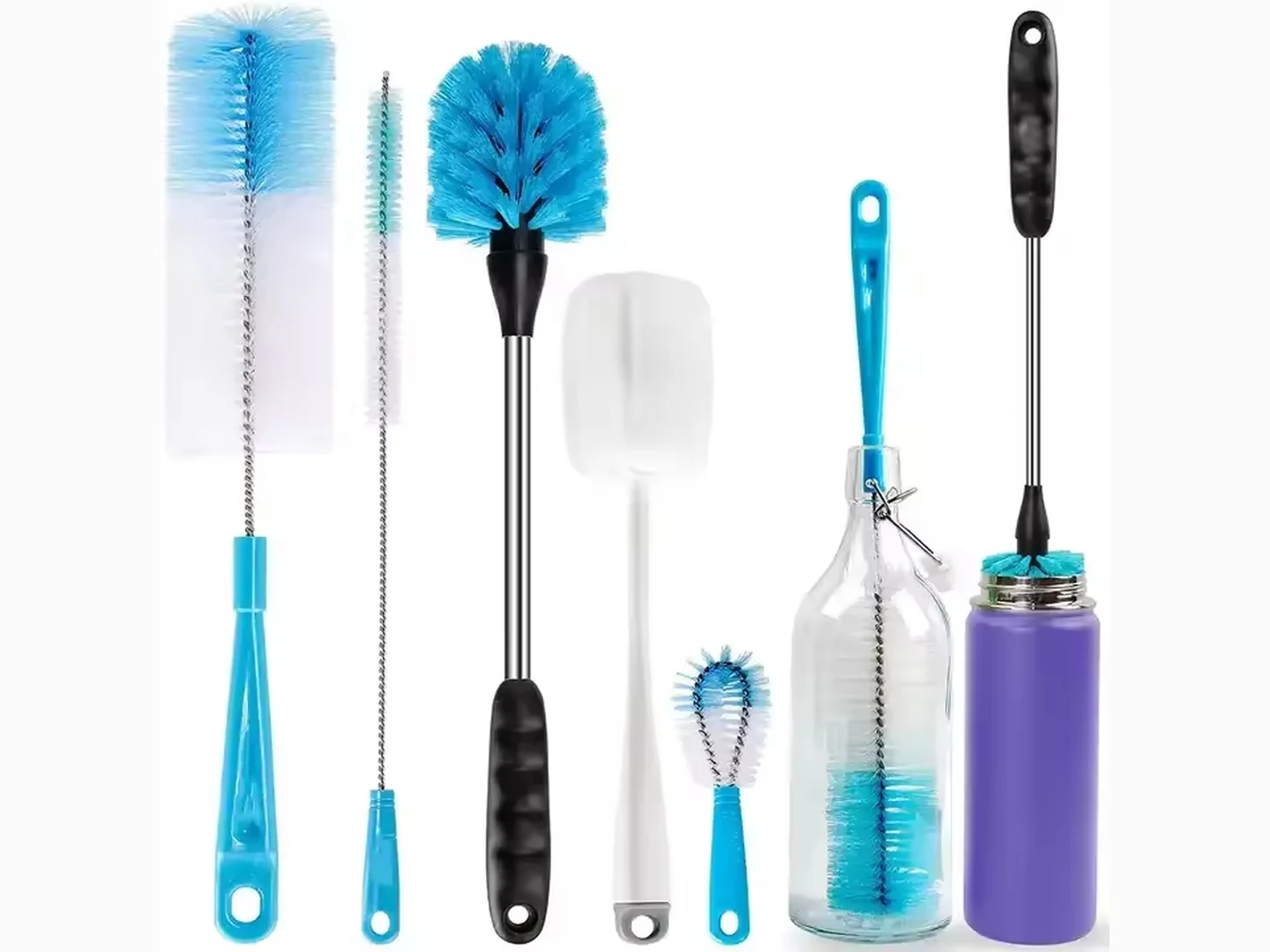
Small brush
500 pcs
Minimum order
Held in one hand: tube, bottle, detail and swab brushes — including long-handled ones with a small head.
Production lead time, once the specification is confirmed
- Up to 500 pcsWithin 7 days
- 501–50,000 pcsWithin 14 days
- Over 50,000 pcsWithin 21 days
Peak season can extend these times; the shipping date is confirmed in writing with your quotation. Sampling and shipping are quoted separately.
A hand-guided cup and mug cleaning brush built around a cylindrical bristle head with a tufted end, sized to scrub the full interior wall, bottom corner, rim, and lid threads of drinkware in one push-twist-pull stroke. Nylon PA, boar bristle, and PBT fill options cover everything from daily coffee mugs to high-volume commercial dish lines.
What can this brush do for you?
One stroke scrubs the entire inner wall
Tufts radiate from a round core, so every diameter of the cup is contacted at once. As the operator pushes, twists, and pulls the head through the mug, the bristle tips stay flexed against the sidewall. A flat cloth or sponge has to be repositioned several times to cover the same surface; a round cup brush does it in one motion and leaves fewer missed bands near the rim or base.
The forward tuft reaches the bottom corner
Most mugs have a sharp radius where the floor meets the sidewall. Radial side bristles skip that line, and residue collects there first. The dense end fill bends into that corner and removes coffee film, tea staining, powder, and settled particles before they build into a hard ring.
Bristle material changes what the brush can safely contact
Nylon PA fill is the workhorse for daily drinkware: it stays stiff in hot water, dries quickly, and scrubs soft beverage film without scratching stainless, glass, or standard plastic. Boar bristle is the softer, absorbent option for glazed porcelain, painted mugs, and cups with printed logos. PBT fill holds its shape longer in detergent-heavy commercial sinks and gives operators more tip pressure for heavy residue. Selecting the right fill is a surface decision, not just a price decision.
A longer handle keeps hands out of the cup
Tall travel tumblers, commuter mugs, and tapered tea cups have rims that get in the way of short scrub brushes. A handle or stem matched to the cup depth lets the operator scrub the bottom without forcing knuckles against the lip or dipping hands into hot wash water.
Threads and lid details can use the same tool
When the mug or tumbler has a screw-on lid, a short section of stiffer or shorter fill near the top of the head can scrub rim threads, spout openings, and valve recesses without switching to a second brush. The geometry is specified per lid, so one motion cleans the cup body and the parts that touch the mouth.
What is a Cup & Mug Cleaning Brush?
A cup and mug cleaning brush is a hand-guided drinkware brush with a round or slightly tapered bristle head mounted to a grip, stem, or fixed base. Fill tufts are inserted into the core radially and forward from the tip; the head diameter is chosen so the tuft tips deflect against the cup wall while the brush still rotates with light hand pressure.
In use, the head enters the cup mouth, travels through the straight-wall or tapered zone, and presses its end tuft into the bottom transition. A push-twist-pull motion creates the scrubbing action. Radial contact removes liquid film, odor deposits, powder, and loose particles; it does not cut hard scale, and it is not designed to replace chemical soaking or descaling.
The same tool can be supplied as a hand-held brush, a sink-base or suction-mounted brush for repeat-position cleaning, or with a threaded shank for a rotary holder. This is a polymer and natural-filament cleaning brush for drinkware. It should not be confused with a wire cup brush for power tools or an angle-grinder attachment; those use metal abrasive fill for surface preparation, not cup washing.
Technical Specifications
The table shows the standard configurable range. All key dimensions are set to the cup, not fixed at the widest or longest value.
| Parameter | Value / Options |
|---|---|
| Head diameter | 30–120 mm free diameter, selected to compress at the narrowest cup opening |
| Working section height | 40–180 mm, matched to the straight-wall and taper zone |
| Overall length | 150–450 mm, depending on handle, stem, or mount |
| Filament materials | Nylon PA, boar bristle, PBT, or blended fill |
| Filament thickness | 0.10–1.50 mm; finer filament for smooth film, heavier filament for particles |
| Filament stiffness | Soft, medium, or firm, set by material, diameter, and trim length |
| Base contact | Forward tufted end, radial bristle wrap, silicone fin, or sponge pad |
| Mounting | Hand grip, sink base, suction base, threaded shank, or machine holder |
| Core / stem | Molded PP, stainless steel, or sealed coated wire; selected for water, detergent, and sanitizer exposure |
| Fill pattern | Spiral, full-radial, or zone-density tufting for different residue loads |
| Brush type | Custom Bottle & Container Brushes |
| How it is driven | Hand-guided |
| Cleaning target | coffee bar and café espresso cup, travel tumbler and commuter mug, and catering, hotel and promotional drinkware cleaning |
| Surface or part | thread, walls, rims, plastic, corners, bars, pads, fins, and vessels |
| Residue or debris | coffee, particles, liquid film, scale, glaze, powder, hard scale, loose particles, and beverage film |
| Mounting / connection | Hand grip, sink base, suction base, threaded shank, or machine holder |
Where does this brush work best?
- Coffee bars, commissaries, and shared office kitchens — fixed sink-base or suction-mounted cup brushes for fast, repeat cleaning of mugs between uses, without operators reaching into deep sinks.
- Travel tumblers and commuter mugs — tall, narrow interiors with screw threads at the lip are matched with a longer working section and a thread-cleaning top zone.
- Tea service and glazed porcelain mugs — boar bristle fill cleans stained interiors and printed exteriors without the tip hardness of stiff nylon on delicate glaze.
- Reusable promotional drinkware and stadium cups — custom handle colors, molded logos, and retail packaging make the brush part of the branded cup program.
- Plastic training cups, measuring cups, and hydration mugs — soft or silicone-contact options remove film from plastic interiors without leaving visible scratch marks.
How do I choose the right one?
Start with the cup’s narrowest opening, not its capacity
Measure the inside mouth diameter and the bottom diameter with calipers. Choose a free head diameter that compresses slightly at the narrowest point and still rotates with light hand pressure. If the brush cannot be turned without forcing it, the head is too large. If the handle rattles back and forth and the side bristles stay straight, it is too small and will leave uncleaned bands.
Match the working section to the cup depth and taper
The brush should reach the base without the handle or mounting collar striking the rim. Tapered cups often need a reduced-diameter lower zone or a rounded tip so contact remains consistent from mouth to floor. Deep tumblers need a longer working section, not just a longer handle; unsupported length reduces control.
Choose the filament for the surface and the residue
- Nylon PA — durable in hot water, dries quickly, removes daily coffee, tea, and protein film from stainless, glass, and standard plastic. Default for most program buyers.
- Boar bristle — softer and absorbent; use on glazed porcelain, painted logos, and thin glass where tip pressure and scratch risk must stay low.
- PBT — stiffer and more chemical-tolerant; use in commercial dish pits, sanitizer immersion, and heavy beverage residue where nylon softens.
- Blended fill — combines cost, absorbency, and stiffness when a single material cannot cover the residue range.
Filament thickness works with the material: 0.10–0.30 mm fills suit smooth liquid film, while 0.50–1.50 mm tips give more bite on sticking particles and dried-on beverage solids.
Select the base contact for the bottom corner
A forward tufted end is the standard choice for cups with a defined floor-to-wall radius. A silicone fin or sponge pad may be better for thin plastic bases or irregular bottom shapes. The radial bristle wrap works when the residue sits on the sidewall and the bottom is mostly flat and accessible.
Choose mounting by workflow
- Hand grip — operator-held, standard, and versatile for mixed cup sizes.
- Sink base or suction base — fixed-position scrubbing in a coffee bar or restaurant where the same mug size repeats all day.
- Threaded shank or machine holder — rotary or automated cleaning lines where the brush is driven, not hand-turned.
When this brush is not the right tool
If the cup has hardened mineral scale, burned-on sugar, or deep staining, a polymer cup brush will not cut through it. Soak with the appropriate descaler and use a stainless steel or abrasive brush only after testing on the substrate. For reusable bottles with a neck narrower than about 25 mm, a straight bottle brush or straw brush reaches the body more effectively. For applications where cross-contamination must be eliminated, choose a disposable brush or swab instead of a reusable cup brush.
Can I customize this brush?
Every geometry on this brush can be set to the mug or cup family you are cleaning. To define the configuration, provide the cup mouth ID, bottom ID, interior depth, bottom-corner radius, lid thread diameter, residue type, wash temperature, detergent or sanitizer chemistry, handle or mount preference, and expected daily use. A sample cup or drawing shortens the sampling loop.
- Head geometry — diameter, working height, straight or tapered profile, rounded tip, or multi-zone form for a cup plus lid thread.
- Fill material and pattern — nylon PA, boar bristle, PBT, blend, filament thickness, trim length, density, spiral or zone tufting.
- Base contact — forward tufted end, radial wrap, silicone fin, or sponge pad.
- Stem and handle — length, bend angle, grip diameter, ergonomic shape, hanging hook, or stem material in PP, stainless steel, or sealed coated wire.
- Mounting — hand grip, sink base, suction base, threaded shank, or machine holder for rotary cleaning.
- Color and marking — custom fill or handle colors, molded logo, pad print, laser marking, or project identification codes.
- Packaging — bulk carton, individual polybag, retail sleeve, hang tab, or private-label kit packaging.
If the project requires material declarations, inspection reports, or third-party testing support tied to the customer’s wash-down, food-area, or quality program, those requirements can be handled during customization.
When is a cup & mug cleaning brush worn out rather than just dirty?
How do I tell whether the brush head is the right diameter for my mug?
Slide the brush into a clean, dry mug and turn it once by hand. The side tufts should bend against the wall and spring back when removed. If the brush feels like it is jamming or the handle flexes, the head is too large. If the tufts never bend and the brush wanders, it is too small. Ordering a sample against the exact mug is the fastest way to lock the fit.
Will nylon or boar fill damage a printed logo inside the cup?
Nylon tips can remove soft printed ink if the print is fragile or already lifting. For printed or painted interiors, use boar bristle or a reduced-stiffness nylon fill and test on one printed cup first. No bristle material can guarantee preservation of a poorly bonded decoration.
What should I do with the cup before brushing?
Empty loose liquid and solids, remove lids, gaskets, straws, and any removable valves, and rinse away large particles. Brush the cup body first with the correct head and handle combination, then clean removable parts separately. If residue is dried or sticky, a short warm-water soak before brushing prevents the bristles from carrying solids around the sidewall.
How can I verify the cup is actually clean after brushing?
Hold the cup under good light and wipe the bottom corner and rim thread with a clean white cloth or cotton swab. Any color, film, or odor on the cloth says the brush is not making complete contact at that point — normally a sign that the head diameter, working length, or end fill needs adjustment.
Does brushing replace soaking or sanitizing?
No. Brushing removes attached film and loosens residue, but the loosened material still has to be rinsed away. If your process also requires descaling, sanitizing, or sterilization, those steps stay separate. The brush is one step in the wash sequence, not a substitute for the full sequence.
What should operators check during a routine inspection?
Check that the bristles still stand out from the core, the end tuft still reaches the bottom without being flattened, the handle or stem has no cracks or loose joints, and any suction base still holds firmly. Replace the brush when the fill is splayed permanently, the tuft tips have curled, or the head no longer recovers its shape after flexing.
Guides that go deeper on this
Nylon Cup Brush vs Standard Brushes in Kitchens
Read this guideGuideNylon Cup Brush: Material and Size for Narrow Mouth Bottles
Read this guideGuideNylon Cup Brush: Specs for Glass Cups
Read this guideGuideNylon Cup Brushes: Polishing or Cleaning, and What Fill?
Read this guideGuideSponge Cup Brushes: Cleaning, Absorbing or Polishing?
Read this guideCustom Manufacturing RFQ
Describe Your Application
Send the key measurements, cleaning requirement, residue, material direction, mounting method, quantity, and drawing or photo.
Drawing or photo optional — it speeds things up, it does not gate the enquiry.
Custom Brush RFQ
Send Your Brush Project
Upload a drawing, product photo, or sample photo and provide the core dimensions and cleaning conditions.
“We need a brush to remove wet residue from a stainless steel conveyor, about 800mm wide. The current brush wears quickly. We can send photos.”
“We sell drinkware and need a cleaning brush to include with the product. Quantity around 5,000 pieces.”