
Custom Cleaning Brush
Double End Brass Steel Nylon Bristle Metal Cleaning Brushes
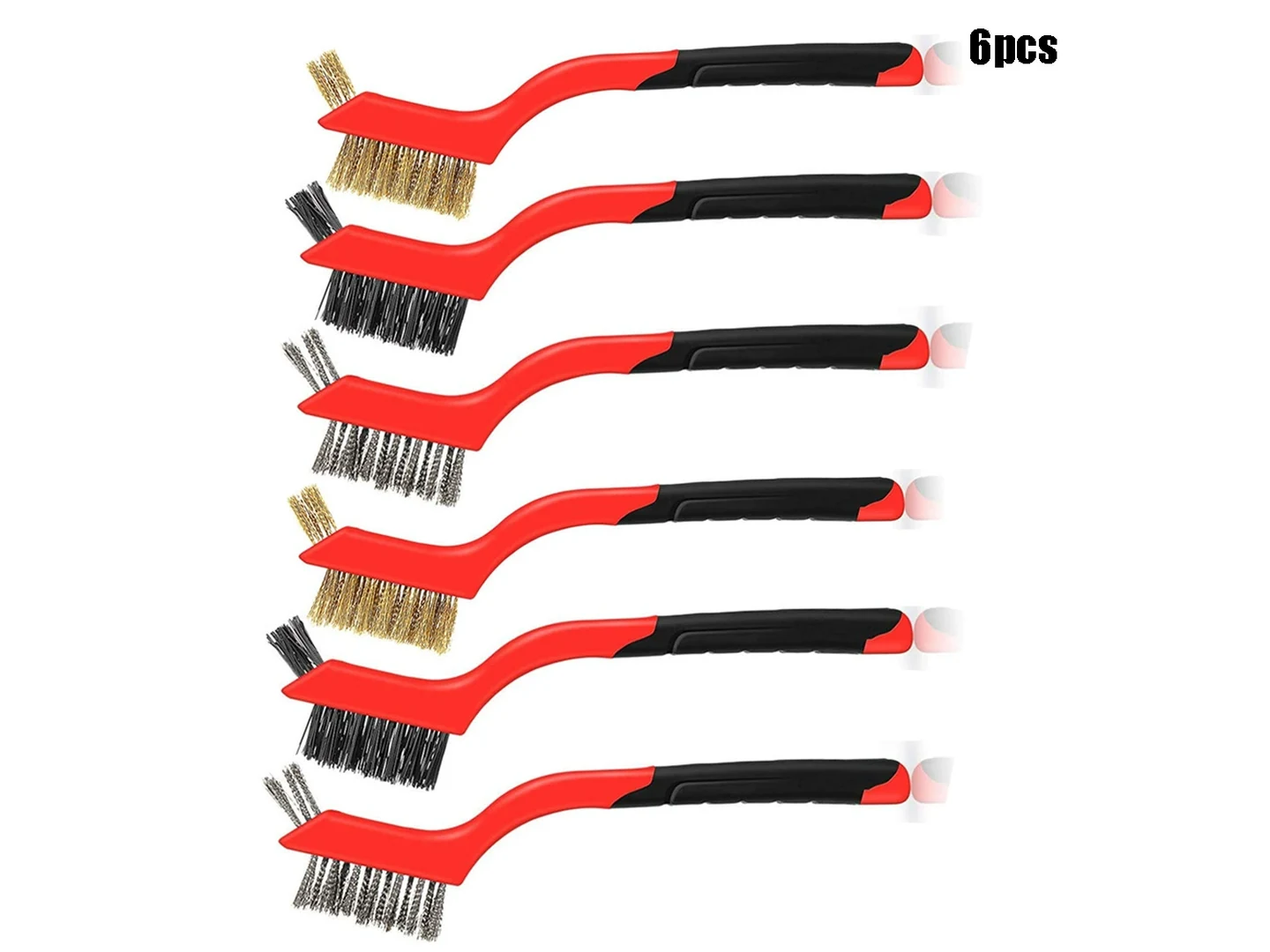
Two-end hand cleaning brushes with brass, steel, or nylon bristles for rust, paint, and weld slag removal in tight metal areas.
Small brush
500 pcs
Minimum order
Held in one hand: tube, bottle, detail and swab brushes — including long-handled ones with a small head.
Production lead time, once the specification is confirmed
- Up to 500 pcsWithin 7 days
- 501–50,000 pcsWithin 14 days
- Over 50,000 pcsWithin 21 days
Peak season can extend these times; the shipping date is confirmed in writing with your quotation. Sampling and shipping are quoted separately.
A two-ended hand-cleaning brush with independent brass wire, steel wire, or nylon bristle ends for removing rust, paint, welding slag, and surface contamination from metal parts, threads, and hard-to-reach areas. Flip the tool to switch from aggressive metal removal to softer surface finishing without reaching for a second brush.
What can this brush do for you?
Two Working Ends Keep the Job Moving
Each end can be filled with a different material — steel wire on one side for heavy rust or paint, brass or nylon on the other for finishing or lighter contamination. The operator flips the brush instead of stopping to change tools, which keeps manual surface prep moving in maintenance cells, gunsmithing benches, and tool rooms.
Material-Matched Contact for Different Residues
Steel wire removes rust, mill scale, paint, and welding slag; brass wire gives a softer metal contact that cleans steel and ferrous parts with lower risk of scratching; nylon PA bristles loosen grease, carbon, and loose debris without metal-metal contact. Because both ends are independently selected, one brush can cover a full two-step cleaning sequence.
Reach Threads, Grooves, and Tight Cavities
Narrow working ends and short bristle trims allow the brush to enter threaded holes, recesses, keyways, and small machine part features where a single-ended brush or rag cannot apply controlled contact. Working end widths and bristle lengths are matched to the access space before production.
Controlled Pressure with a Stable Two-End Handle
The double-end design balances the tool in the hand and allows a firm grip when applying directional pressure. Operators can push or pull through the work area with control, which is especially useful when working inside a bore or along a threaded surface.
What is a Double End Brass Steel Nylon Bristle Metal Cleaning Brush?
A double end brass steel nylon bristle metal cleaning brush is a manual surface-preparation tool built around a single handle with a working end at each side. Each end carries a bristle or wire fill — brass, steel, or nylon — anchored in a ferrule or twisted-wire core. The two ends can carry the same material or different materials, depending on the cleaning sequence the operator needs.
This is a hand-guided brush, not a power brush. It is used with push, pull, and short rotating strokes to remove surface-attached contamination from metal parts, castings, fasteners, tooling, and small mechanical assemblies. The cleaning action comes from the bristle tips contacting the surface; the double end simply gives the operator two contact options in one tool.
The brush is usually chosen when work areas are too small or too irregular for a standard single-ended hand brush, or when a two-step process — aggressive removal followed by surface cleanup — would otherwise require two separate tools. It is not intended for large open surfaces where a wide block brush or powered brush would cover more area faster.
Technical Specifications
The table below shows typical production ranges. Dimensions, fill materials, and end configurations are adjusted to the cleaning target and access space.
| Parameter | Value / Options |
|---|---|
| Overall length | 150–450 mm, selected to reach the work area while keeping the handle controllable |
| Working length per end | 10–120 mm, adjusted to the depth of the recess or contact surface |
| Working end width | 3–100 mm, matched to the opening, groove, or surface width |
| Bristle trim length | 8–40 mm, shorter for tight threads and rigid contact, longer for deeper recesses |
| Filament diameter | 0.10–0.80 mm; steel and brass wire at the low end for fine access, nylon at the high end for soft scrubbing |
| Handle diameter | 8–35 mm, selected for grip and access clearance |
| Fill materials | Brass wire, carbon steel wire, stainless steel wire, Nylon PA |
| Handle material | Polypropylene, aluminum, stainless steel, or project-specified material |
| Ferrule / anchor | Brass-plated steel, stainless steel, or twisted-wire core depending on fill type |
| Use temperature | Up to 100°C for nylon-filled ends; metal wire ends tolerate higher temperatures but the handle grade sets the practical limit |
| Brush type | Custom Handheld Detail Brushes |
| How it is driven | Hand-guided |
| Cleaning target | metal surface prep and rust removal, welding cleanup, and firearm and small-mechanism maintenance cleaning |
| Surface or part | metal, thread, recesses, bores, holes, tooling, machined surfaces, and metal surfaces |
| Residue or debris | rust, paint, surface contamination, carbon, grease, scale, chips, and spatter |
| Mounting / connection | Fixed |
If your application involves solvents, acids, steam cleaning, or outdoor exposure, specify the working conditions so the handle, ferrule, and wire grade can be selected accordingly.
Where does this brush work best?
- Metal surface prep and rust removal — small steel parts, fasteners, threaded holes, and machined surfaces where rust, mill scale, or light paint must be removed before coating, assembly, or inspection.
- Welding cleanup — removal of spatter, slag, and heat tint around weld seams, joints, and inside confined areas that a power brush cannot safely reach.
- Firearm and small-mechanism maintenance — actions, chambers, bolt recesses, guide rails, and hard-to-reach mechanism surfaces where brass or nylon ends clean without removing base material. Steel ends are reserved for heavily fouled tooling or fixtures only.
- Automotive, marine, and equipment maintenance — threads, gasket surfaces, small bores, and corrosion-prone hardware where manual contact is safer than powered wire brushing.
- Tool room and machining support — cleaning collets, fixtures, jigs, and small dies where chips, grease, and light rust interfere with setup accuracy.
How do I choose the right one?
Select the two end materials first, then size the geometry to the access space.
Select the bristle material by surface and residue
- Steel wire — choose for rust, paint, heavy carbon, and welding slag on ferrous parts where the surface can tolerate aggressive contact. Carbon steel is the standard choice; stainless steel wire is available when moisture or chemical exposure would corrode carbon wire.
- Brass wire — choose for cleaning steel, iron, and harder non-ferrous parts when you want lower scratch risk and metal contact without embedded bristle marks. Brass is softer than steel and often preferred on threads, machined surfaces, and firearm components.
- Nylon PA — choose for degreasing, light carbon removal, and cleaning coated, plated, or polished surfaces. Nylon works wet or dry and will not create metal-metal contact.
Decide what each end should do
| End A | End B | Typical sequence |
|---|---|---|
| Steel wire | Brass wire | Remove heavy rust/paint, then clean and brighten exposed steel |
| Steel wire | Nylon PA | Remove heavy deposits, then degrease and remove loose debris |
| Brass wire | Nylon PA | Clean and protect sensitive metal surfaces in one tool |
| Nylon PA | Nylon PA | Degreasing and light cleaning on plated, coated, or polished parts |
Both ends can also carry the same material when the job requires a spare working end or two slightly different widths.
Size the ends to the actual space
Measure the narrowest opening, thread pitch, groove width, or recess depth before choosing the end width and bristle trim. The working end should enter without forcing, and the trim length should be long enough to contact the surface but short enough to keep the bristles aligned under pressure. A too-wide end will bind; a too-long trim will fold over and stop cleaning at the bottom of the recess.
Match the handle and overall length to the work position
Select an overall length that lets the operator reach the work area while keeping a firm two-hand or one-hand grip. Longer overall lengths help in deep housings, but too much length reduces control on small, precise surfaces. Handle diameter and shape are normally chosen for gloved-hand use in the actual work environment.
When another brush or method is a better fit
Use a powered wheel, cup, or end brush if the surface is open and large enough for motorized contact. Use a twisted-in-wire tube brush if the access is a long, narrow pipe or bore where a fixed ferrule end cannot follow the passage. Use a chemical stripper or abrasive blasting for thick multi-layer coatings or deeply corroded surfaces that extend below the original material line. The double-end hand brush is most productive on small, irregular, or precision areas where control matters more than speed.
Can I customize this brush?
Yes. The double-end design is almost always configured for the job. The most useful information to provide is the surface material, the specific residue or contamination, the smallest access dimension, the working temperature and chemical exposure, and the required overall length. A drawing, photo, or sample part quickly resolves most fit questions.
We can adjust:
- End configuration — brass, carbon steel, stainless steel, or nylon PA at each end, in any combination, with matched filament diameters and bristle density.
- Geometry — end width, bristle trim length, end profile (flat, pointed, rectangular, tapered), and working-end curvature for threads or curved surfaces.
- Handle — length, diameter, shape, material (PP, aluminum, stainless steel), knurling or ribbing, and hanging hole or clip feature.
- Anchor and ferrule — metal ferrule type, twisted-wire core, or molded anchor, selected for the fill material and operating environment.
- Color and marking — custom color, molded-in logo, pad printing, laser marking, or end-color coding for material identification.
- Packaging — bulk, individual bag, retail card, kit, or project-specific packaging.
If your project needs material declarations, inspection documentation, or third-party testing support, we can coordinate these requirements during the customization process.
Which filament survives the cleaning and still lasts on double end brass steel nylon bristle metal cleaning brushes?
How do I know whether the steel wire end is too aggressive for my part?
Test on an inconspicuous area or a scrap part before using it on the finished surface. If the wire cuts into the base metal, leaves deep scratches, or removes the surface treatment, switch to brass wire or nylon. Steel wire is normally reserved for ferrous parts and tooling, not coated, plated, or polished surfaces.
Can carbon steel wire leave rust marks on the parts I am cleaning?
Yes. Carbon steel wire can corrode when moisture is present and can transfer fine rust particles to the work surface. Use stainless steel wire if the brush will be used wet, outdoors, or on parts that must remain free of iron contamination. Always dry carbon steel wire ends after use.
What should I check on the brush before starting work?
Check both ends for loose, bent, or missing bristles, inspect the ferrule or twisted-wire anchor for cracks or movement, and confirm the handle is secure. A worn or damaged brush can shed wire fragments into the working area or lose contact in the recess. Replace the brush when the bristle tips no longer stand evenly or the fill loosens.
Does this brush replace chemical cleaning or abrasive blasting?
No. Manual brushing removes surface-attached contamination that the bristle tips can reach, but it does not remove deeply embedded corrosion, thick multi-layer paint systems, or contamination inside blind passages. If the residue continues below the surface or requires full coating removal, chemical treatment or blasting may still be needed before or after brushing.
What is the best way to clean and store a double-end hand brush?
Remove loose debris from both ends after use. Rinse nylon ends if solvents or degreasers were used; dry steel and brass wire ends thoroughly to slow corrosion. Hang the brush or store it with the bristles not pressed against other tools. Protecting the bristle tips keeps the next cleaning pass consistent.
How much pressure should I apply in a threaded hole or tight bore?
Use enough pressure to keep the bristle tips in contact with the surface, but not so much that the bristles fold flat or the ferrule scrapes the sidewall. In a threaded area, pull the brush back through the threads rather than twisting hard against them; this keeps the fill aligned and reduces the chance of wedging a wire tip into the thread root.
Guides that go deeper on this
Custom Manufacturing RFQ
Describe Your Application
To quote this brush accurately, send the size, material, cleaning target, residue, quantity, and any available drawing or sample photo.
Drawing or photo optional — it speeds things up, it does not gate the enquiry.
Custom Brush RFQ
Send Your Brush Project
Upload a drawing, product photo, or sample photo and provide the core dimensions and cleaning conditions.
“We need a brush to remove wet residue from a stainless steel conveyor, about 800mm wide. The current brush wears quickly. We can send photos.”
“We sell drinkware and need a cleaning brush to include with the product. Quantity around 5,000 pieces.”