
Custom Cleaning Brush
Etching Line Brush
Custom etching line roller brush with PVA, PU, PBT or nylon fill and 100–1500 mm working width for PCB wet-process cleaning and fluid control.
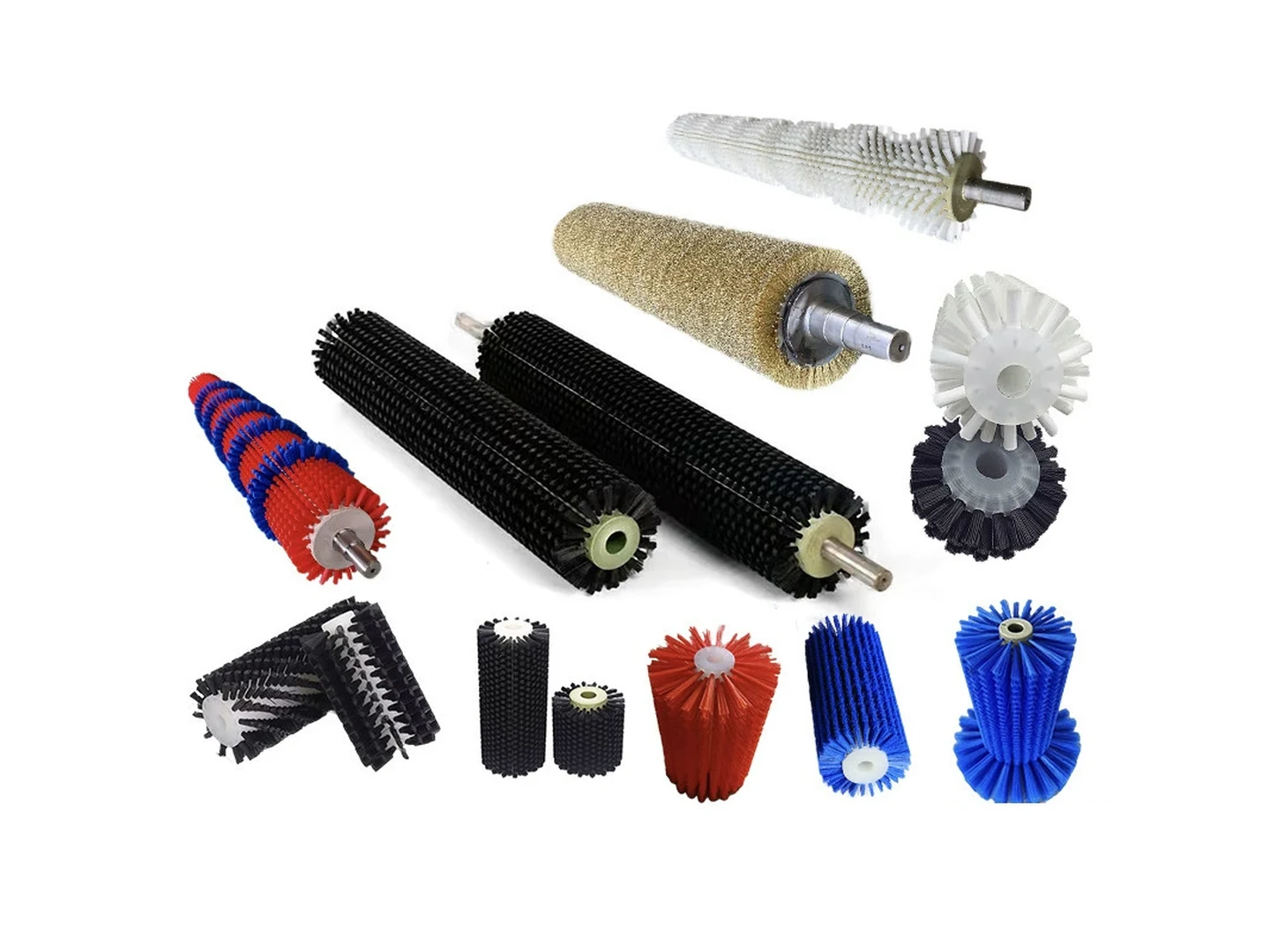
Large-format brush
100 pcs
Minimum order
Built one at a time on a core or channel: full-width rollers, sweeper brooms and long strip.
Production lead time, once the specification is confirmed
- Up to 100 pcsWithin 20 days
- 101–1,000 pcsWithin 30 days
- Over 1,000 pcsConfirmed with your quotation
Peak season can extend these times; the shipping date is confirmed in writing with your quotation. Sampling and shipping are quoted separately.
Etching Line Brush is a machine-mounted roller brush for PCB etching and wet-process lines. It removes etch residues, oxides, salts and slurry fines from panel surfaces, conditions transport rollers and helps control fluid carryover at wet-process contact zones.
What can this brush do for you?
Continuous contact across the full working width
Roller-brush construction replaces manual wiping and localized touch-up. The fill media is built across a 100–1500 mm working face so the rotating brush contacts the entire panel or roller zone as the line moves. This gives repeatable, full-width cleaning instead of uneven hand cleaning between batches.
Choose between absorbent wiping and fine scrubbing in the same roller format
PVA sponge fill removes etch residue and salts through absorbent, low-pressure wiping. PU sponge adds resilient scrubbing for heavier oxide and slurry film. PBT or nylon PA filament works for fine particulate and more tenacious wet-process deposits. One roller format lets you tune contact aggressiveness to the surface and residue without changing machine geometry.
Controls fluid carryover at the wet-process contact zone
The sponge or filament media meters and removes excess chemistry from panel surfaces and transport rollers. This reduces solution drag-out into downstream rinse or etch stages, stabilizes wetting, and lowers the chance of dried salts transferring back onto clean panels.
Low-runout, balanced assembly protects thin substrates
Core construction, fill balance and a 0.05–0.20 mm runout reference keep the roller running straight. Combined with a 0.5–3 mm engagement setting and a surface load below 2 N/cm² on fragile substrates, the brush maintains even contact without digging edges or stressing thin-core panels.
ESD-safe fill option where static control matters
For lines handling static-sensitive panels, the fill can be specified with 10³–10⁹ ohms resistance. Controlled dissipation helps prevent static attraction of fines and reduces discharge-related handling defects during wet-process cleaning.
What is an Etching Line Brush?
An Etching Line Brush is a cylindrical roller brush installed in the etch, pre-clean, developer or rinse stage of a PCB or metal-treatment wet process line. It rotates against the moving panel surface or against adjacent transport rollers, using sponge or filament media to remove etch residue, oxides, salts, slurry fines and other wet-process contamination.
The working principle combines mechanical contact with fluid control. Sponge media absorbs and releases chemistry while wiping the surface; filament media dislodges particles that sponge alone might leave behind. The roller is mounted on a core or shaft, usually driven or idling, and contact depth is set by machine position or spring load.
Because the brush operates in acid or alkaline chemistry, fill material and core construction must be matched to bath composition, operating temperature and line speed. It is a consumable-wear component: media gradually loses diameter and structure, so replacement is planned as part of line maintenance rather than treated as a permanent machine part.
This is not a high-pressure abrasive roll or a replacement for rinse and filtration. It removes attached residue and conditions the contact zone, but loosened debris still needs the line rinse and filtration system to carry it away.
Technical Specifications
The table lists the parameters buyers normally check before fitting an etching line brush to an existing machine. Working width, roller OD and core diameter define fit; fill material and grade define cleaning behavior; runout and contact setting define process control. All values can be adjusted to the project.
| Parameter | Value / Options |
|---|---|
| Working width | 100–1500 mm, matched to line width and panel format |
| Roller outside diameter | 40–250 mm, selected for wrap angle, line speed and machine clearance |
| Core / shaft diameter | 20–120 mm, selected for rigidity and interface fit |
| Core / shaft material | Stainless steel, coated alloy, or corrosion-resistant polymer / composite selected for process chemistry |
| Fill material | PVA sponge, PU sponge, PBT, Nylon PA, or mixed-zone media |
| Media grade | Filament 0.02–0.30 mm or process-specific sponge pore grade |
| Fill pattern | Straight, spiral, segmented, or mixed-zone layout for panel contact and fluid flow |
| Runout reference | 0.05–0.20 mm for a balanced precision assembly |
| Interface | Keyed shaft, through-shaft, journal, flange, or machine-specific end cap |
| Contact setting | 0.5–3 mm engagement; surface load below 2 N/cm² on fragile substrates |
| ESD resistance | 10³–10⁹ ohms where required |
| Operating environment | Acid or alkaline chemistry, wet-process temperature and line speed defined with project |
| Brush type | Custom Roller and Conveyor Brushes |
| How it is driven | Machine-driven, mounted in the equipment |
| Cleaning target | pcb etch and pre-clean stage, developer and rinse section, and transport-roller conditioning cleaning |
| Surface or part | roller, panels, panel surfaces, edges, metal, substrates, machine parts, and spring |
| Residue or debris | salt, oxide, fines, slurry, chemical film, and particles |
| Mounting / connection | Keyed shaft, through-shaft, journal, flange, or machine-specific end cap |
Where does this brush work best?
- PCB etch and pre-clean stages where copper panel surfaces need oxide, salt and etch-residue removal before downstream imaging, plating or lamination.
- Developer and rinse sections where slurry fines and chemical film collect on panel surfaces and transport rollers.
- Transport-roller conditioning in wet lines where dried salts, oxide or residue would otherwise transfer back onto clean panels.
- Thin-core and flex PCB handling where soft PVA or PU contact cleans without the edge stress of hard scrub media.
- Metal panel and leadframe surface treatment where wet-process residues are removed from flat metallic surfaces on a moving line.
How do I choose the right one?
Start with three measurements: the machine roller pocket or bearing centers, the widest panel format, and the roller outside diameter that matches your existing line geometry. Working width should cover the full contact zone; core and shaft diameter must match your journal, flange or keyed interface.
Then choose fill by residue and surface:
| Fill material | Cleaning action | Typical choice |
|---|---|---|
| PVA sponge | Absorbent, low-pressure wipe; removes etch residue, salts and light film; retains chemistry well | Thin copper, flex panels, coated or scratch-sensitive surfaces |
| PU sponge | Resilient scrub; removes heavier oxide, slurry film and embedded fines; more durable in some chemistries | General PCB wet-line cleaning where more pressure is needed |
| PBT / Nylon PA filament | Fine filament scrub for particulate and tenacious residue; firmer contact | Fine debris removal on robust substrates; verify surface compatibility first |
Mixed media can be specified when one zone must wipe gently and another must scrub, provided the line can support the combined contact behavior.
Set contact engagement from 0.5 to 3 mm and keep surface load below 2 N/cm² on fragile substrates. Deeper engagement scrubs harder but increases stress and media wear; a shallow setting improves gentleness but may leave residue. Validate on a sample panel before release.
Match the media to the chemistry. PVA sponge is sensitive to some hot or strongly alkaline solutions, while PU and filament materials cover a wider chemical range. Tell us the bath type, concentration, temperature and line speed so the fill grade and core material are selected together.
If the brush must run at high speeds or on very wide lines, confirm core rigidity and runout. A 0.05–0.20 mm runout reference helps avoid vibration streaks and uneven contact.
If you are removing baked-on scale or need aggressive mechanical stock removal, an etching line brush is the wrong tool. Use a specialized abrasive roll or high-pressure cleaning stage for that work, and keep this brush for wet-process residue and fluid control.
Can I customize this brush?
Etching line brushes are configured to a specific machine and process. To define the right build, provide the roller pocket dimensions, working width, roller OD and core or shaft ID, interface drawing or photos, chemistry and temperature, panel thickness and surface type, line speed, and the residue you need to remove.
Common customization variables:
- Roller geometry — working width, OD, core or shaft diameter, overall length, face length and end detail
- Fill configuration — PVA sponge, PU sponge, PBT, nylon PA or mixed zones; filament diameter 0.02–0.30 mm or process-specific sponge pore grade; density, spiral or segmented pattern
- Interface — keyed shaft, through-shaft, journal, flange, end caps or machine-specific drive style
- Core or shaft material and finish — stainless steel, coated alloy or corrosion-resistant polymer or composite selected for the bath chemistry
- Contact behavior — media compression, engagement range, surface load setting and balanced runout target
- ESD option — 10³–10⁹ ohms surface resistance where static control is required
- Marking and identification — roller ID engraving, color coding by media or line position, and batch marking
- Packaging — bulk packaging, individual protective sleeves or pre-assembled line sets
If your project requires material declarations, inspection records, dimensional data or third-party testing against your line chemistry, we can support those requirements as part of the customization scope.
When is an etching line brush worn out rather than just dirty?
How do I verify the brush is engaging the panel at the correct setting?
Set the engagement between 0.5 and 3 mm and run a sample panel. Check for uniform residue removal across the full width without visible streaks, edge digging or panel deflection. If the roller leaves a wide water or chemistry track but does not remove residue, engagement may be too shallow. If the media compresses heavily or the panel flexes, reduce engagement and validate again.
Can one etching line brush clean both panels and transport rollers?
Yes, a full-width roller can do both jobs, but the two functions often require different fill or engagement. Panel-contact media are usually chosen for surface safety, while roller-conditioning media need enough scrub to remove dried salts and film from roller surfaces. If one brush does both, validate the panel surface after the roll has been working against the transport roller, and consider separate media zones or dedicated rolls for each function.
What should I check during routine roller inspection?
Inspect the working face for embedded particles, tears, delamination, permanent compression set or diameter loss. Check the core and interface for corrosion, runout change or loose end caps. Any embedded grit or hardened media can scratch panels, so remove loose debris and replace the brush if damage cannot be rinsed out.
When should the brush be retired instead of cleaned?
Retire the brush when the fill no longer returns to its working diameter, shows permanent flat spots or compression set, develops tears that expose the core, or becomes embrittled or swollen from chemistry. A simple check is to compare the current OD against the original contact setting; if it no longer reaches the panel without excessive engagement, replace it.
Does this brush replace the rinse or filtration stage?
No. The brush loosens and removes attached residue and helps control fluid film, but the rinse, drag-out tank and filtration system must still carry loosened debris away. Brushing is one step inside the wet-process sequence, not a substitute for rinsing or chemistry maintenance.
Is the ESD option necessary for every etching line?
Only if your line process or panel type is static-sensitive. ESD-safe fill with 10³–10⁹ ohms resistance helps dissipate charge and reduce attraction of fine particles, but it is not needed when the line already has adequate static control and the panel type is not sensitive. Specify the line ESD requirements so we do not add unnecessary cost or use the wrong media grade.
Guides that go deeper on this
Custom Manufacturing RFQ
Describe Your Application
To prepare the correct quotation, provide the dimensions, cleaning task, residue, material, mounting details, quantity, and a drawing or photo.
Drawing or photo optional — it speeds things up, it does not gate the enquiry.
Custom Brush RFQ
Send Your Brush Project
Upload a drawing, product photo, or sample photo and provide the core dimensions and cleaning conditions.
“We need a brush to remove wet residue from a stainless steel conveyor, about 800mm wide. The current brush wears quickly. We can send photos.”
“We sell drinkware and need a cleaning brush to include with the product. Quantity around 5,000 pieces.”