
Custom Cleaning Brush
Main/Roller Brush
Custom main roller brushes for robotic and stick vacuums: nylon, rubber and microfiber fills, 150–350 mm lengths, and drop-in drive interfaces.
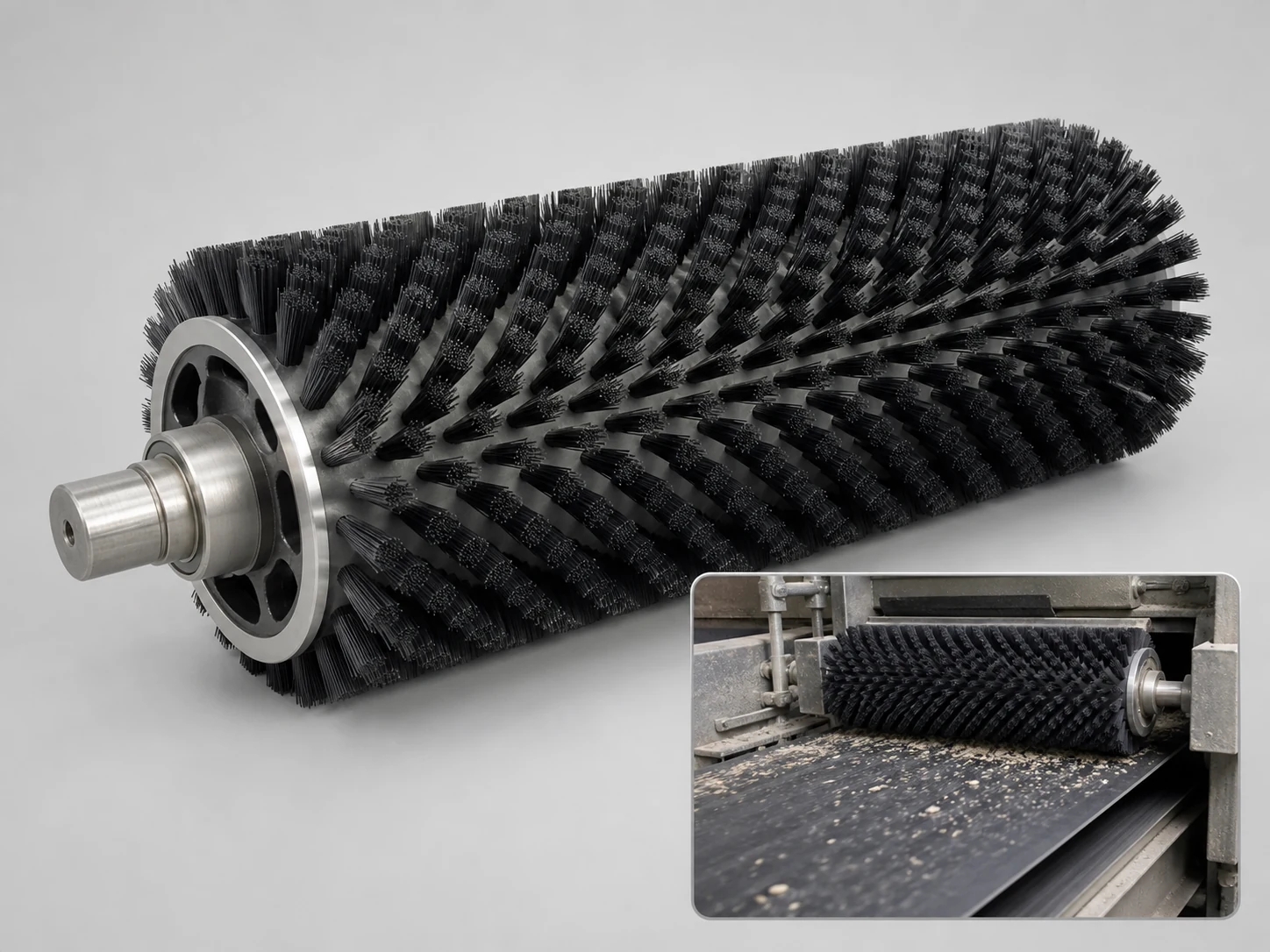
Medium brush
100 pcs
Minimum order
Worked with two hands or on a pole: chimney, gutter and pond-filter brushes, discs, cups and tank brushes.
Production lead time, once the specification is confirmed
- Up to 100 pcsWithin 7 days
- 101–5,000 pcsWithin 14 days
- 5,001–50,000 pcsWithin 21 days
- Over 50,000 pcsConfirmed with your quotation
Peak season can extend these times; the shipping date is confirmed in writing with your quotation. Sampling and shipping are quoted separately.
A configurable main roller brush for robotic and stick vacuum floor modules, built with nylon, rubber, and microfiber contact strips to lift dust, hair, and fine debris from hard floors and low-pile carpet while matching the original roller’s working diameter and drive interface.
What can this brush do for you?
Lifts dust, hair, and fibers in one roller
Alternating nylon bristle rows and rubber blade strips work together on every rotation. The bristles agitate carpet fibers and pull embedded debris loose, while the rubber edges sweep hard floors and push larger particles toward the suction inlet. A microfiber strip can be added to capture fine dust that other fills leave behind, so one pass covers mixed-debris situations instead of requiring multiple cleaning passes.
Hair management through blade and bristle combination
Rubber blades are angled to slide hair and long fibers along the roller surface and into the vacuum air path instead of letting them wrap around the core. Combined with a shorter, stiffer nylon trim, this configuration reduces the accumulation that forces users to cut hair away from the roller every few cleaning cycles. The exact blade angle and trim length can be tuned for heavy pet-hair environments.
The right working diameter prevents housing contact
The roller’s outer diameter includes the fill tips, and we match that dimension to the original brush chamber. A working clearance of 0.5–2.0 mm between the fill and housing lets the roller spin freely without rubbing on the chamber wall or sensor windows. Too much contact increases motor load and wears the fill unevenly; too little contact reduces pickup. This brush is built to stay inside the design window of your machine.
Drive interfaces that fit the motor you already have
The roller comes with the drive coupling your vacuum module uses: a gear, D-shaft, hex, molded tab, screw plate, or a custom interface. This means the brush can drop into existing drive systems without modifying the motor or gearbox. You do not need to change your product design to adopt a replacement roller.
Fill and trim length matched to floor type
Trim length from 5 to 30 mm changes how aggressively the roller works. Longer trim reaches deeper into low-pile carpet; shorter, stiffer trim holds up on hard floors and lasts longer. Nylon PA provides structured agitation, rubber blades give a firm sweep, and microfiber catches fine powder. The mix can be selected for the primary floor surface the machine will encounter.
What is a Main/Roller Brush?
A Main/Roller Brush is the rotating cylindrical cleaning element installed across the suction inlet of a robotic vacuum, stick vacuum, or cordless floor module. It is the primary mechanical contact between the machine and the floor: as the motor spins the roller, bristle tips and rubber blade edges strike the floor surface, dislodge particles, and guide them into the vacuum air stream.
In use, the roller sits inside a brush chamber with fixed clearances. Its outside diameter, working length, end cap geometry, and drive interface must all match the original design for the roller to install correctly and spin without binding. A roller that is too long rubs against the chamber ends. A roller with the wrong coupling slips on the motor shaft or fails to transmit torque. A roller with the wrong diameter either loses floor contact or overloads the motor.
The fill configuration matters as much as the fit. Nylon bristles provide scrubbing and carpet penetration. Rubber blades offer a continuous wiping edge that works well on hard floors and helps move hair. Microfiber strips increase fine-particulate capture. A mixed roller combines these behaviors in a single rotating assembly, so the machine can handle both hard floor and low-pile carpet without changing parts.
This is a wear component. Bristles flatten, rubber blades lose their edge, and end caps wear over hundreds of operating hours. Replacement should restore the original contact pressure and debris pickup rather than improvising with a generic roller that almost fits.
Technical Specifications
| Parameter | Specification / Options |
|---|---|
| Roller working length | 150–350 mm, matched to brush chamber width |
| Roller outer diameter | 20–50 mm including fill tips, matched to original working height |
| Fill trim length | 5–30 mm, selected for floor type and agitation level |
| Drive interface | Gear, D-shaft, hex, molded tab, screw plate, or custom coupling |
| Fill materials | Nylon PA, rubber blade, TPU, microfiber, or mixed configuration |
| Blade shape | Straight, angled, V-shaped, or chevron profile |
| End caps | Molded bearing caps, bushings, or friction-fit hubs to match the chamber |
| Recommended chamber clearance | 0.5–2.0 mm between fill tips and housing or sensor surfaces |
| Operating temperature | 5–100°C for standard nylon and rubber fills |
| Optional fill combination | Stiff nylon for carpet, soft rubber for hard floor, microfiber strip for fine dust |
| Brush type | Custom Roller and Conveyor Brushes |
| How it is driven | Machine-driven, mounted in the equipment |
| Cleaning target | robotic vacuum cleaner, motorized stick and cordless vacuum, and pet-owning household cleaning |
| Surface or part | roller, floors, chambers, edges, tile, housings, gears, and tabs |
| Residue or debris | hair, dust, fiber, particles, crumbs, and fine dust |
| Mounting / connection | Gear, D-shaft, hex, molded tab, screw plate, or custom coupling |
Dimensions and material combinations are project-specific. Provide the original roller sample, measured dimensions, or part number, and we will match the working geometry to your vacuum module.
Where does this brush work best?
- Robotic vacuum cleaners operating on hard floors, tile, laminate, and low-pile carpet where daily pickup of dust, crumbs, hair, and fibers is the main cleaning task.
- Motorized stick and cordless vacuums that use a rotating brushroll in the floor head to agitate debris before suction removes it.
- Pet-owning households, grooming facilities, or commercial spaces with continuous hair and fiber shedding where a mixed bristle-and-rubber roller reduces wrap.
- Automated floor-care devices such as dry floor sweepers or robot vacuums with a main brush chamber that needs a matching replacement roller.
- Facilities with mixed hard-surface and low-pile carpet areas where one roller must perform acceptably on both without swapping parts.
How do I choose the right one?
Start with the original roller dimensions and interface
Measure the working length between end caps, the outer diameter at the bristle tips, and the drive coupling type. If you do not have a sample on hand, provide the vacuum model number and we can reverse-match the common specifications. The new roller must match the original geometry; a millimeter difference in length or diameter can affect chamber clearance and motor current.
Match the fill to the floor and debris
Nylon bristles agitate low-pile carpet and dislodge embedded particles. Rubber blades sweep hard floors and push hair toward the suction inlet. Microfiber fills capture fine dust that passes between bristle tips. For machines that run on both hard floors and carpet, a dual configuration with nylon bristles and rubber blades delivers the most balanced pickup.
Adjust trim length and stiffness for the right tradeoff
Longer trim (20–30 mm) reaches deeper into carpet but wears faster and can tangle more with long hair. Shorter, stiffer trim (5–15 mm) lasts longer and works well on hard floors. Choose based on the expected floor traffic and debris mix. A roller that is too soft may not agitate; one that is too stiff may scratch delicate hard surfaces.
Verify chamber clearance to protect the motor
The roller should spin freely with 0.5–2.0 mm gap to the housing and sensor windows. If the fill tips drag on the chamber, the motor draws more current and the fill wears prematurely. If the gap is too large, the roller cannot maintain consistent floor contact. After installation, spin the roller by hand and listen for any rubbing before powered operation.
Consider the operating environment
Standard nylon and rubber fills handle 5–100°C, which covers normal indoor cleaning cycles and warm air near the battery compartment. If the module will run wet, encounter cleaning chemicals, or operate in a humid environment, specify corrosion-resistant drive components and sealed bearing caps at the customization stage.
When a different brush is the better answer
This main roller is for dry debris pickup. For wet mopping robots or floor scrubbers that use a soft water-absorbing roller, a different roller construction is required. For high-pile carpet that needs deep beating rather than surface agitation, a beater bar or different carpet brush may be more appropriate. If the debris is heavy, wet, or abrasive, a brush alone will not replace suction and may need more frequent replacement.
Can I customize this brush?
Main roller brushes are built around the machine’s brush chamber, so customization starts with the original dimensions and drive interface. Send the original roller sample, close-up photos, or a drawing with the following measurements: working length, overall diameter at fill tips, trim length, end cap inner diameter, and drive coupling type. Also note the primary floor surface, debris profile, and any hair or fiber issues you want to reduce.
We can adjust:
- Roller length and diameter to match the brush chamber or to create a project-specific size
- Fill type and mix — nylon PA, rubber blade, TPU, microfiber, or combined rows in custom sequence
- Trim length and blade shape — straight, angled, V-shaped, or chevron profile for specific pickup behavior
- Drive interface — gear, D-shaft, hex, molded tab, screw plate, or a custom coupling for your motor
- End caps and bearing hubs — molded caps, bushings, or friction-fit designs to match the chamber ends
- Color, marking, and branding — custom fill colors, laser marking, pad printing, or identification coding
- Packaging — bulk, individual bag, retail sleeve, or project-specific packing for distribution
If your project requires material declarations, inspection reports, or third-party testing for specific requirements, we can assist with those during the customization process.
How do you check that a main/roller brush is the right size for the opening?
How do I verify the roller will fit my vacuum model?
Measure the existing roller’s working length, outer diameter at the fill tips, and end cap inner diameter. Compare those values to the specification table above. If you are still unsure, send a photo of the original roller next to a ruler and the vacuum model number. We match the working geometry rather than guessing from brand name alone.
Why is the 0.5–2.0 mm clearance between the roller and housing important?
The clearance prevents the bristle tips and blade edges from dragging on the chamber walls while still allowing the roller to maintain floor contact. If the gap is too small, the motor works harder and the fill wears quickly. If the gap is too large, debris can squeeze past without being picked up. After installation, rotate the roller by hand to confirm it spins freely with a slight gap on all sides.
Can I run this roller on wet floors or in a wet cleaning machine?
No. The standard roller is designed for dry debris pickup on hard floors and low-pile carpet. Nylon and rubber fills are not intended for standing water or wet mopping operations. For wet floor cleaning robots, choose a soft roller made from water-absorbing or water-tolerant materials, and specify the wet environment during customization.
How do I know when the roller needs replacement?
Inspect the fill tips for flattening, missing bristle clusters, torn rubber blades, or uneven wear along the roller length. Also check the end caps for cracks or excessive play. If the roller no longer maintains the same working diameter, loses floor contact, or causes the motor to sound strained, replace it. A worn roller recovers some pickup with higher suction, but the roller geometry is the primary cleaning mechanism.
Will the rubber blade alone remove pet hair?
Rubber blades help push loose hair toward the suction inlet and reduce wrapping around the core. However, hair embedded in low-pile carpet often needs the agitation of nylon bristles to be pulled free. For heavy pet hair, use a mixed fill with rubber blades and nylon bristles. For very short hair or mostly hard floors, a rubber-blade-dominant roller may be sufficient.
How do you check roller balance and runout before shipping?
Each roller goes through a low-speed runout check on a fixture matched to its drive interface. We look for visible wobble, uneven fill height, and excessive end-cap movement. A roller that is out of balance will vibrate in the vacuum module and shorten motor life. If the roller passes the runout check, it is ready to install without additional balancing.
Guides that go deeper on this
Custom Manufacturing RFQ
Describe Your Application
For an accurate quotation, please provide the main dimensions, material preference, working surface, residue, quantity, and a drawing or photo.
Drawing or photo optional — it speeds things up, it does not gate the enquiry.
Custom Brush RFQ
Send Your Brush Project
Upload a drawing, product photo, or sample photo and provide the core dimensions and cleaning conditions.
“We need a brush to remove wet residue from a stainless steel conveyor, about 800mm wide. The current brush wears quickly. We can send photos.”
“We sell drinkware and need a cleaning brush to include with the product. Quantity around 5,000 pieces.”