
Custom Cleaning Brush
Short Handle Nylon Cup Brush 360 Degree Spin
Short-handle nylon cup brush with 360° bristle contact for cup lids, threads, rims, walls, and bottom corners.
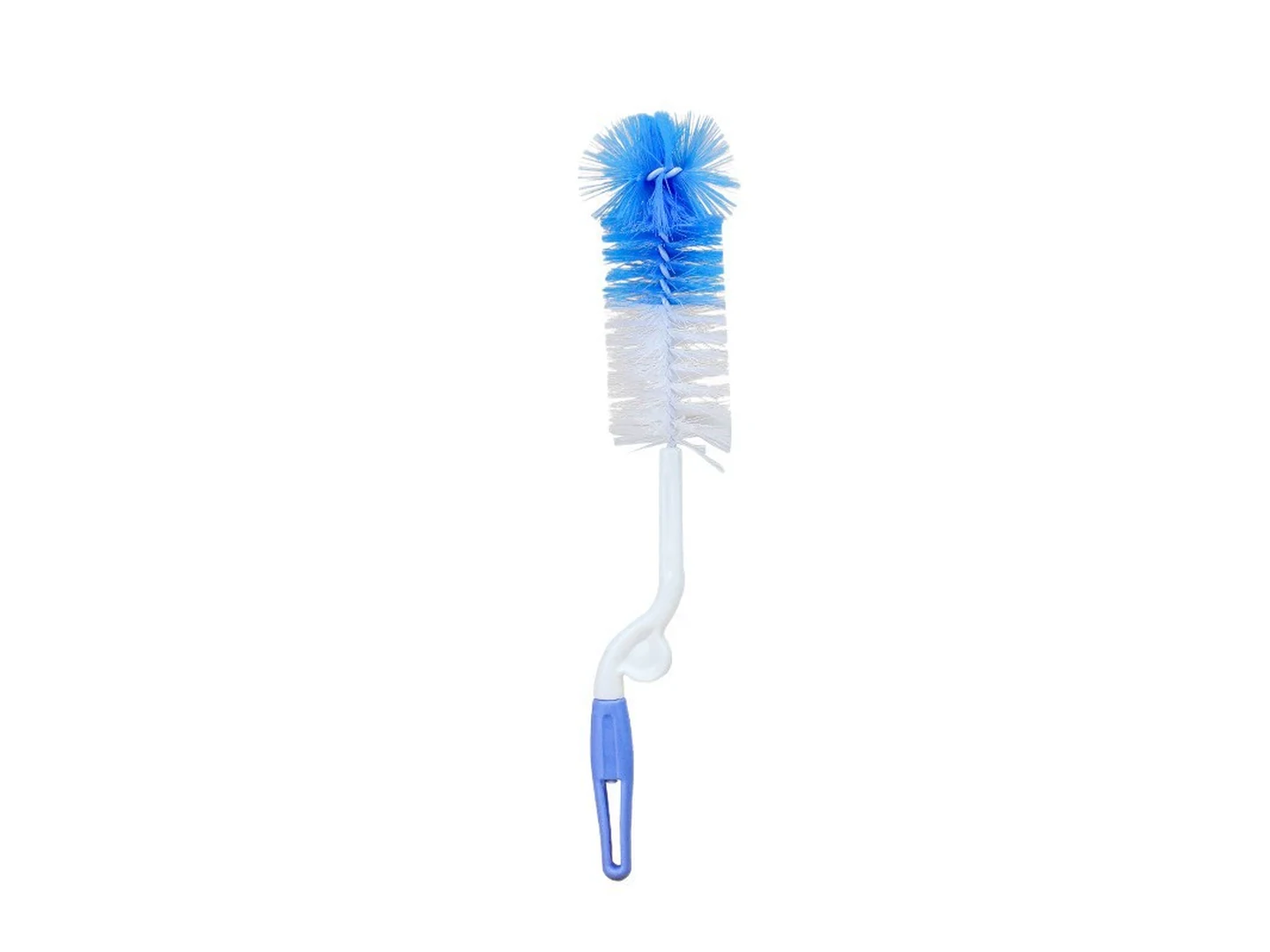
Small brush
500 pcs
Minimum order
Held in one hand: tube, bottle, detail and swab brushes — including long-handled ones with a small head.
Production lead time, once the specification is confirmed
- Up to 500 pcsWithin 7 days
- 501–50,000 pcsWithin 14 days
- Over 50,000 pcsWithin 21 days
Peak season can extend these times; the shipping date is confirmed in writing with your quotation. Sampling and shipping are quoted separately.
A short-handle nylon cup brush with full 360° bristle contact for cleaning cup and mug lids, threads, rims, inner walls, and curved bottom corners. The compact handle and circumferential nylon filament ring let operators scrub beverage residue from tight lid grooves and base transitions without repositioning the brush.
What can this brush do for you?
Brushes the full inner circumference in one twist
The nylon filaments are packed around the complete 360° of the cup-shaped head, so every turn of the handle scrubs the sidewall, thread, or rim all the way around. You are not constantly rotating the brush to find an unbrushed section — the contact is already there.
Short handle keeps pressure where you need it
The compact handle places the operator’s hand close to the bristle head. That short lever gives firmer, more controllable pressure at the rim, lid threads, and bottom corner than a long wand-style brush, which flexes away from the work.
Nylon filaments cut beverage film without scratching the cup
PA nylon is stiff enough to break up dried coffee, tea, milk, and juice residue, but the filament tips flex rather than gouge glazed ceramic, stainless steel, painted, or plastic interiors. The cup surface is cleaned without adding new scratches.
Cup-shaped head reaches the bottom corner where wall meets base
The flared or cylindrical trim allows filament tips to get into the radius at the base of a mug or tumbler. Flat sponges and straight brushes skip this transition; the cup brush completes the contact down to the curve.
Rinses clean and dries quickly between uses
Nylon sheds water and food residue after a simple rinse under running water. The open filament ring does not trap beverage liquid like a sponge head, so the brush stays fresher and is ready for the next cup.
What is a Short Handle Nylon Cup Brush 360 Degree Spin?
This is a hand-guided cleaning brush with a short handle and a cup-shaped head whose nylon bristles radiate outward around the full 360° of the tool axis. It is designed for manual cup and mug cleaning, especially the areas a sponge cannot reach: lid threads, rim edges, the inner wall, and the sharp or curved transition at the cup bottom.
The working motion is push, pull, and twist. The operator inserts the head into the cup, then rotates the handle while moving the head up and down the wall. Because the bristle ring faces every radial direction at once, the same stroke cleans the side that the hand is holding and the opposite side at the same time. The 360° description refers to this circumferential bristle coverage and the spinning hand motion — it is not a power-tool attachment for an angle grinder.
The short handle keeps the brush easy to control at the sink and simple to store. The head profile, bristle length, and stiffness are selected to match the cup opening, internal diameter, and residue type rather than being one fixed size for all vessels.
Technical Specifications
The table shows the parameters we normally define for each project. Dimensions and stiffness can be adjusted to fit the cup and cleaning task.
| Parameter | Typical options / range |
|---|---|
| Bristle coverage | Full 360° circumferential ring around the head axis |
| Bristle material | Nylon PA6 or PA6.6, straight or crimped filament |
| Bristle filament diameter | 0.15–0.30 mm, finer for soft contact, thicker for firmer scrubbing |
| Head diameter (bristled OD) | 40–90 mm, matched to cup mouth and base diameter |
| Bristled working height | 25–80 mm, selected for wall and corner contact |
| Trim profile | Cylindrical, flared/cup, tapered end, or custom radius-matching profile |
| Core / bristle retention | Galvanized steel, stainless steel, or polymer core; resin-set, twisted-wire, or mechanical anchor |
| Handle length | 80–180 mm overall, compact for hand control |
| Handle material | PP, PE, ABS, rubber-overmolded, or stainless steel |
| Operating temperature | Standard nylon: continuous hot-water use up to approximately 80°C (176°F); heat-stabilized nylon available for higher temperatures |
| Cleaning environment | Water, mild detergents, common food/beverage soils; material grade selected for chemical or heat exposure |
| Brush type | Custom Handheld Detail Brushes |
| How it is driven | Hand-guided |
| Cleaning target | ceramic mug and coffee cup, reusable travel tumbler and insulated mug, and plastic drinkware cleaning |
| Surface or part | thread, rims, grooves, walls, corners, ceramic, plastic, and profiles |
| Residue or debris | beverage residue, coffee, beverage film, and dried residue |
| Mounting / connection | Fixed |
Where does this brush work best?
- Ceramic mugs and coffee cups where the rim and the corner at the bottom collect beverage film.
- Reusable travel tumblers and insulated mugs with threaded lids, gasket grooves, and internal threads that need cleaning from all sides.
- Enamel, glazed, stainless steel, and plastic drinkware where metal brushes or aggressive abrasives would leave scratches.
- Food-service and hospitality sink stations where staff need a short, controllable brush for daily cup washing.
- Lids with spouts, slider openings, or seal grooves when the head is customized with a smaller tip or tapered trim.
How do I choose the right one?
Start with the smallest opening and the bottom diameter of the cup.
Measure the cup mouth internal diameter and the diameter at the point where the wall meets the base. The bristled head should enter without forcing and still contact the wall. A head that is too large will jam or fold bristles back without reaching the base; a head that is too small will clean only the center and miss the sidewall.
Then choose filament stiffness for the residue and the surface.
For printed or coated plastic cups and delicate glazes, choose finer, softer filaments. For daily coffee and tea film on ceramic or stainless steel, a medium nylon filament works well. For dried residues, choose a thicker filament or crimped fiber to apply more scrubbing force. Nylon can remove soft and semi-dried residues, but mineral scale, burned-on food, or epoxy-like deposits usually need a more aggressive brush type or a chemical soak first.
Check the lid separately.
If the main job is cleaning lid threads and gasket grooves, specify a head diameter and trim profile matched to the lid internal diameter, not the cup body. A smaller cylindrical or tapered head can clean both the cup and the lid if the dimensions allow it. Otherwise, plan a separate detail brush for the lid.
Match the core and handle to the sink environment.
A stainless steel core resists water and detergent exposure and adds stiffness for deeper scrubbing. A polymer core is lighter, non-marring if it touches the rim, and often preferred for delicate cups. If hot water above 80°C is part of the wash process, ask for heat-stabilized nylon and a heat-tolerant handle material.
When to use a different brush
Do not use this tool for deep narrow-neck bottles or tall carafes; a long-handle bottle brush is designed for that reach. Do not use it where the residue requires wire, abrasive, or chemical stripping. And this is not a cup brush for angle grinders or power tools — it is a manual sink brush.
Quick selection guide
| Condition | Recommended configuration |
|---|---|
| Light film on coated or printed plastic | Fine filaments, soft trim, polymer core |
| Daily beverage residue on ceramic or stainless | Medium filaments, stainless or galvanized core |
| Dried residue on bare ceramic or stainless | Thicker or crimped filaments, firmer trim |
| Lid thread and gasket cleaning | Smaller head diameter, tapered or radius-matched trim |
Can I customize this brush?
Yes. We configure the head, handle, and bristle package around the cup geometry and cleaning process. Provide the cup mouth internal diameter, internal body diameter, wall height, bottom corner radius, lid thread dimensions if needed, surface material, residue type, hot-water temperature, and preferred handle length. A sample cup or drawing speeds up the design.
We can adjust:
- Head geometry — diameter, working height, cylindrical or flared profile, tapered tip, or custom radius-matched shape
- Nylon bristle package — filament diameter, length, crimp, tuft density, color, and stiffness
- Core and retention — stainless steel, galvanized steel, polymer core, or metal-free construction
- Handle — length, straight or ergonomic shape, hanging hole, grip material, color, and molded branding
- Trim and edge detail — softer edge rows for rims, firmer center rows for walls, or a detail tip for lid grooves
- Packaging — bulk, individual bag, retail card, color-coded kits, or project-specific packing
If your project requires material documentation, inspection, or third-party testing support, we can assist with those requirements during the customization process.
When is a short handle nylon cup brush 360 degree spin worn out rather than just dirty?
How do I use the 360° contact correctly?
Insert the head into the cup, then combine push-and-pull motion with a continuous turn of the wrist. The rotation lets the full bristle ring scrub the wall, thread, and base corner in one pass. Straight up-and-down motion without turning only cleans a portion of the circumference.
What should I check on the cup before brushing?
Remove the lid, gasket, valve, slider, and any other detachable parts; clean those separately with a matching detail profile. Inspect the cup for cracks or chips, especially near the mouth, because a cracked edge can catch and break bristles. Clear any loose debris from the bottom before starting.
Can one brush clean both the cup body and the threaded lid?
Sometimes. If the lid internal diameter is close to the cup mouth and the thread depth is moderate, a tapered head with shorter outer bristles can reach both. If the lid has fine threads or a narrow gasket groove, specify a smaller secondary tip on the head or plan a separate lid brush for that part.
How can I verify the bottom corner is actually clean?
After rinsing, inspect the wall-to-base radius under good light. Wipe the curve with a white paper towel or cotton swab. Any colored residue transfer means film remains. If it persists, the head diameter is likely too small for the cup base or the trim does not reach the radius, and the profile or stiffness should be adjusted.
How do I know when the brush needs replacement?
Replace the brush when the filaments stay bent or matted after use, when tufts begin to shed, or when the core shows corrosion or bending. If the head no longer springs back to its original shape or does not contact the cup wall evenly, the bristle package is worn and the brush is no longer doing full 360° cleaning.
Guides that go deeper on this
Custom Manufacturing RFQ
Describe Your Application
Please include the main sizes, application, residue, preferred material, interface, quantity, and any drawing or sample available.
Drawing or photo optional — it speeds things up, it does not gate the enquiry.
Custom Brush RFQ
Send Your Brush Project
Upload a drawing, product photo, or sample photo and provide the core dimensions and cleaning conditions.
“We need a brush to remove wet residue from a stainless steel conveyor, about 800mm wide. The current brush wears quickly. We can send photos.”
“We sell drinkware and need a cleaning brush to include with the product. Quantity around 5,000 pieces.”