
Custom Cleaning Brush
250mm Melamine Stain Removal Disc Brush
250mm melamine stain removal disc brush for floor scrubbers. Lifts heel marks, scuffs and tire marks from sealed floors. Snap-fit PP base, customizable.
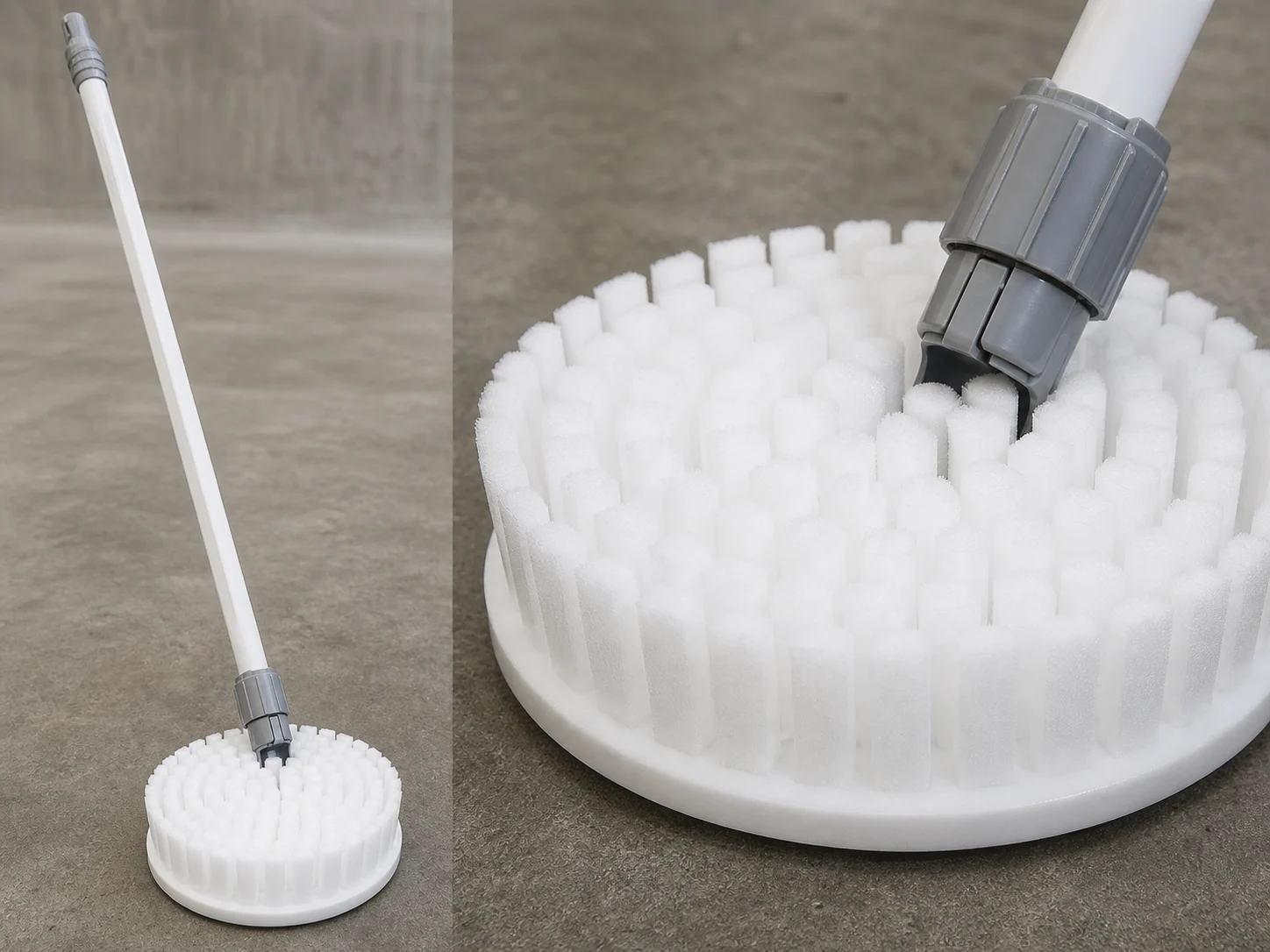
Medium brush
100 pcs
Minimum order
Worked with two hands or on a pole: chimney, gutter and pond-filter brushes, discs, cups and tank brushes.
Production lead time, once the specification is confirmed
- Up to 100 pcsWithin 7 days
- 101–5,000 pcsWithin 14 days
- 5,001–50,000 pcsWithin 21 days
- Over 50,000 pcsConfirmed with your quotation
Peak season can extend these times; the shipping date is confirmed in writing with your quotation. Sampling and shipping are quoted separately.
The 250mm Melamine Stain Removal Disc Brush is a machine-driven rotary scrubbing disc built to lift black heel marks, scuff marks, tire marks, and oily shadows from sealed hard floors without scraping the surface. Its open-cell melamine foam face erases visible stains with water or neutral cleaner, while the snap-fit polypropylene base connects directly to a compatible floor scrubber drive plate.
What can this brush do for you?
Lifts Marks Conventional Bristle Brushes Leave Behind
Nylon and polypropylene brush filaments often skim over slick rubber transfer and heel marks. The melamine foam face works differently: as the disc rotates, the foam’s micro-abrasive cell walls make thousands of fine cutting contacts across the stain, releasing it from polished VCT, LVT, epoxy, terrazzo, or sealed concrete with light machine pressure.
Cleans With Less Chemical and No Coarse Scratching
Melamine foam can remove many surface stains with water or a neutral pH floor cleaner. Because the abrasive action is finer than mineral pads or wire, it leaves less visible scratch pattern on gloss finishes when matched to the floor correctly. That makes it useful in corridors, lobbies, and showrooms where appearance after cleaning is the first thing inspectors check.
Productive 250 mm Cleaning Path
The full-diameter working face covers a 250 mm swath on every pass, so operators clear stained traffic lanes faster than with small hand pads. The 35 mm foam depth supplies enough working material to maintain a flat contact patch before the disc needs replacement.
Snap-Fit Changeover Keeps Machines Running
The injection-molded PP base locks onto the scrubber drive plate with a snap-fit connection. When the foam face is spent, the operator releases the disc and clicks in a replacement without tools, minimizing downtime on scheduled floor maintenance.
Conforms to Light Texture and Grout Joints
Unlike a rigid brush, the compressible melamine face follows shallow texture, tile edges, and grout lines. Stains lodge in these recesses, and the foam reaches into the low spots better than a flat conventional pad while still clearing the raised surface.
What is a 250mm Melamine Stain Removal Disc Brush?
A 250mm Melamine Stain Removal Disc Brush is a rotary floor-cleaning disc that uses an open-cell melamine foam pad as its working face instead of nylon fibers, polypropylene bristles, or abrasive grit. The foam is bonded to a molded PP base that carries the snap-fit interface for a rotary floor scrubber or auto scrubber drive plate. There is no handle or grip; the brush is designed to be machine-driven, not used by hand.
In operation, the floor machine rotates the disc between about 150 and 350 rpm while keeping the damp foam face in contact with the floor. The foam acts as a very fine abrasive sponge: it erases the stain from the surface layer and releases small foam particles and loosened residue that the scrubber’s vacuum/squeegee or a follow-up mop pass removes. Melamine foam is a consumable. The pad wears down gradually as it cleans, so its thickness, density, and replacement schedule are part of the maintenance plan.
Important operating boundary: this is not a stock-removal brush. It is not intended to cut through thick coatings, cured adhesive, deep scratches, rust, or heavy mineral scale, and it should not be run dry at high speed. The disc is designed for damp wet cleaning of sealed, smooth hard floors where visible stain removal is the goal.
Technical Specifications
| Parameter | Value / Configuration |
|---|---|
| Working diameter | 250 mm nominal, round disc face |
| Head / foam depth | 35 mm; project-configurable |
| Working face material | Open-cell melamine foam pad, micro-abrasive cleaning surface |
| Base material | Injection-molded polypropylene (PP) |
| Mounting interface | Snap-fit drive-plate connection; pattern matched to customer’s scrubber |
| Drive compatibility | Rotary floor scrubber / auto scrubber drive plate; typical operating speed 150–350 rpm |
| Use condition | Damp or wet with water or neutral pH floor cleaner |
| Foam density / hardness | Medium or firm open-cell foam selected for floor sensitivity and stain load |
| Foam coverage | Full-face pad or segmented pattern, project-selectable |
| Standard color | White or light gray; custom colors available on project basis |
| Operating floor compatibility | Sealed VCT, LVT, sheet vinyl, epoxy, polished concrete, terrazzo, quarry tile; test on high-gloss or coated surfaces |
| Brush type | Custom Disc Brushes |
| How it is driven | Machine-driven, mounted in the equipment |
| Cleaning target | commercial corridor, retail entrance and airport concourse, and automotive showroom and service bay cleaning |
| Surface or part | floors, pads, concrete, terrazzo, sheets, stone, wood, and tile |
| Residue or debris | tire marks, grease, heavy grease, shoe marks, rust, mineral scale, adhesive, and fiber |
| Mounting / connection | Snap-fit drive-plate connection; pattern matched to customer's scrubber; Rotary floor scrubber / auto scrubber drive plate; typical operating speed 150–350 rpm |
The snap-fit pattern is usually the first specification to confirm. Send the make and model of the scrubber or a drawing of the drive plate, and we can match the locating features, lug profile, and center opening to your machine. Diameter, foam depth, and density can also be adjusted for the project.
Where does this brush work best?
- Schools, hospitals, and commercial corridors — black heel marks, scuff transfer, and cart marks on VCT, LVT, and sheet vinyl traffic lanes.
- Retail entrances and airport concourses — rubber transfer, shoe marks, and oily shadows on polished concrete, terrazzo, and sealed stone.
- Automotive showrooms and service bays — tire marks and rubber smears on epoxy-coated floors and polished concrete where appearance is a customer-facing issue.
- Food service and commercial kitchens — light grease shadow and stained traffic areas around entrances and fryer stations; pre-treat heavy grease with a degreaser and use the disc for final stain cleanup.
- Sports facilities and event floors — rubber scuffs on sealed sports flooring systems after a small-area finish test confirms compatibility.
Not the right choice for unsealed wood, rough aggregate concrete with heavy grit, bare concrete that requires stock removal, or finishes where even micro-abrasion dulls the gloss. For those conditions, choose a nylon, polypropylene, or diamond-impregnated pad or brush.
How do I choose the right one?
Confirm the scrubber’s drive plate pattern before ordering. The 250 mm disc is a common 10-inch machine size, but snap-fit lugs, center holes, and locating ribs vary between manufacturers. A disc that looks close but does not lock flat will vibrate, wear unevenly, or detach. Send the machine make/model or a measured drawing of the drive plate.
Match foam density to the floor. Softer foam makes less change to high-gloss finishes and follows polished surfaces more gently; firmer foam lasts longer on textured tile and concrete and removes heavier marks with less foam consumption. On a new floor finish, run the disc on a hidden area first and inspect the sheen under angled light.
Melamine foam is the right tool for rubber marks, heel marks, scuffs, shoe polish, crayon, and light oily shadows. It is not the right tool for thick grease, cured coatings, paint overspray, deep scratches, or rust. Those conditions need a degreaser plus a stiffer nylon or polypropylene brush, or an abrasive/diamond pad.
Keep the disc wet and under about 350 rpm. Dry running or high-speed burnishing generates heat and dust that shorten foam life and can dull the finish. Use light-to-moderate machine pressure; the foam should contact the floor with a flat, even patch.
| Your condition | Use this configuration |
|---|---|
| High-gloss VCT or LVT with light heel marks | Softer foam, lower pressure, panel test first |
| Epoxy or polished concrete with tire marks | Firm foam, damp face, moderate pressure |
| Quarry tile with stained grout lines | Firm full-face foam with degreaser pre-treatment |
| Rough concrete, thick coatings, deep scratches | Switch to nylon/PP brush, wire brush, or diamond pad |
Can I customize this brush?
The 250 mm melamine disc can be tailored to the scrubber and the floor. To specify a custom version, provide the machine make/model, drive plate drawing or photo, floor type, stain type, cleaning chemical, operating speed, and how many hours of pad life you need per disc.
- Disc geometry — diameter, foam depth, edge profile, and full-face or segmented foam layout.
- Foam selection — density, color, segment count, center cutout, or custom foam formulation for the stain load.
- Base material — standard PP, glass-filled PP for stiffer service, or an alternate engineering polymer when the application requires.
- Snap-fit interface — lug pattern, center opening, retainer profile, and drive ribs matched to your equipment.
- Marking and identification — molded part number, logo, color coding, or batch marking on the base.
- Packaging — bulk cartons, individual sleeves, install-ready kits, or project-specific packing and labeling.
For projects that require documentation support, material declarations, incoming inspection, or third-party testing to your specification, we can work with your team during the customization process.
How do you tell when a 250mm melamine stain removal disc brush is worn out?
My scrubber drive plate has a different lug pattern. Can I still use this disc?
Only if the snap-fit features match. The disc must lock flat and stay centered while rotating. Send a photo or drawing of the drive plate, and we can confirm compatibility or adjust the interface in the custom configuration. Never run a disc that sits loosely on the drive plate.
Should I run the melamine face dry or wet?
Run it damp or wet with water or a neutral pH cleaner. Dry operation makes the foam wear faster, increases dusting, and can build heat that dulls gloss finishes. A light, controlled water feed keeps the contact cool and flushes released particles away.
How do I know when the disc needs replacement?
Check the remaining foam depth before each shift. Replace the disc when the foam is worn down to approximately 10 mm or when the operator can feel the base beginning to contact the floor. Also inspect for tears, embedded grit, or a contact patch that no longer sits flat.
Will this disc remove deep scratches or old paint?
No. The melamine face removes surface stains and transfer, not material defects. Deep scratches, cured paint, rust, or concrete spalling require a coarser abrasive, wire brush, or diamond pad.
Why can’t I run the disc on a high-speed burnisher?
High-speed burnishers typically run over 1,000 rpm. At that speed and friction, melamine foam degrades quickly, the PP base may overheat, and the micro-abrasion can alter the floor sheen unpredictably. Keep the disc on rotary scrubbers under approximately 350 rpm.
How can I check that the pad won’t dull a floor finish before a full run?
Run the disc on a small, inconspicuous area of about 1–2 m² at your planned speed and pressure. Dry the area, inspect it under angled light, and wipe it with a clean white cloth. If the sheen is reduced, reduce pressure, switch to a softer foam, or use a conventional non-abrasive scrubbing pad instead.
Guides that go deeper on this
Electrode Powder Removal Brushes: Types and Selection
Read this guideGuideFloor Scrubber Brush Selection: Disc Brush vs Roller Brush
Read this guideGuidePCB Cleaning and Deburring: Which Disc Brushes Avoid Damage?
Read this guideGuideWhich Disc Brushes Belong on Glass Processing Lines?
Read this guideCustom Manufacturing RFQ
Describe Your Application
To quote this brush accurately, send the size, material, cleaning target, residue, quantity, and any available drawing or sample photo.
Drawing or photo optional — it speeds things up, it does not gate the enquiry.
Custom Brush RFQ
Send Your Brush Project
Upload a drawing, product photo, or sample photo and provide the core dimensions and cleaning conditions.
“We need a brush to remove wet residue from a stainless steel conveyor, about 800mm wide. The current brush wears quickly. We can send photos.”
“We sell drinkware and need a cleaning brush to include with the product. Quantity around 5,000 pieces.”