
Custom Cleaning Brush
25mm PA66 Tube Brush
25mm PA66 tube brush with a 120 mm round nylon head and PP handle for heat exchanger tubes, ports and bores. Custom diameter, length, stem and handle.
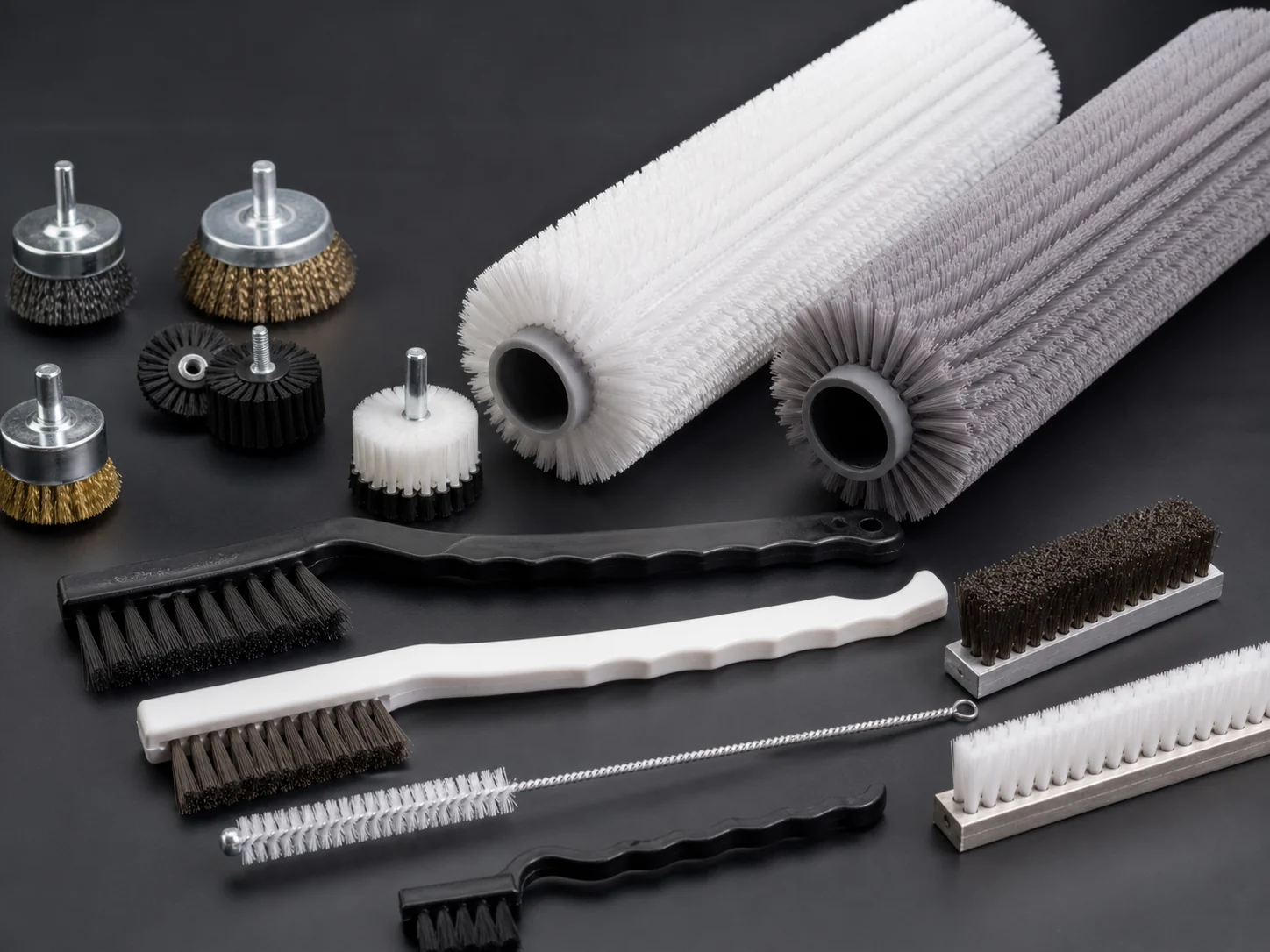
Small brush
500 pcs
Minimum order
Held in one hand: tube, bottle, detail and swab brushes — including long-handled ones with a small head.
Production lead time, once the specification is confirmed
- Up to 500 pcsWithin 7 days
- 501–50,000 pcsWithin 14 days
- Over 50,000 pcsWithin 21 days
Peak season can extend these times; the shipping date is confirmed in writing with your quotation. Sampling and shipping are quoted separately.
The 25mm PA66 Tube Brush is a hand-guided internal cleaning brush built around a 120mm round PA66 nylon filament head and a fixed polypropylene handle. It clears chips, oil, coolant residues, light scale, carbon films, and process deposits from heat exchanger tubes, ports, and other cylindrical bores with an internal diameter close to 25mm.
What can this brush do for you?
Cleans the full tube circumference in one pass
The round 25mm head distributes PA66 filament around the full 360 degrees of the bore, so a single reciprocating stroke sweeps deposits from the sidewall instead of only the bottom or the top of the tube. This is the contact pattern needed on heat exchanger tubes where residue forms evenly around the internal wall.
Removes chips, oil, coolant, and light deposits without metallic bristles
PA66 nylon filament keeps a firm scrubbing edge even when wet with oil or water-based coolant, yet it is far less likely to score copper, brass, aluminum, or stainless tube walls than a wire brush. That makes it suited to post-machining cleanup and routine heat exchanger maintenance where the tube surface needs to remain dimensional.
Works wet, in oil, and under mild alkaline cleaners
PA66 retains its stiffness and shape after soaking in petroleum-based oils, emulsions, coolants, and mild alkaline wash solutions. The brush can be used during a wash or solvent step instead of only as a dry pre-clean.
Follows threads, cross holes, tapers, and blind-hole bottoms
The 120mm bristled section lets the brush bridge port intersections and sweep internal threads, cross-drilled holes, tapers, and the bottom of blind bores with one insertion. The filament tips flex into small geometry changes while the twisted-wire core keeps the head aligned.
Simple fixed handle for controlled manual strokes
The 220mm PP handle with 12mm grip diameter gives enough purchase for push-pull and rotational cleaning inside short heat exchanger tubes, valve bodies, and manifolds. The fixed connection transfers force directly without a joint that can loosen under twisting.
What is a 25mm PA66 Tube Brush?
A 25mm PA66 Tube Brush is a manual internal-cleaning brush with a twisted-wire core, a 120mm round working head filled with PA66 nylon filament, and a fixed polypropylene handle. The 25mm figure is the nominal diameter measured across the bristle tips; it is selected to match the internal diameter of the tube being cleaned.
In use, the operator inserts the head into the tube or port, then pushes, pulls, or rotates the handle so the filament tips sweep the internal wall. On straight tube runs the bristles stay in full contact around the circumference; at the bottom of a blind hole, the filament tips work debris loose from the closed end. The brush is normally used by hand, although the stem and connection can be changed to suit a machine or extension when the project requires it.
This is a mechanical cleaning tool. It loosens and removes attached residue; it does not flush, chemically descale, or passivate the tube. The standard PA66 filament is intended for chips, oil, coolant, light scale, carbon films, and similar process deposits. For hard rust, baked scale, weld spatter, or heavy carbon, a wire or abrasive brush remains the more appropriate tool.
Operating limits come mainly from the filament material and stem. PA66 softens if run too hot or too fast under heavy interference, so a manual stroke with reasonable speed is the standard use case. The stem should not be bent repeatedly at sharp angles, and the brush should not be forced through a tube measurably smaller than the head diameter.
Technical Specifications
The values below are the standard configuration for this product. Diameter, head length, handle length, filament size, stem material, and trim profile can be adjusted to the tube chart or production standard you are cleaning to.
| Parameter | Value / Option |
|---|---|
| Nominal brush diameter | 25 mm, measured across bristle tips |
| Head shape | Round, 360-degree filament fill |
| Bristled head length | 120 mm standard; can be extended or shortened |
| Filament material | PA66 (nylon 6/6) |
| Filament diameter | 0.30 to 0.50 mm, selected by fill density and aggressiveness |
| Stem / core | Twisted-wire core, galvanized steel standard; 304 or 316 stainless available |
| Handle material | Polypropylene (PP) |
| Handle length | 220 mm |
| Grip diameter | 12 mm |
| Connection | Fixed head-to-handle connection |
| Overall length | Approx. 340 mm (head plus handle) |
| Recommended tube ID | 22 to 25 mm for full 360-degree contact; 26 to 28 mm only for light wiping or loose residue |
| Operating environment | Oils, coolants, water-based cleaners, mild alkaline detergents; avoid strong acids, phenols, and strong oxidizers |
| Working temperature | Up to 100 degrees C continuous when wet; short excursions to about 120 degrees C |
| Brush type | Custom Tube & Pipe Bore Brushes |
| How it is driven | Hand-guided |
| Cleaning target | shell-and-tube heat exchanger, hydraulic manifold, and coolant and oil gallery cleaning |
| Surface or part | tubes, ports, bores, holes, blind holes, valves, walls, and nozzles |
| Residue or debris | coolant, oil, scale, chips, light scale, process deposits, carbon, and coolant residue |
| Mounting / connection | Fixed head-to-handle connection |
The recommended tube ID row assumes a straight or gently curved tube. For tight U-bends, spirals, or tubes with heavy internal obstructions, allow more clearance or choose a smaller diameter head.
Where does this brush work best?
- Shell-and-tube heat exchangers, condensers, and evaporators where 22 to 25 mm ID tubes collect oil films, coolant residue, light scale, and sludge between chemical cleanings. The brush provides mechanical action that loosens deposits before flushing or circulation.
- Hydraulic manifolds, valve bodies, and spool bores after machining or assembly, where chips, lapping compound, and coolant remain in ports, cross holes, and internal threads and a wire brush would risk damaging sealing surfaces.
- Coolant and oil galleries in engine blocks, gear cases, and transmission housings, including intersecting passages and blind holes that need debris removed before component assembly.
- Tube ends, pipe stubs, filter housings, pump bodies, and nozzles with light process deposits or dried product on the internal diameter.
- Pre-cleaning and final brush-out of tube interiors before inspection, pressure testing, coating, or reassembly.
How do I choose the right one?
Start with the tube ID, not the brush diameter
Measure the internal diameter at the mouth, along straight sections, and at any bend or reducer. For a 25 mm nominal head, straight tubes with an ID of 22 to 25 mm receive firm full-circumference contact. Tubes with a 26 to 28 mm ID can still be cleaned when the residue is light or the goal is a rubbing action, but loaded or bonded deposits will not be fully contacted.
| Tube ID | Fit with 25 mm head |
|---|---|
| Below 20 mm | Oversized head; stem may scrape the wall and bristles mat. Select a smaller brush. |
| 20 to 22 mm | Tight fit with high interference; use only on straight, smooth tubes and verify bristles flex without matting. |
| 22 to 25 mm | Normal operating range; full-circumference contact for routine cleaning. |
| 26 to 28 mm | Partial or light contact; acceptable for wiping films or loosening light residue, not for heavy deposits. |
| Above 28 mm | Select a larger diameter head. |
Match the filament to the residue and surface
PA66 is a stiff nylon filament with good wet strength and resistance to petroleum-based oils, coolants, and mild alkaline cleaners. Choose it when the residue is chips, coolant, oil, light scale, carbon film, powder, or dried product and the tube wall is copper, brass, aluminum, stainless, or steel that should not be scored by metallic wire. If the deposit is hard rust, mineral scale, weld spatter, high-temperature carbon, or baked varnish, a stainless steel or brass wire tube brush, or a silicon-carbide-impregnated nylon tube brush, will be more effective. For strong acids, phenols, or oxidizers, PA66 is not the right filament; specify a chemically resistant polymer for that environment.
Set the bristled length from the tube depth
The standard 120mm head cleans about 120mm of bore per insertion. Short tube stubs, nozzles, ports, and valve bores match this well. For tube runs longer than 200mm, either pass the brush in overlapping strokes or specify a longer bristled section. The handle length must also leave enough working length outside the tube for the operator to grip and control the tool.
Decide between manual and powered use
The fixed PP handle is designed for manual reciprocation and light rotation. If the cleaning station uses an extension, drill, or machine feed, the stem and connection should be changed to a shank or coupling design before ordering. Powered rotation can be used with PA66 filament, but high speed combined with tight interference will heat the filament and shorten its life. Confirm the maximum RPM or feed rate beforehand.
Use it as part of the full cleaning sequence
Brushing removes attached material but does not replace rinsing, chemical descaling, passivation, flushing, or borescope inspection. A heavily plugged or scaled tube should be rodded or chemically treated before brushing, not after.
Can I customize this brush?
Yes. The standard 25mm PA66 configuration is a starting point. For a project-specific part, we will need the tube ID, tube length, bend radius, surface material, residue type, cleaning chemical, operating temperature, and whether the brush will be used by hand or in a machine. A drawing, tube sample, or photo of the fouled tube helps close the details faster.
- Head diameter: adjust to the actual tube ID from roughly 15 mm to 40 mm or more; match the selected interference.
- Bristled head length: extend or shorten the 120 mm working section for the tube depth.
- Filament size and trim: choose 0.30 to 0.50 mm PA66 filament, set fill density, use crimped or flagged filament, or change the end profile to round, flat, or end-tuft for blind holes.
- Stem or core: galvanized steel, 304 or 316 stainless, coated wire, or a flexible polymer cable for curved passages.
- Handle: PP standard; change length, grip diameter, shape, overmold, hanging hole, or use a threaded, quick-connect, or machine shank interface.
- Color and marking: custom handle or filament color, pad print, laser marking, or barcode labeling for tool-room identification.
- Packaging: bulk, individual polybag, kit, shelf box, or project-specific packing for MRO or resale.
If the application requires project-specific material documentation, inspection records, or third-party testing support, we can assist with those requirements during the customization process.
Which filament survives the cleaning and still lasts on a 25mm PA66 tube brush?
How can I check that a 25mm head will fit my tube before ordering?
Measure the true tube ID with calipers or a known gauge at both ends and at any bend. For straight tubes, compare the measured ID with the 25mm head: 22 to 25mm ID gives normal full contact, and below 20mm the head is likely to bind. For curved passages, also check the minimum bend radius. If you have a cut-off tube sample, run a dry insertion test before committing to a production quantity.
Does PA66 filament shed into the tube during brushing?
PA66 is tough, but filament can break under excessive interference, sharp internal burrs, or high-speed powered use. After each pass, inspect the brush for missing or matted filaments and the tube for loose fiber. If shedding occurs regularly, reduce interference, use a larger tube or smaller brush, smooth the internal burrs first, and rinse or blow out the tube after brushing.
Can I use the standard 25mm PA66 Tube Brush on a drill?
The fixed PP handle is intended for manual strokes. Running it in a power tool requires a stem and shank designed for rotary use, not the standard hand configuration. Powered use with PA66 filament is possible, but high RPM with tight interference will generate heat and mat the filament quickly. Confirm the working RPM and interference before switching to powered operation.
What will this brush not remove from a heat exchanger tube?
A PA66 tube brush will remove chips, oil, coolant, light scale, carbon film, and soft process deposits. It will not reliably remove hard mineral scale, rust crust, high-temperature carbon, weld spatter, or baked varnish. Those conditions need a wire or abrasive brush, chemical descaling, or hydroblasting. Brushing also does not replace flushing or passivation.
How do I know when the brush is worn out?
Compare the used brush with a new one of the same specification. If the diameter across the bristle tips is visibly smaller, the filament is flattened or matted, the core wire is exposed, the stem holds a permanent bend, or the handle is cracked, replace the brush. In a quality check, a 25mm head that measures below roughly 23mm across the tips in the bristled section should be retired from precision tube cleaning.
How should the brush be cleaned after use?
Rinse the head with a compatible solvent, detergent, or water-based cleaner and shake or blow it dry. Do not leave the PA66 filament soaking in strong acids, phenols, or oxidizing chemicals, and avoid laying the brush with the head bent to one side. For repeated MRO use, hanging the brush or returning it to a holder keeps the filament from taking a set.
Guides that go deeper on this
Custom Manufacturing RFQ
Describe Your Application
Send the key measurements, cleaning requirement, residue, material direction, mounting method, quantity, and drawing or photo.
Drawing or photo optional — it speeds things up, it does not gate the enquiry.
Custom Brush RFQ
Send Your Brush Project
Upload a drawing, product photo, or sample photo and provide the core dimensions and cleaning conditions.
“We need a brush to remove wet residue from a stainless steel conveyor, about 800mm wide. The current brush wears quickly. We can send photos.”
“We sell drinkware and need a cleaning brush to include with the product. Quantity around 5,000 pieces.”