
Custom Cleaning Brush
Brass Safety Brush
Manual non-sparking brass safety brush removes rust, scale, paint and corrosion from valves, flanges, threads and tools in ignition-risk environments.
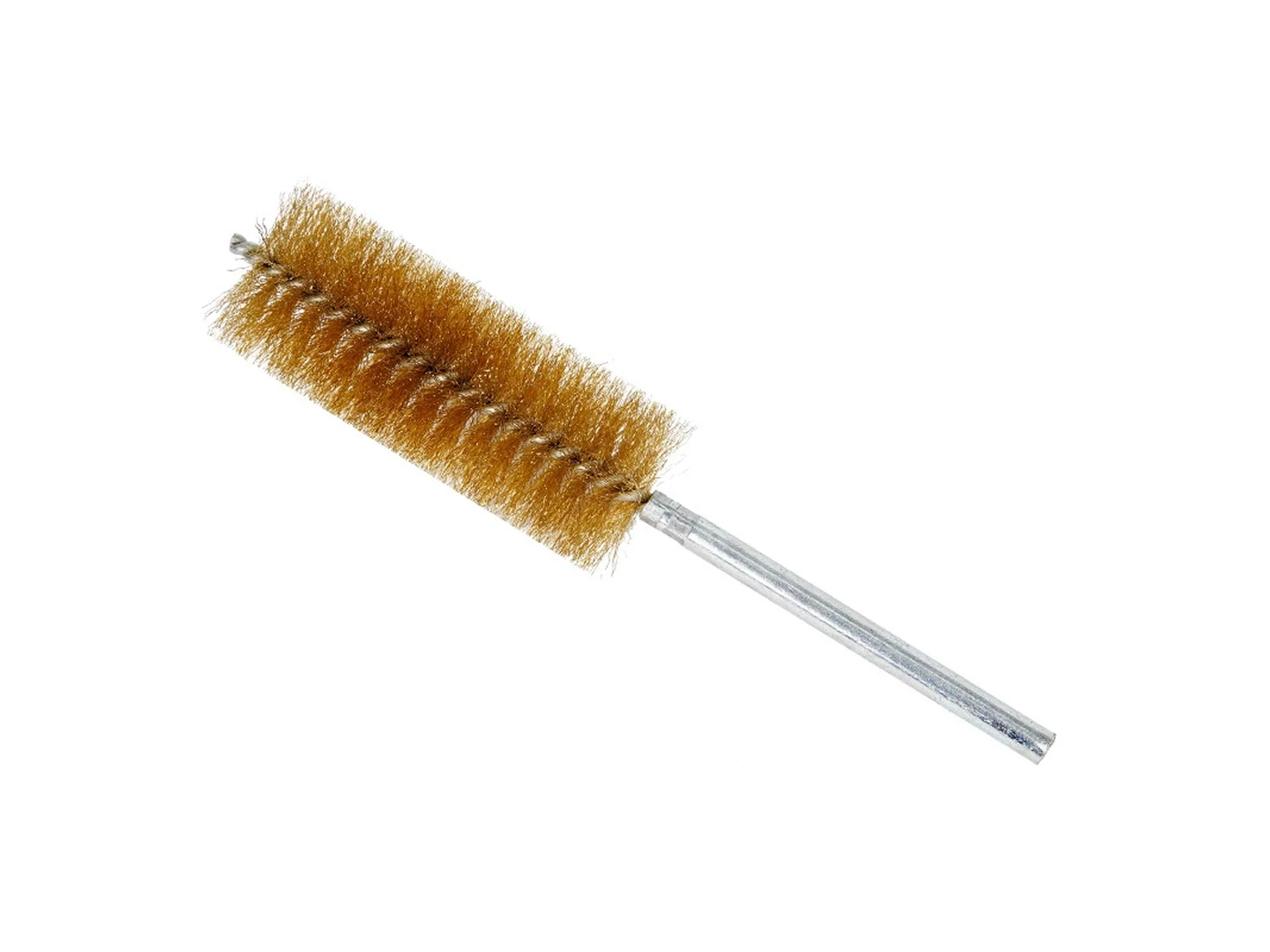
Small brush
500 pcs
Minimum order
Held in one hand: tube, bottle, detail and swab brushes — including long-handled ones with a small head.
Production lead time, once the specification is confirmed
- Up to 500 pcsWithin 7 days
- 501–50,000 pcsWithin 14 days
- Over 50,000 pcsWithin 21 days
Peak season can extend these times; the shipping date is confirmed in writing with your quotation. Sampling and shipping are quoted separately.
Brass Safety Brush is a non-sparking, hand-guided brass wire brush for removing rust, oxide, scale, paint residue, and loose corrosion from valves, flanges, pipe threads, tools, and machined metal surfaces in ignition-risk environments. Its cylindrical wire fill and interchangeable stem configurations let operators reach bores, seats, bolt holes, and recessed contact areas without introducing steel-to-steel spark hazards.
What can this brush do for you?
Non-Sparking Contact for Hazardous-Area Work
The brass wire fill has a much lower sparking tendency than carbon steel when rubbed or struck against metal surfaces, which is why brass hand brushes are standard in areas where flammable vapors, gases, or combustible dust may be present. The operator can scrub threads, gasket faces, and tooling with mechanical action while keeping the ignition risk lower than with ferrous hand tools.
Removes Corrosion Without Gouging Base Metal
Brass is hard enough to break through light to moderate rust, oxide, and paint films, but softer than steel substrates. This means the brush strips contamination while leaving machined surfaces, sealing faces, and thread crests far less torn than a carbon steel wire brush would leave them. It is especially useful before re-machining, coating, or reassembling equipment where surface condition matters.
Reaches Threads, Bores, and Seats That Flat Brushes Miss
The cylindrical fill is available from 3.2 mm diameter, so the working end can enter small valve ports, pipe thread roots, bolt holes, and narrow flanges. The fill section can be made long enough to cover the full seating length, letting one stroke carry the wire tips through the entire contact zone instead of forcing the operator to attack the area in short, blind passes.
Stem Styles Extend the Reach Without Changing the Brush Head
Single stem, double stem, threaded, loop, ring, and flexible extension configurations allow the same fill to be mounted for straight, angled, or offset access. A flexible extension keeps the handle out of the operator’s line while the wire follows a curved pipe entry, and a threaded stem accepts an extension handle for deep or overhead work.
Predictable Wire Wear Protects Critical Parts
Because brass wears visibly and progressively, the operator can see when the fill has lost cutting height or density. That gives the brush a built-in soft stop: as the wire flattens, cleaning action drops, and the brush naturally limits the amount of force it can transfer to the part. This is useful on gasket beds, thread roots, and other areas where uncontrolled abrasion is not acceptable.
What is a Brass Safety Brush?
A Brass Safety Brush is a hand cleaning tool built around a cylindrical or spiral brass wire fill held by a stem, loop, ring, or handle. The operator applies push, pull, or rotating strokes across the contaminated surface, and the tips of the brass wires scrape away rust, oxide, scale, paint residue, and other loose corrosion products. The brush works by mechanical scraping, not chemical reaction; the brass filaments flex under pressure and follow minor surface irregularities while removing debris that has not fused to the base metal.
This is a manual brush, not a power brush for a grinder or drill. The cutting pressure, stroke direction, and contact angle are controlled entirely by hand, which makes it appropriate where a power tool would create dust, heat, or uncontrolled spark risk. The brass fill is intended for light to moderate deposits. It will not remove heavy mill scale, weld slag, or deeply embedded carbon as quickly as a steel wire brush, and the brass itself can leave a soft metallic smear on some surfaces if high pressure is used.
Technical Specifications
| Parameter | Value / Options |
|---|---|
| Fill material | Brass wire, alloy grade selected for non-sparking use and debris type |
| Brush (fill) diameter | 3.2–50.8 mm (0.125–2.0 in), matched to bore, thread, or contact width |
| Brush section length | 25–127 mm (1–5 in), adjusted to the intended contact area |
| Overall length | 152–406 mm (6–16 in), measured from handle end to working tip |
| Filament (wire) diameter | 0.08–0.25 mm (0.003–0.010 in); finer for film and conformability, heavier for scale |
| Stem / handle style | Single stem, double stem, threaded, loop, ring, or flexible extension |
| Stem / core material | Brass or coated steel core, plastic or wooden grip, selected for stiffness and full non-sparking requirement |
| Fill configuration | Spiral, straight, or sectioned cylindrical fill; custom trim and density available |
| Working environment | Dry or solvent/lubricant-assisted manual cleaning; protect from standing moisture and strong acids/alkalis |
| Brush type | Custom Tube & Pipe Bore Brushes |
| How it is driven | Hand-guided |
| Cleaning target | fitting thread preparation, flange and gasket surface cleanup, and tool and instrument maintenance cleaning |
| Surface or part | metal, thread, bores, valves, pipes, holes, metal surfaces, and carbon steel |
| Residue or debris | corrosion, paint, rust, oxide, scale, carbon, weld slag, and overspray |
| Mounting / connection | Threaded Removable / Fixed |
All dimensions and wire grades can be set for the project. Provide the narrowest access opening, required contact area, surface material, and cleaning position so the fill diameter, section length, and stem style can be selected together.
Where does this brush work best?
- Pipe, valve, and fitting thread preparation — removal of rust, dried joint compound, and light corrosion from threads before sealing or reassembly in petrochemical, gas, and fuel handling systems.
- Flange and gasket surface cleanup — clearing oxide and old gasket residue from raised-face flanges, groove seats, and sealing lands without cutting the metal.
- Tool and instrument maintenance — cleaning spanners, wrenches, valve hand wheels, and portable instruments that have surface rust or paint overspray, where a steel brush would create sparks or scratches.
- Small bores and orifices — reaching ports, vents, and drilled holes in fuel, hydraulic, or pneumatic components where a smaller diameter fill is required.
- Pre-weld and pre-coat surface finishing — removing loose corrosion and paint from carbon steel parts before coating, galvanizing, or welding in areas where ferrous contamination must be controlled.
How do I choose the right one?
Start with the narrowest opening and required contact width
For cylindrical fill, select a brush diameter close to the bore ID or thread minor diameter. A fill diameter equal to or up to about 15 percent larger than the opening lets the wire tips lean against the surface and sweep the full circumference without excessive bunching. If the diameter is too small, only a narrow line of contact is cleaned; if too large, the brush cannot enter or the stem interferes.
Match wire diameter to the residue and surface tolerance
Finer wire (0.08–0.15 mm) is appropriate for light rust, paint film, or thin oxide on machined surfaces and gasket faces. Heavier wire (0.18–0.25 mm) gives more scraping force for loose scale and thicker corrosion but will remove metal faster and may damage soft substrates. Test on a scrap or hidden area when surface finish is important.
Choose the stem style for the actual access path
Single stem configurations are the shortest and simplest for straight-on access. Double stem or loop forms provide a two-handed pulling action and better control in long strokes. A threaded end accepts an extension handle; a ring is convenient for hanging storage; a flexible extension follows elbows, offsets, and obstructed piping. The stem must not be bent repeatedly or it will fatigue.
Check contamination and chemical compatibility
Brass wire can transfer a visible brass-colored smear to stainless steel, aluminum, and other nonferrous surfaces. If cross-contamination is prohibited, test the brush on a representative sample first and plan a solvent wipe or passivation step. Avoid exposing the brush to strong acids, ammonia, or salt-laden fluids that rapidly corrode the brass fill or stem.
When a different brush is the better choice
Use a steel wire brush when heavy mill scale, weld slag, or thick cured coatings must be removed quickly and spark risk is not a controlling factor. Use a nylon, PBT, or non-metallic brush when metal contamination is completely prohibited. If the passage is smaller than about 3 mm or the contamination is hard carbon, consider a needle tool, chemical cleaning, or a different access method. Brass is the right call when non-sparking behavior and surface preservation outweigh maximum stock removal.
Can I customize this brush?
The Brass Safety Brush is project-built because access geometry, residue type, and site rules vary. We can adjust:
- Fill geometry — diameter, section length, spiral or straight configuration, trim length, and wire density
- Wire — filament diameter, brass alloy grade, and temper to match residue aggressiveness and surface hardness
- Stem / handle — single or double stem, threaded, loop, ring, flexible extension, handle length, grip material, and ergonomic shape
- Overall dimensions — total reach from 152 mm to 406 mm or more, with intermediate lengths matched to the work position
- Non-sparking assembly — full brass, plastic, or wood construction where ferrous materials are restricted, or coated steel core where extra stiffness is required
- Marking and packaging — color coding, pad print or laser marking, bulk packing, individual bags, or project-specific labeling
To define a custom brush, provide the minimum opening or bore diameter, the contact-area length and shape, the surface material and hardness, the residue to be removed, the required stem or handle style, and any site restrictions on materials. A sketch, sample part, or photo shortens the specification step.
If the project requires material certificates, third-party testing, or inspection documentation for site acceptance, we can support those requirements during the customization process.
Which filament survives the cleaning and still lasts on a brass safety brush?
How do I know whether the brass brush will remove my residue?
Brass wire removes loose rust, oxide, paint film, dried lubricant, and light scale by mechanical scraping. If the residue scrapes off with a brass test piece or comes off with moderate hand pressure, the brush will handle it. If the contamination is hard scale, baked-on carbon, or weld slag, expect longer working time or choose a steel or abrasive brush.
Will this brush scratch a stainless steel surface?
Brass is softer than most stainless steels, so deep scratching is unlikely under normal hand pressure. However, brass can smear and leave a faint gold-colored transfer mark on polished or bright stainless surfaces. Test on a scrap area. If the part requires a completely metal-free finish, choose a non-metallic brush or plan a post-cleaning passivation or solvent wipe.
What should I check before taking the brush into a hazardous area?
Inspect the fill for broken wires and the stem or handle for cracks. Verify that the complete tool meets the site’s non-sparking requirement: if the handle or core contains steel, it may not be acceptable even though the fill is brass. Confirm that the brush has not picked up ferrous debris from earlier use, and use the tool only within the area’s work permit conditions.
How do I clean and store the brush between uses?
Tap or brush out loose debris, then wash with a compatible solvent or detergent and dry the fill with compressed air or a clean cloth. Store it dry and away from acids, ammonia, or salt air, which attack brass. Do not hang the brush by a bent or kinked flexible stem.
When should I replace the brush?
Replace the brush when the wire tips are flattened more than a third of their visible length, when the fill density is visibly reduced, or when a full cleaning pass takes noticeably longer than it did with a new brush. Continuing to use a worn brass brush simply transfers pressure to the stem and handle without cleaning effectively.
Can this brush be used with a power drill or grinder?
No. This is a manual hand brush. Power-driven brass wire brushes use different shanks, guards, and speed ratings. Using this stem in a power tool can cause the stem to bend or break and creates an uncontrolled safety hazard. For mechanical cleaning, request a dedicated power brush configuration.
Guides that go deeper on this
Brass Safety Brush vs Steel Wire Brush on Sensitive Metals
Read this guideGuideMaintaining Brass Brushes in Spark-Sensitive Areas
Read this guideGuideCustom Brush Sampling and Validation Plan
Read this guideGuideNon-Sparking Wire Brush: Brass, Bronze or Beryllium Copper?
Read this guideGuideStainless Steel vs Carbon Steel vs Brass Brush Wire
Read this guideCustom Manufacturing RFQ
Describe Your Application
Please share the brush dimensions, working area, residue type, material direction, quantity, and a drawing or photo for quotation.
Drawing or photo optional — it speeds things up, it does not gate the enquiry.
Custom Brush RFQ
Send Your Brush Project
Upload a drawing, product photo, or sample photo and provide the core dimensions and cleaning conditions.
“We need a brush to remove wet residue from a stainless steel conveyor, about 800mm wide. The current brush wears quickly. We can send photos.”
“We sell drinkware and need a cleaning brush to include with the product. Quantity around 5,000 pieces.”