
Custom Cleaning Brush
Stainless Steel Wire Industrial Cleaning Brush
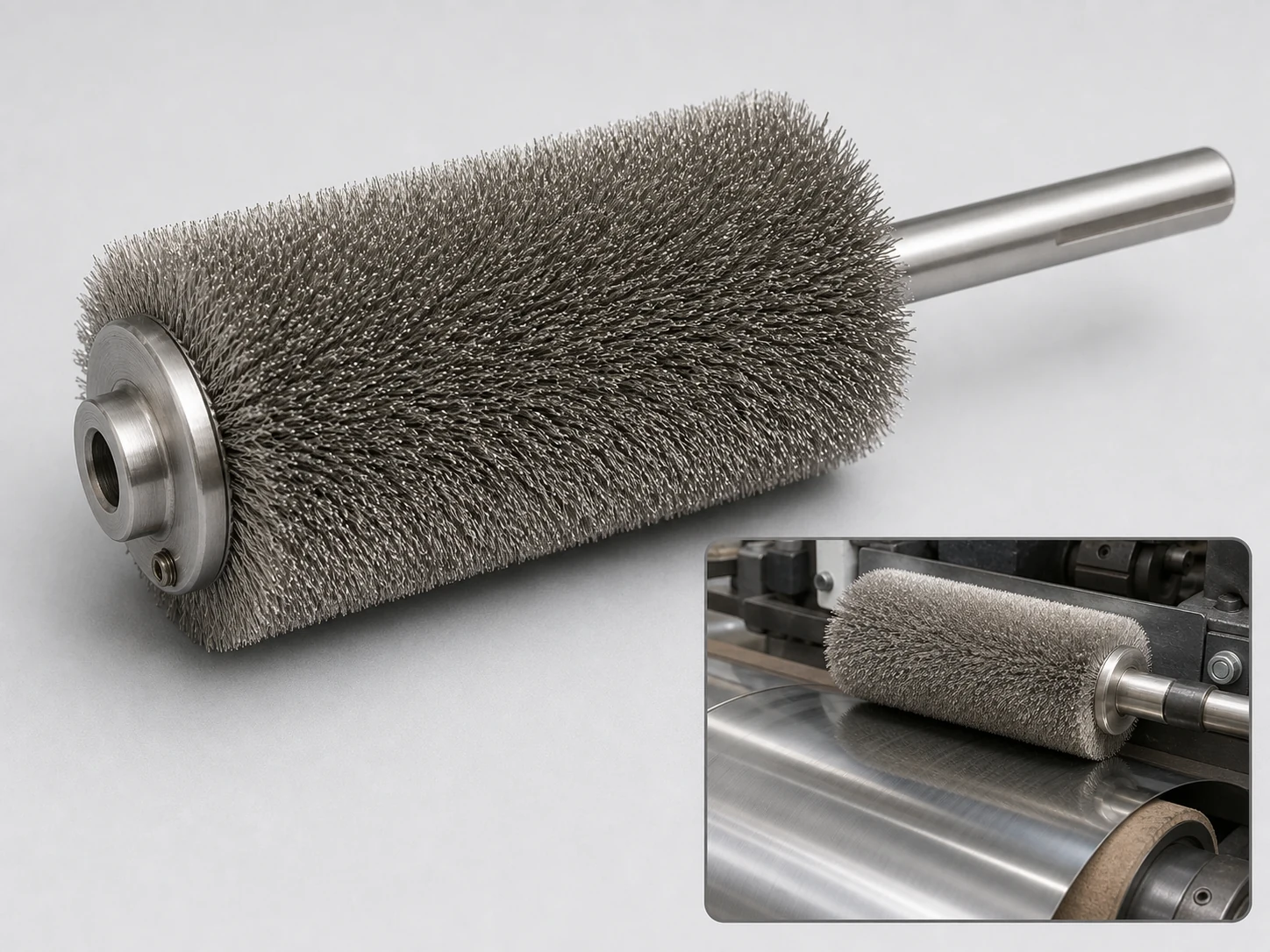
316 stainless wire cleaning brush for removing oxide, scale, oil, dust and residue from machine belts, screens, rollers, guides and fixtures.
Small brush
500 pcs
Minimum order
Held in one hand: tube, bottle, detail and swab brushes — including long-handled ones with a small head.
Production lead time, once the specification is confirmed
- Up to 500 pcsWithin 7 days
- 501–50,000 pcsWithin 14 days
- Over 50,000 pcsWithin 21 days
Peak season can extend these times; the shipping date is confirmed in writing with your quotation. Sampling and shipping are quoted separately.
A corrosion-resistant stainless steel wire industrial cleaning brush for removing oxide, scale, oil, dust, lint, and residue from machine surfaces such as belts, screens, drums, rollers, guides, and fixtures. Built from 316 stainless steel wire, the brush can be configured for manual cleaning or fixed, rotary, and machine-mounted maintenance tasks.
What can this brush do for you?
Clean stainless steel without carbon contamination
The 316 stainless steel wire removes residue from stainless surfaces without leaving behind carbon steel particles that later rust and discolor the part. For maintenance teams and OEM lines that must keep stainless equipment free of iron contamination, using a dedicated stainless wire brush is a straightforward way to protect the substrate while cleaning it.
Hold up in wet and washdown environments
316 stainless resists corrosion from water, humidity, cleaning chemicals, and light process fluids. The wire does not rust onto the machine surface or shed oxidized bristles the way carbon steel brushes do, which keeps maintenance stations and washdown lines cleaner.
Adjust the cleaning action to the residue
Filament diameters from 0.05 mm to 1.20 mm cover everything from fine dust and lint to dried oil film, polishing compound, oxide, and scale. Thinner wire conforms and wipes, while thicker wire digs into harder deposits. Trim lengths from 5 mm to 100 mm add another layer of control for flat versus contoured surfaces.
Get full contact across open machine surfaces
Fill densities from 20 to 200 tufts per 100 cm² let you match the wire pattern to the surface type. Dense fills produce even contact on flat belts, plates, and drums; lower-density fills allow individual wire tips to enter grooves, seams, and screen openings.
Use one brush family across manual and automated stations
The same wire construction can be mounted on a handle for operator use, on a stem or shaft for drill-driven or spindle cleaning, or on a strip, plate, wheel, or ferrule for mounting into an automated station on a conveyor, roller, or web line.
What is a Stainless Steel Wire Industrial Cleaning Brush?
A stainless steel wire industrial cleaning brush is a hand-guided or machine-mounted cleaning tool that uses stainless steel wire filaments to mechanically scrape, loosen, and remove residues from accessible industrial equipment surfaces. It is built for maintenance and process cleaning where dust, oil, oxide, lint, scale, and loose particles build up on belts, screens, drums, rollers, guides, fixtures, and other machine surfaces.
During use, the wire tips contact the surface and flex under operator or machine motion. The tips break the bond between the residue and the metal, while the motion carries the loosened material away from the working zone. Unlike abrasive pads or flap wheels, the brush does not remove significant base material; it cleans the surface by scraping and moving residue, which helps preserve dimensional accuracy on machined parts and process equipment.
The brush is a maintenance tool, not a finishing or polishing tool. It will not produce a mirror finish, and it will not replace chemical passivation, pickling, or abrasive preparation when those processes are required. It is most effective when the residue is loosely attached or can be mechanically loosened without cutting into the base surface.
Technical Specifications
The values below represent the standard configuration range for this brush. Dimensions, wire diameter, trim length, fill density, and mounting can be adjusted to your machine and cleaning task.
| Parameter | Standard Range / Options |
|---|---|
| Wire material | 316 stainless steel (AISI 316) — selected for corrosion resistance |
| Filament diameter | 0.05–1.20 mm; thinner for dust/lint and light film, thicker for oxide and scale |
| Trim length | 5–100 mm; shorter for aggressive flat-surface contact, longer for contour following and reach |
| Fill density | 20–200 tufts per 100 cm²; higher density for flat open surfaces, lower density for grooves and screens |
| Head width | 20–100 mm; matched to the width of the contact surface or cleaning station |
| Overall length | 150–400 mm; adjusted for operator reach, mounting envelope, or machine clearance |
| Mounting / interface | Handle, ferrule, strip, wheel, plate, stem, or shaft |
| Handle / backing material | Wood, polypropylene, aluminum, stainless steel, or other project-suitable material |
| Operating environment | Wet, humid, washdown, or mild chemical exposure; dry industrial environments |
| Brush type | Custom Handheld Detail Brushes |
| How it is driven | Hand-guided |
| Cleaning target | stainless steel mesh or slat conveyor belt, screen and sieve, and drum and roller cleaning |
| Surface or part | belts, drums, roller, screens, guides, fixtures, metal, and rails |
| Residue or debris | dust, scale, lint, oil, oxide, polishing compound, adhesive, and overspray |
| Mounting / connection | Handle, ferrule, strip, wheel, plate, stem, or shaft |
If your installation has a fixed shaft size, bolt pattern, or rail spacing, provide that dimension at the RFQ stage so the mounting interface is built to fit.
Where does this brush work best?
- Stainless steel mesh or slat conveyor belts in food, baking, metal forming, or heat-treat lines where baked-on residue, oil, or dust accumulate on the belt surface.
- Screens and sieves in powder processing, printing, and drying systems where lint, dust, and compound close off mesh openings.
- Drums and rollers on laminating, coating, calendering, and printing lines where adhesive, overspray, or built-up compound must be removed from the roll surface.
- Guides, rails, fixtures, and jigs on assembly and welding equipment where scale, spatter, polishing compound, or oxide builds up on contact points.
- Machine frames, housings, and stainless enclosures that need periodic cleaning in humid, washdown, or outdoor service conditions.
How do I choose the right one?
Classify the residue first
Loose dust, lint, and light oil film only need a thin wire, typically 0.05–0.15 mm. Dried residue and polishing compound respond to medium diameters around 0.15–0.35 mm. Oxide, scale, and heavy deposits generally require 0.35 mm and larger. Starting with the smallest filament diameter that removes the residue protects the surface and reduces wire breakage.
Set trim length by geometry and pressure
Short trim lengths (5–20 mm) keep the wire stiff and deliver higher pressure for flat belts, plates, and guides. Longer trim lengths (30–100 mm) flex around drums, rollers, curved surfaces, and screens, but apply less force per tip. If the surface has tight grooves or perforations, choose a longer, thinner filament so the tips can enter without jamming.
Match fill density to the contact pattern
Use dense fills (near the top of the 20–200 tufts per 100 cm² range) for continuous flat surfaces where uniform coverage matters. Use lower densities when the wire must reach into seams, mesh openings, or recessed areas. Over-dense fills on perforated surfaces can trap debris and make the brush harder to clean.
Select the mounting by how the brush will be driven
A handle fits operator-led cleaning. A stem or shaft adapts to a drill or spindle. A wheel mounts where rotating contact follows a moving web. A strip, plate, or ferrule suits fixed mounting brackets on automated lines. Measure the shaft diameter, bolt hole spacing, or rail width before ordering.
Confirm the environment before committing
316 wire is standard for wet, humid, and washdown conditions. If the brush runs in dry air with no chemical exposure, 304 may be acceptable at lower cost, but 316 provides a wider chemical safety margin. The handle or backing material must also survive the same cleaning chemicals, temperature, and moisture as the wire.
When a different brush is the better answer
For aluminum, galvanized steel, or coated surfaces, use a dedicated brass or nylon brush and keep it separate from stainless tooling to avoid cross-contamination and galvanic corrosion. For polished or decorative stainless finishes, test the finest wire on scrap first; if marks are unacceptable, switch to a non-woven or filament brush. For hardened, fused scale or thick weld slag that wire tips cannot loosen, use abrasive blasting, grinding, or a chemical descaling process.
Can I customize this brush?
Most stainless steel wire industrial cleaning brushes are configured to the machine rather than bought off the shelf. To define the right build, we need: the surface material and hardness, the residue type and how tightly it adheres, the contact width and contour, the mounting space and drive method, and the cleaning environment including chemicals, moisture, and temperature. A drawing, photo, or sample of the existing brush shortens the project time.
Configuration variables
- Wire — 316 stainless standard; 304 when project requirements allow; filament diameter, straight or crimped wire form, trim length, and tip shape.
- Head geometry — width, length, flat or curved face, fill density, tuft pattern, and edge profile.
- Mounting interface — handle, ferrule, strip, wheel, plate, stem, or shaft; dimensions matched to existing equipment.
- Handle or backing — material, length, grip design, hanging feature, bolt pattern, or protective coating.
- Marking and identification — color coding, laser marking, pad printing, labeling, or batch identification.
- Packaging — bulk, individually wrapped, kit, line-side bin, or project-specific packing.
If your project requires material certification, batch traceability, inspection documentation, or third-party testing, those requirements can be included in the project scope.
Which filament survives the cleaning chemicals a stainless steel wire industrial cleaning brush meets?
Will a 316 stainless wire brush leave rust marks on my stainless equipment?
Not if the brush is dedicated to stainless surfaces. Rust marks on stainless usually come from carbon steel wire or from particles transferred from carbon steel tools. Keep the brush separate from carbon steel cleaning, and do not use the same brush on carbon steel and then on stainless in the same shift without thorough cleaning.
What should I do before putting the brush on an automated line?
Check the mounting fit, shaft runout, and contact alignment first. Run the brush briefly without load and listen for wire hitting brackets or guards. Then run a test patch on the machine surface and inspect for wire loss, uneven wear, or surface marking before releasing the station to production.
How do I know if I need a thicker wire?
If the current wire bends permanently, flattens, or stops removing the residue after a few passes, the filament is too thin for the load. Increase the diameter by one step. If the wire removes residue but leaves unacceptable scratches, go thinner or switch to brass/nylon. A scrap test is always cheaper than a damaged production surface.
Can this brush remove weld heat tint or restore passivity on stainless?
No. The brush can loosen and remove surface oxide and spatter that is mechanically attached, but it does not restore the passive chromium layer that stainless relies on for corrosion resistance. Weld heat tint and deep oxide should be followed by chemical pickling and passivation where the specification requires it.
What maintenance should I schedule for a fixed cleaning brush station?
Inspect at every shift or scheduled maintenance window: measure remaining trim length against the minimum contact requirement, look for broken or missing tufts, check mounting fasteners for loosening, and clear trapped debris from the fill. Replace the brush when wire length falls below the point where it still contacts the surface or when fill loss changes the cleaning pattern.
Is this the right brush for aluminum tooling?
Typically no. Stainless steel wire on aluminum can embed small iron particles that later corrode and pit the aluminum surface. For aluminum use a dedicated brass or nylon brush, and store it separately so it cannot transfer stainless or carbon particles to the next job.
Guides that go deeper on this
How to Choose Stainless Steel Brush Roller
Read this guideGuideStainless Steel Brush Rollers: What Suits a Glass Line?
Read this guideGuideStainless Steel Brush Rust Prevention in Wet Applications
Read this guideGuideCleaning, Drying, and Storing Industrial Brushes
Read this guideGuideNon-Sparking Wire Brush: Brass, Bronze or Beryllium Copper?
Read this guideCustom Manufacturing RFQ
Describe Your Application
For a custom quote, we need the key dimensions, surface or part, residue, material preference, quantity, and reference image or drawing.
Drawing or photo optional — it speeds things up, it does not gate the enquiry.
Custom Brush RFQ
Send Your Brush Project
Upload a drawing, product photo, or sample photo and provide the core dimensions and cleaning conditions.
“We need a brush to remove wet residue from a stainless steel conveyor, about 800mm wide. The current brush wears quickly. We can send photos.”
“We sell drinkware and need a cleaning brush to include with the product. Quantity around 5,000 pieces.”