
Custom Cleaning Brush
Cement Conveyor Cleaning Brush
Rotary cement conveyor cleaning brush for removing carryback, dust and sticky fines from conveyor belts.
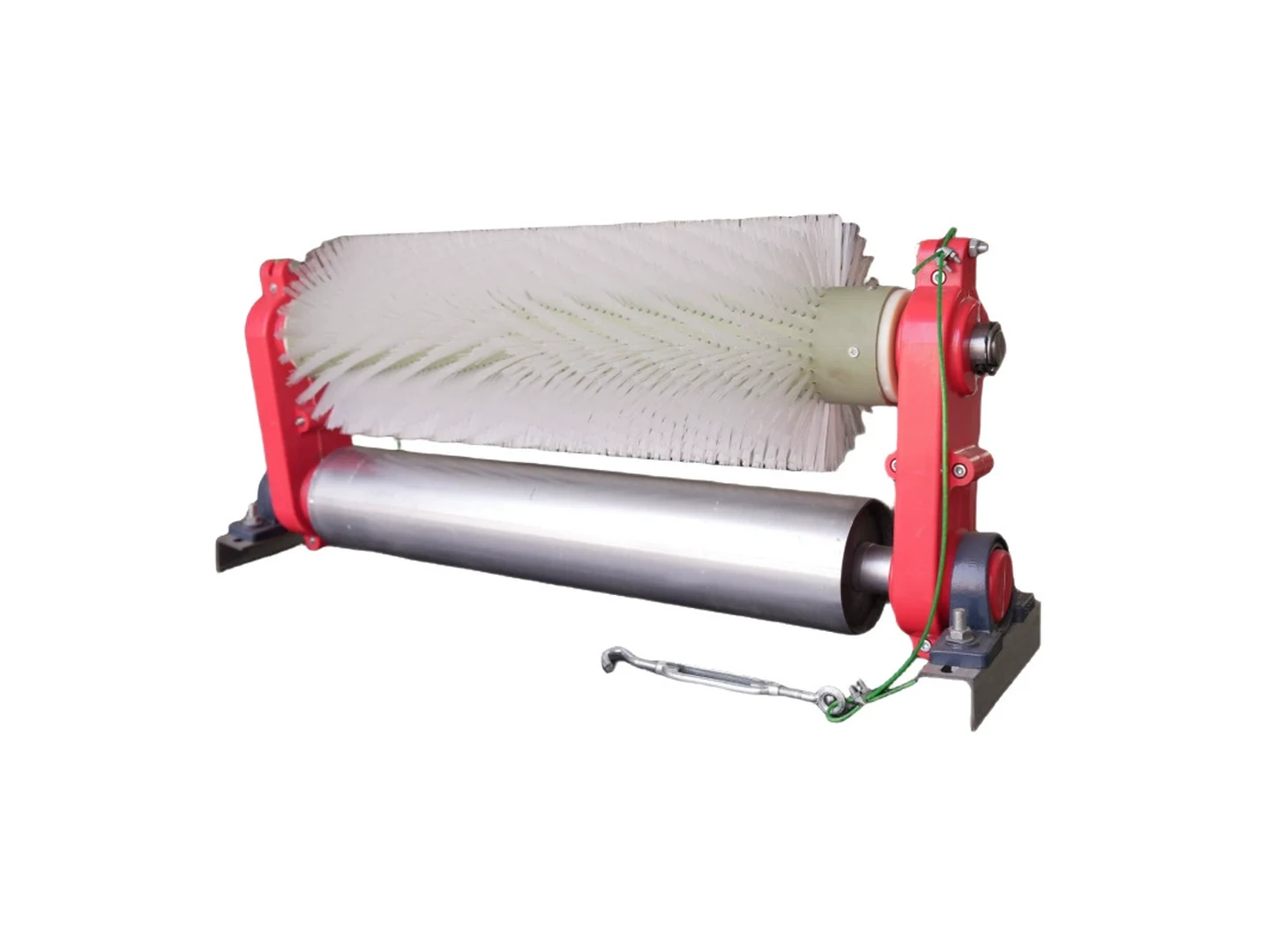
Large-format brush
100 pcs
Minimum order
Built one at a time on a core or channel: full-width rollers, sweeper brooms and long strip.
Production lead time, once the specification is confirmed
- Up to 100 pcsWithin 20 days
- 101–1,000 pcsWithin 30 days
- Over 1,000 pcsConfirmed with your quotation
Peak season can extend these times; the shipping date is confirmed in writing with your quotation. Sampling and shipping are quoted separately.
A rotary Cement Conveyor Cleaning Brush that removes carryback, cement dust, clinker fines, and sticky residue from conveyor belts, return paths, and pulley surfaces. PP or nylon fill, working widths from 100 to 3000 mm, and a shaft-mounted core for powered conveyor belt cleaning systems.
What can this brush do for you?
Continuous full-width carryback removal
The brush rotates against the belt as a powered cleaning brush roller, sweeping loose powder and soft fines off the belt cover before the material reaches return idlers, the tail pulley, or the floor. That means fewer manual cleanup stops and less buildup at the return side.
Edge coverage that prevents deposit bands
The working width is sized slightly wider than the belt, with 5 to 15 mm of overlap per side. This keeps the belt edges inside the filament contact path so fine dust does not compact into dark bands where the cleaning path would otherwise end.
Two filament families for harsh cement duty
Polypropylene fill works well for fine dry cement, limestone, and fly ash, with good moisture resistance at an economical fill cost. Nylon PA6 or PA66 fill is available for abrasive clinker dust, higher-temperature sections, and sticky carryback, holding tip stiffness longer and resisting early filament wear.
Controlled engagement instead of heavy blade pressure
Radial contact is set in the 2 to 10 mm range. The flexible filaments remove surface residue while the filament bend absorbs movement from splices, rough covers, and belt wander. In many installations this produces less belt polishing and splice stress than a rigid scraper blade.
Built as part of a rotating machine, not as a hand tool
The core and shaft are engineered for continuous rotation. Machined or keyed shaft ends connect to gearmotors, sprockets, or the existing cleaner frame, so brush speed can be controlled independently of belt speed and kept consistent across the full width.
What is a Cement Conveyor Cleaning Brush?
A Cement Conveyor Cleaning Brush is a cylindrical rotary brush installed against a cement or raw-material conveyor belt. It is normally mounted under the return belt, after a head-pulley discharge, or at a transfer point where the belt can be reached, and then driven by a gearmotor or connected to the conveyor drive. As the brush turns, the filament tips contact the belt cover and sweep off powder, soft fines, and light carryback that primary cleaning leaves behind.
The working part is a core filled with PP or nylon filaments and carried on a shaft. Brush diameter, core diameter, trim length, filament thickness, and fill density are selected for belt width, belt speed, residue type, moisture, and operating temperature. It is not a hand brush used for occasional maintenance. It is a continuous-duty component that must be mounted with correctly sized shafting, bearings, and drive hardware.
The product also has clear limits. It does not remove large lumps or hardened slabs, and it does not replace a primary belt scraper in heavy carryback service. It is the second stage that finishes the belt surface, or the main contact stage for light dusty residue where a metal blade would be unnecessarily aggressive.
Technical Specifications
| Parameter | Specification / Options |
|---|---|
| Working width | 100 to 3000 mm, matched to belt width |
| Brush outer diameter | 60 to 500 mm |
| Core diameter | 25 to 250 mm |
| Shaft diameter | 12 to 100 mm |
| Trim length | 15 to 100 mm free-length from core face to filament tip |
| Fill materials | Polypropylene PP or Nylon PA6 / PA66 |
| Filament diameter | 0.3 to 1.2 mm, selected for residue and belt cover sensitivity |
| Contact setting | 2 to 10 mm radial engagement; 5 to 15 mm edge overlap per side |
| Rotation | Powered shaft, gearmotor, sprocket, or existing drive interface |
| Fill pattern | Straight, crimped, or spiral arrangement depending on cleaning duty |
| Shaft / hardware | Carbon steel, treated carbon steel, or stainless steel for wet or alkaline zones |
| Brush type | Custom Roller and Conveyor Brushes |
| How it is driven | Machine-driven, mounted in the equipment |
| Cleaning target | return side of overland and plant conveyor, head pulley and transfer-point, and raw mill cleaning |
| Surface or part | belts, conveyors, roller, edges, metal, transfer points, and frames |
| Residue or debris | fines, dust, powder, leaves, cement dust, ash, and sticky carryback |
| Mounting / connection | Powered shaft, gearmotor, sprocket, or existing drive interface |
These are standard design ranges. For wide belts, shaft diameter and core diameter are increased together to limit deflection. For narrow belts, a compact assembly is used. The final build is calculated from belt speed, installed clearance, and drive torque.
Where does this brush work best?
Return side of overland and plant conveyors
After discharge, the belt carries a film of cement or raw-material dust back along the return run. A powered roller brush for conveyor belt cleaning removes that film before it drops onto return idlers and builds up at the tail end.
Head pulley and transfer-point cleaning
Installed after a primary scraper, the brush finishes the belt surface before it leaves the discharge zone. This is where sticky fines, moisture-softened dust, and carryback films are removed without loading the belt edge with blade pressure.
Raw mill, finish mill, and packhouse lines
Conveyors handling limestone, gypsum, fly ash, clinker, and finished cement each produce a different residue. On these lines the brush is selected by material type: softer PP fill for dry powders, nylon fill for abrasive or damp material.
Snub pulley and roller face cleaning
Where sticky fines accumulate on snub pulleys or return roller faces, a separately mounted brush can keep the roller surface clean and reduce belt tracking problems caused by uneven buildup.
How do I choose the right one?
Start from the conveyor, not from a catalog part number. Belt width, available mounting clearance, residue composition, and belt speed decide the brush. The following steps will narrow the configuration quickly.
Set the working width from the belt width
Order the brush as belt width plus 5 to 15 mm on each side. This maintains edge cleaning without allowing the outer filament bundles to fold over the belt edge. If the belt has pronounced tracking movement, add extra overlap on the wander side and confirm guide roller alignment.
Match the fill to the residue, not just the cost
| Condition | Preferred starting configuration |
|---|---|
| Loose dry cement or limestone dust | PP or nylon fill, finer filament diameter with a denser tip pattern |
| Abrasive clinker or granulated slag | Nylon PA6 or PA66, thicker filaments, shorter trim for support |
| Wet or sticky carryback | Nylon fill, open pattern that sheds paste, larger brush outer diameter |
| High belt speed or long service intervals | Nylon, shorter trim, larger core and shaft, bearings at both ends or intermediate supports |
These are starting points. A trial section on the actual conveyor is the most reliable way to confirm the fill before committing the full belt width.
Adjust engagement, not mounting force
Set initial radial contact between 2 and 10 mm by moving the brush center, not by forcing the shaft into the belt. If residue remains, increase engagement inside that range. If the belt cover begins to polish or splice wear appears, reduce it. The brush should ride over mechanical splices instead of bottoming out against them.
Size the core and shaft for the full span
On wide belts, shaft deflection often causes more cleaning unevenness than filament choice. Increase shaft diameter for long spans, use steel or stainless core material, and support the assembly with bearings at both ends or intermediate pillow blocks. A flexible center lets the middle of the brush push deeper while the edges lose contact.
When this brush is not the right tool
For heavy slabs, large lumps, or material that has set like rock, install a polyurethane or metal primary scraper ahead of the brush. If the belt surface cannot tolerate any filament contact, consider an air knife or vacuum system. For vertical chutes, narrow ledges, or guide rails that a rotating cylinder cannot reach, a strip brush or static fill brush is the better shape. The Cement Conveyor Cleaning Brush is the correct choice when the job is continuous wide-surface removal of powder and soft fines.
Can I customize this brush?
We build each Cement Conveyor Cleaning Brush to the conveyor instead of supplying a fixed stock item. Provide the belt width, belt speed, carryback material, operating temperature, moisture level, available mounting clearance, shaft-end detail, and drive interface. A drawing or photo of the existing cleaner frame speeds the design.
Typical customization points include:
- Working width and edge overlap
- Brush outer diameter, core diameter, shaft diameter, and trim length
- Filament material PP, PA6, or PA66, filament diameter, crimped or straight fill
- Fill density and spiral or full-face fill arrangement
- Core material and shaft hardware, including stainless or treated components for wet and alkaline zones
- Shaft ends keyed, threaded, bearing journals, or coupling matching to the existing drive
- Drive interface for gearmotor, sprocket, pulley, or direct coupling
- Color and identification marking for installation and replacement tracking
- Project packaging bulk, individual protection, or line-side kit packing
If your project requires material documentation, inspection records, or third-party testing for the fill or shaft materials, we can support those requirements during the customization process. Indicate these needs at the RFQ stage.
How do you confirm a cement conveyor cleaning brush has actually cleaned the surface?
How do I check that the edge overlap is correct after installation?
Run the conveyor through one full shift, then inspect the belt edges and the floor under the cleaner frame. If a compacted line remains along an edge, increase the overlap on that side. If outer filaments fold over the belt edge or show heavy early wear at the edge, reduce the overlap and check shaft alignment before changing anything else.
Will the brush remove hardened slabs of carryback?
No. The brush is designed for loose powder, soft fines, and surface film. Hardened slabs and large lumps should be removed by a primary scraper or manual cleaning before the brush contacts the belt. Running the brush against solid deposits folds the filaments and can bend the shaft.
Can I operate the brush with water spray?
Yes, but water turns dry dust into slurry. Use nylon fill, select an open filament pattern that sheds paste rather than packing between rows, and size the shaft and hardware for wet alkaline conditions. Do not keep a dry-dust filament configuration when water is added to the process.
Will this brush also clean return rollers and snub pulleys?
Only if a separate brush is positioned against those surfaces. A belt-mounted brush cleans the belt cover, not the rollers. Rollers that become coated need their own cleaning brush, and heavy roller buildup may require a scraper or manual removal before brushing.
How do I know if the engagement is too deep?
Look for polished or shiny stripes on the belt cover, rapid rounding of filament tips, motor current above the designed operating level, or filament bundles that remain bent at standstill. Reset to the smallest radial engagement that still removes the residue, then verify brush behavior at normal belt speed.
What should be recorded during routine inspection?
Record brush outside diameter, shaft runout, filament tip condition, edge overlap, drive current, and any material packed in the core. Compare each reading with the as-installed values. If the outside diameter has worn down so far that correct engagement can no longer be maintained within the adjustment range, or if tips are matted, melted, or missing, replace the brush or change the fill specification.
Guides that go deeper on this
Cement Conveyor Brush vs Standard: Wet Material Carryback
Read this guideGuideCement Conveyor Brush: Specs for Dry Dust
Read this guideGuideCement Conveyor Cleaning Brush: Roller or Strip, and What Fill?
Read this guideGuideWhen to Use a Cement Conveyor Brush on Continuous Lines
Read this guideGuideWhich Cement Conveyor Brush Clears Belt Edge Contamination?
Read this guideGuideBrush Roller Conveyor Mistakes with Dry Dust
Read this guideGuideConveyor Belt Cleaning Brush Design
Read this guideCustom Manufacturing RFQ
Describe Your Application
Send the key measurements, cleaning requirement, residue, material direction, mounting method, quantity, and drawing or photo.
Drawing or photo optional — it speeds things up, it does not gate the enquiry.
Custom Brush RFQ
Send Your Brush Project
Upload a drawing, product photo, or sample photo and provide the core dimensions and cleaning conditions.
“We need a brush to remove wet residue from a stainless steel conveyor, about 800mm wide. The current brush wears quickly. We can send photos.”
“We sell drinkware and need a cleaning brush to include with the product. Quantity around 5,000 pieces.”