
Custom Cleaning Brush
Ceramic Substrate Cleaning Brush
Custom inline ceramic substrate cleaning brush with PVA/PU sponge and nylon PA filament media for dust, slurry, glaze.
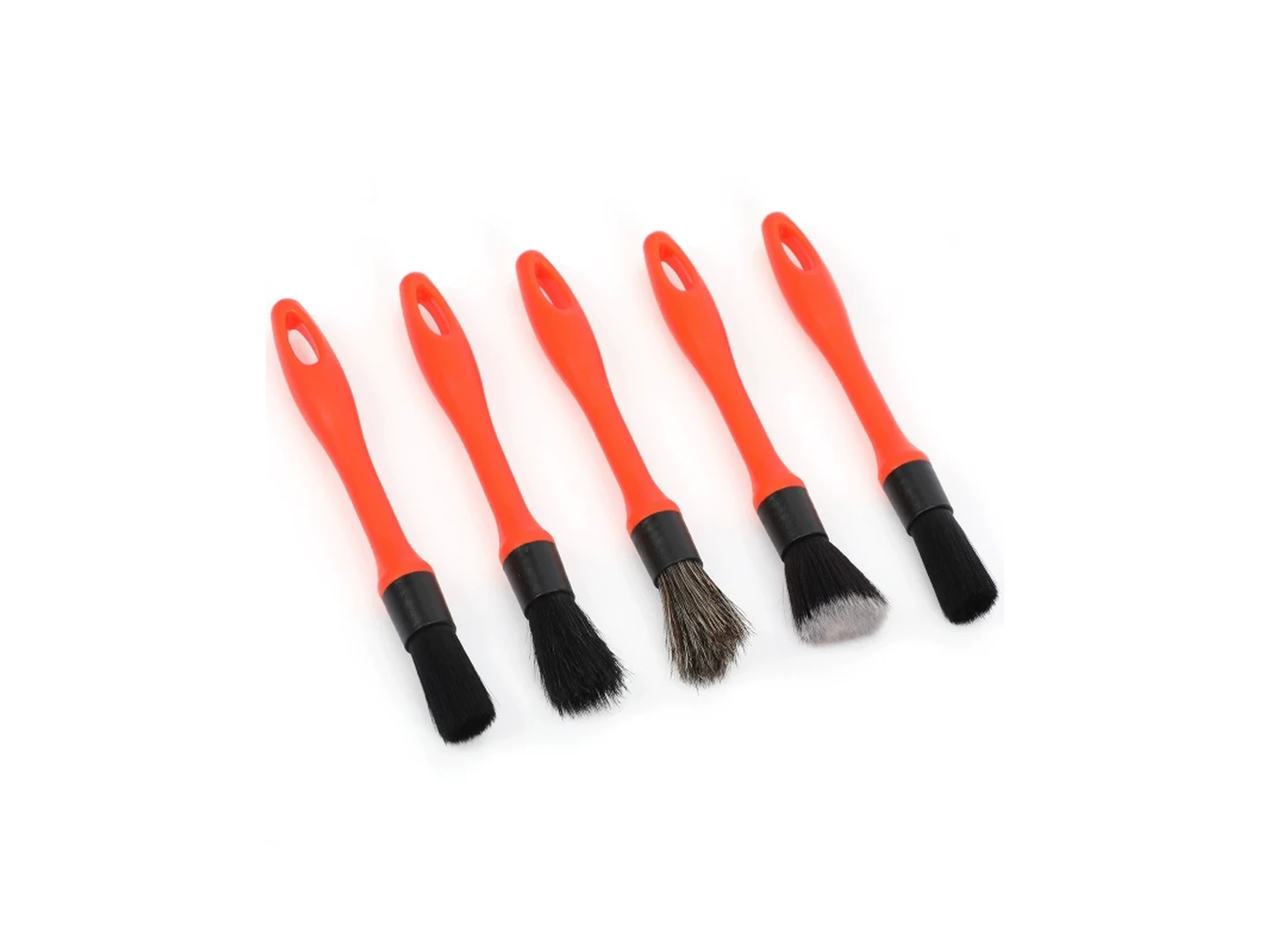
Medium brush
100 pcs
Minimum order
Worked with two hands or on a pole: chimney, gutter and pond-filter brushes, discs, cups and tank brushes.
Production lead time, once the specification is confirmed
- Up to 100 pcsWithin 7 days
- 101–5,000 pcsWithin 14 days
- 5,001–50,000 pcsWithin 21 days
- Over 50,000 pcsConfirmed with your quotation
Peak season can extend these times; the shipping date is confirmed in writing with your quotation. Sampling and shipping are quoted separately.
A configurable inline roller brush for ceramic substrate and ferrite processing lines, engineered to remove fine ceramic dust, slurry, glaze particles, oxide, and polishing residue with uniform contact across the full substrate width — without chipping edges or overloading fragile green bodies.
What can this brush do for you?
Uniform Cleaning Across the Full Substrate Width
Working widths from 100 to 1,500 mm let the roller match your conveyor line exactly. Continuous nylon PA filament zones and PVA or PU sponge zones are built without side-to-side gaps, so the substrate receives the same mechanical cleaning action from edge to edge. Operators no longer need to hand-wipe or double-pass boards after an inline cleaning step.
Fine Particulate Removal Without Green-Body Damage
Filament diameters from 0.02 to 0.30 mm and soft open-cell sponge media apply controlled pressure across the contact zone. Engagement is set between 0.5 and 3 mm, keeping surface load below 2 N/cm² on fragile substrates. This removes loose dust and slurry while protecting thin green ceramic sheets, printed edges, and unfired multilayer stacks from cracking or corner chipping.
Absorbs Slurry and Liquid Instead of Pushing It Along
PVA sponge media wicks water-based slurry, oxide suspension, and cleaning solution into its pore structure as the roller rotates, then releases the liquid at the rinse or squeegee stage. The substrate leaves the roller zone drier, with less residual film and fewer re-deposited particles.
One Roller Can Handle Wet and Dry Touch Points
Media zones can be segmented on the same core, for example a nylon PA filament section for dry dust removal followed by a PVA sponge section for wet absorption. This lets a single brush assembly replace separate dry-brush and sponge-dry stations in space-limited ceramic lines.
Low Runout Keeps Contact Stable at Conveyor Speed
Roller assemblies are balanced and machined to a runout reference of 0.05 to 0.20 mm. That limits pressure pulses, vibration, and visible streaking on thin substrates, and helps keep the engagement depth constant instead of varying with each revolution.
Static-Safe Options for Sensitive Substrates
When requested, fill materials can be compounded to a surface resistance of 10³ to 10⁹ ohms and the shaft grounded through the machine interface. This reduces static attraction of fine ceramic dust and protects static-sensitive electronic substrates.
What is a Ceramic Substrate Cleaning Brush?
A Ceramic Substrate Cleaning Brush is an inline rotary roller assembly that mounts onto the driven shaft of a cleaning or brushing unit in a ceramic substrate processing line. The substrate or part travels underneath the roller while the roller rotates against the direction of travel. The filament tips or sponge surface sweep the exposed face, edges, and contact areas, dislodging loose particles and absorbing liquid in a single continuous action.
The roller is built on a machinable core with a keyed shaft, through-shaft, journal, or flange interface so it can be installed as a direct replacement in existing equipment. Fill media is selected for the process stage: fine nylon PA filament for dry dust and edge cleaning, PVA sponge for wet slurry absorption and gentle wiping, PU sponge for improved chemical resistance and moderate abrasion, or a combination of zones.
This brush is a surface-conditioning tool, not a grinding or material-removal tool. It is intended for loose ceramic dust, dried slurry film, glaze overspray, oxide particles, and polishing residue. It does not remove fired-on glaze, sintered deposits, or deep burrs.
Technical Specifications
Dimensions, media, and interface are finalized for each line. Standard manufacturing ranges are shown below.
| Parameter | Value / Options |
|---|---|
| Working width | 100–1,500 mm, matched to conveyor width |
| Roller outside diameter | 70–250 mm standard; other diameters possible with machine clearance review |
| Core / shaft diameter | 20–120 mm, selected for stiffness and existing journals |
| Fill media | PVA sponge, PU sponge, nylon PA filament, or combined zone construction |
| Filament diameter | 0.02–0.30 mm; finer for green/fragile substrates, coarser for fired ceramic or heavier dust |
| Sponge pore grade | Process-specific open-cell pore size for absorbency, chemical contact, and compression recovery |
| Tuft / zone density | Configured for surface load and particle holding capacity |
| Interface | Keyed shaft, through-shaft, journal, flange, or machine-specific end cap |
| Runout reference | 0.05–0.20 mm on balanced precision assembly |
| Contact setting | 0.5–3 mm engagement or surface load below 2 N/cm² on fragile substrates |
| ESD resistance | 10³–10⁹ ohms where specified for static-sensitive processes |
| Operating condition | Wet with DI water or mild detergent, or dry; media selected accordingly |
| Brush type | Custom Roller and Conveyor Brushes |
| How it is driven | Machine-driven, mounted in the equipment |
| Cleaning target | ceramic pcb substrate, ferrite core and component, and glaze-line carrier cleaning |
| Surface or part | substrates, ceramic, edges, roller, fired ceramic, green bodies, boards, and corners |
| Residue or debris | dust, slurry, particles, ceramic dust, oxide, glaze, polishing residue, and loose particles |
| Mounting / connection | Keyed shaft, through-shaft, journal, flange, or machine-specific end cap |
For a reliable quotation, provide the conveyor width, substrate thickness and fragility, process stage, wet/dry condition, line speed, and the existing shaft mounting drawing or sample.
Where does this brush work best?
- Ceramic PCB substrates after via drilling, scoring, or surface brushing, where fine ceramic dust must be removed before metallization, lamination, or resist application.
- Green ceramic tape and unfired multilayer substrates that require low-force cleaning without deformation, edge chipping, or corner loss.
- Fired ceramic boards and substrates before screen printing, sputtering, or plating, where dust and loose particles cause pinholes and adhesion defects.
- Ferrite cores and components on conveyorized lines after machining, tumbling, or polishing, where slurry, oxide, and media residue remain on surfaces and crevices.
- Glaze-line carriers, fixtures, and transport pallets that accumulate dry glaze dust and overspray and would otherwise contaminate fresh substrates.
How do I choose the right one?
Start with the process stage and substrate fragility before selecting any media or dimensions.
1. Match media to the residue and wet/dry condition
Use fine nylon PA filament for dry ceramic dust and light edge cleaning on fired substrates. Choose PVA sponge when the line is wet and slurry or oxide suspension must be absorbed while leaving a dry surface. Use PU sponge when mild cleaning chemicals or moderate abrasion are involved. Combined zones work when a dry dust removal stage and wet absorption stage happen close together.
2. Set contact to protect the substrate
Green and thin fired ceramic require the lowest engagement. Keep the contact depth at 0.5–1 mm and surface load below 2 N/cm². Thicker fired substrates can take 1–3 mm engagement. After setup, run one sacrificial panel and inspect edges and surface under magnification before committing the line.
3. Verify the mounting interface
Confirm keyway size, shaft diameter, bearing journal length, drive side, and end cap or flange detail against the existing machine. A mismatched shaft interface stops installation even if the cleaning media is correct.
4. Ask for low runout on high-speed or thin-substrate lines
For thin ceramic panels or line speeds that create vibrations, specify runout of 0.05–0.20 mm and dynamic balancing. Higher runout produces pressure pulsation, uneven streaks, and can break fragile edges.
5. Add ESD control when dust reattracts
If the process is static-sensitive, specify antistatic fill in the 10³–10⁹ ohm range and a grounded shaft path through the interface.
When a different tool is more suitable: If the task is to remove fired-on glaze, sintered deposits, or thick burrs, select a diamond, silicon carbide, or wire brush or a machining process instead. If the substrate is extremely thin and unsupported, consider air-knife, ultrasonic, or other contactless cleaning. If the residue is oily or organic, add a chemical cleaning stage; the brush removes particles but does not replace chemistry.
Can I customize this brush?
A ceramic substrate cleaning brush is built around your line rather than selected from shelf stock. Typical custom variables:
- Working width and roller outside diameter to match conveyor and machine clearance
- Core and shaft construction: stainless steel, aluminum, or polymer core; keyed, through-shaft, journal, flange, or end-cap interface
- Media layout: full cylinder, spiral or straight zones, segment lengths, tuft density, trim length, filament diameter, or sponge pore/hardness
- Material grades: PVA, PU, nylon PA, antistatic compounds, or combined zones
- Runout class and dynamic balancing for precision lines
- ESD resistance target and grounding path
- Roller color, marking, protective packaging, and spare-set identification
To define the configuration, provide the line drawing or shaft sample, substrate width and thickness, process stage (green or fired), residue type, wet/dry condition, chemical exposure, line speed, and target contamination level. Project-specific documentation, material declarations, inspection, and third-party testing can be arranged as part of the customization package.
When is a ceramic substrate cleaning brush worn out rather than just dirty?
Can the same roller process both green and fired ceramic?
It is usually better to keep separate media sets. Green ceramic needs lower contact force and softer media; a roller set for fired ceramic may be too aggressive. Shared rollers also risk cross-contamination if the process stages produce different residues.
How do I verify that contact pressure is safe before full production?
Run one sacrificial substrate at the planned gap and speed. Inspect edges and surface under 10x magnification for chipping, cracks, or indentation. Check that engagement stays within 0.5–3 mm and surface load remains below 2 N/cm². If marks appear, increase gap or reduce roller interference.
Why is runout specification important for ceramic substrates?
Runout above the specified 0.05–0.20 mm range creates pressure pulses on each revolution. On thin or brittle ceramic, that shows up as vibration, uneven cleaning streaks, and edge damage. Low runout keeps the contact depth stable along the full width and at line speed.
Does this brush replace chemical cleaning?
No. The roller loosens and removes particles, slurry, and liquid film, but it does not dissolve oils, stearates, or organic films. If the line requires chemical cleaning, use the brush as a mechanical step before or after the chemical stage, not as a replacement for it.
How should a PVA sponge roller be stored when the line stops?
Keep the sponge damp with DI water or in moisture-retaining wrap. Do not allow it to dry out hard, be crushed under its own weight, or sit in direct sunlight or heat. Nylon filament media can be stored dry, but the roller should be protected from impact that could deform the core or bend the shaft.
How do I know when the media needs replacement?
Inspect weekly or after any process change. Look for compressed sponge that no longer recovers, clogged pores, broken or flattened filament tips, or a measurable reduction in outside diameter. If the roller no longer leaves the substrate clean at the established settings, or if absorbency has visibly dropped, schedule media replacement or re-skimming.
Guides that go deeper on this
Ceramic Substrate Brush vs Standard Brushes: Edge Deburring
Read this guideGuideCeramic Substrate Brush vs Standard Brushes: Finish Control
Read this guideGuideHow to Choose Ceramic Substrate Cleaning Brush
Read this guideGuideCeramic Glaze Line Brushes: Applying and Cleaning Glaze Surfaces
Read this guideCustom Manufacturing RFQ
Describe Your Application
To quote this brush accurately, send the size, material, cleaning target, residue, quantity, and any available drawing or sample photo.
Drawing or photo optional — it speeds things up, it does not gate the enquiry.
Custom Brush RFQ
Send Your Brush Project
Upload a drawing, product photo, or sample photo and provide the core dimensions and cleaning conditions.
“We need a brush to remove wet residue from a stainless steel conveyor, about 800mm wide. The current brush wears quickly. We can send photos.”
“We sell drinkware and need a cleaning brush to include with the product. Quantity around 5,000 pieces.”