
Custom Cleaning Brush
Machine Bore Cleaning Brush
Machine bore cleaning brushes with brass, copper, or nylon PA fill for 3.2-50.8 mm bores. Custom stem styles for ports, galleries, and manifolds.
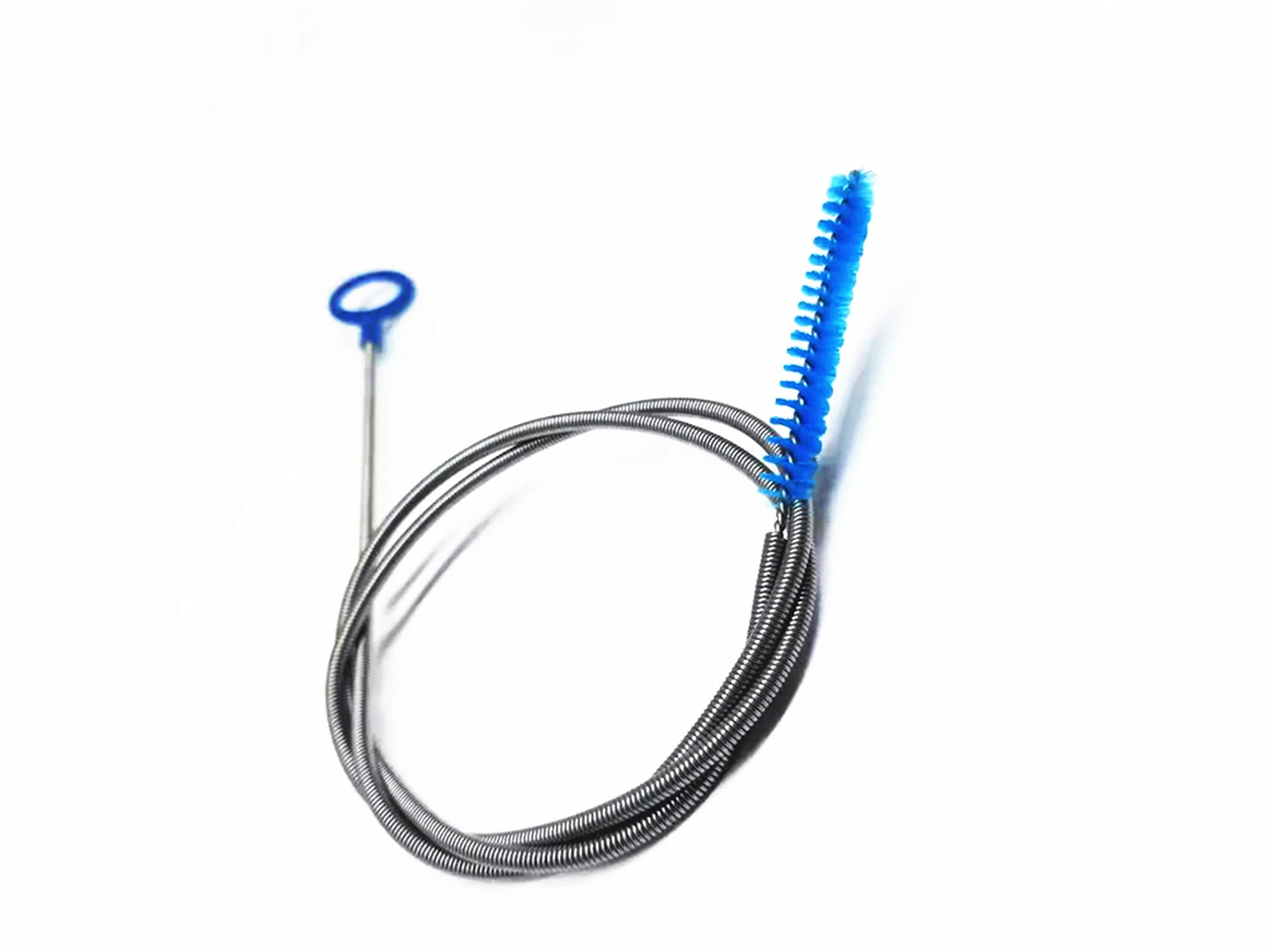
Small brush
500 pcs
Minimum order
Held in one hand: tube, bottle, detail and swab brushes — including long-handled ones with a small head.
Production lead time, once the specification is confirmed
- Up to 500 pcsWithin 7 days
- 501–50,000 pcsWithin 14 days
- Over 50,000 pcsWithin 21 days
Peak season can extend these times; the shipping date is confirmed in writing with your quotation. Sampling and shipping are quoted separately.
A cylindrical bore cleaning brush for the drilled passages, ports, and oil/coolant galleries on machines and hydraulic components. Brass wire, copper wire, and nylon PA fill options let you match contact pressure to the bore material, while stem styles cover blind holes, curved passages, and powered rotation.
What can this brush do for you?
Contact Around the Full Bore Circumference
The cylindrical fill wraps the entire working section, so every rotation scrubs the complete sidewall rather than a single contact line. With brush diameters from 3.2 mm, the brush reaches ports and galleries where cloths, plugs, and hand scrapers cannot enter.
Fill Material Sets the Cutting and Scratch Balance
Brass wire removes light rust, heat scale, and carbon without the aggressive marking of steel. Copper wire is softer still for fine threads and sensitive alloy bores. Nylon PA works on oil, coolant, and sludge films while leaving polished, coated, and close-tolerance surfaces untouched by metallic scratch.
Runs by Hand or From a Rotating Drive
Single-stem construction fits a drill chuck. Threaded ends mount to spindles or power tools. Loop and ring ends work as pull-through configurations for cross-drilled ports. The stem is chosen smaller than the bore ID, so only the fill contacts the bore wall during rotation.
Loosens Chips Without Packing Them Deeper
The open spiral-wound construction leaves channels around the brush section. When you reciprocate the brush while flushing with solvent, coolant, or compressed air, dislodged chips and scale move out of the bore instead of packing into the blind end.
Available in Short, Targeted Working Sections
Brush sections from 25 mm to 127 mm concentrate the cleaning contact where the bore actually needs it. You won’t waste stroke length on a long brush when the problem area is a short oil port or valve bore.
What is a Machine Bore Cleaning Brush?
A Machine Bore Cleaning Brush is a stem-mounted cleaning brush built for insertion into the machined holes of equipment during service, rebuild, or pre-assembly preparation. The working section is formed by crimping or twisting wire or polymer filaments around a central stem in a continuous spiral. The stem extends beyond the fill as a drive or grip point.
In use, the operator inserts the working section into the bore, rotates the brush by hand or at low speed, and moves it in short forward-and-back strokes. A light solvent, cutting fluid, or wash solution is often added to carry loosened material out of the hole. The brush removes loose chips, burrs, light scale, rust bloom, carbon, dried coolant, and oil sludge from the sidewall. It is not a reamer or hone: it will not correct hole diameter, roundness, or surface finish, and it will not remove heavy welded slag or deeply corroded metal.
The same basic brush family covers a wide range of bores by changing diameter, fill length, filament material, filament diameter, and stem style. A single purchase should therefore be defined by the actual bore ID, access path, and residue rather than by a generic bore brush label.
Technical Specifications
| Parameter | Standard range / options | What to check when specifying |
|---|---|---|
| Brush outside diameter | 3.2-50.8 mm (0.126-2.000 in) | Match to the narrowest bore ID along the access path |
| Brush section length | 25-127 mm (1-5 in) | Long enough to cover the contaminated area without unnecessary reach |
| Overall length | 152-406 mm (6-16 in) | Must allow the fill to reach the deepest contact point while the operator holds the stem |
| Filament diameter | 0.08-0.25 mm | Fine wire for smooth surfaces; heavier wire for more aggressive scale and carbon removal |
| Fill material | Brass wire, copper wire, nylon PA; additional options include PBT, stainless steel, carbon steel, horsehair, and abrasive nylon | Select by bore material, residue type, and acceptable surface marking |
| Stem style | Single stem, double stem, threaded, loop, ring, flexible extension | Single for blind holes; double for heavier fill; threaded for power tool mounting; flexible for curved galleries |
| Stem/core material | Galvanized steel, stainless steel, or project-specified corrosion-resistant metal | Must tolerate the cleaning solvent and any wash-down exposure |
| Recommended contact setting | Near-size contact for wiping; 5-20% over-bore for flexible polymer fill; lower interference for wire fill | Extra interference raises scrubbing pressure but also increases torque and wire breakage |
| Brush type | Custom Tube & Pipe Bore Brushes | |
| How it is driven | Hand-guided | |
| Cleaning target | newly drilled or reamed bore, hydraulic cylinder bore and valve body, and engine and powertrain service cleaning | |
| Surface or part | bores, holes, ports, passages, blind holes, cylinders, curved passages, sidewalls, and tubes | |
| Residue or debris | oil, coolant, scale, chips, sludge, carbon, burrs, rust, and process deposits | |
| Mounting / connection | Threaded Removable / Fixed |
All dimensions can be adjusted to your machine. Common specials include extra-long stems, reduced-diameter sections for stepped bores, and non-standard thread adapters.
Where does this brush work best?
- Newly drilled or reamed bores before assembly – removes chips, tapping fluid, and cutting oil from machined holes in housings, valve bodies, bearing caps, and manifolds before components are installed.
- Engine and powertrain service – cleans oil galleries, crankcase passages, cylinder head bolt holes, and turbo oil feed bores on gas and diesel engines during rebuild.
- Hydraulic and pneumatic manifolds – clears cross-drilled ports, blind cavities, and parkerized or anodized internal passages where chips and metallic fines hide after machining.
- Coolant and lubrication system galleries – removes dried coolant sludge, mineral scale, and varnish from bearing lubrication lines, spindle passages, and gearbox galleries.
- Mold, die, and tooling water lines – cleans cooling-channel scale and mold release buildup from water lines with nylon or brass fill instead of abrasives that change channel dimensions.
- Tube and pipe end preparation – cleans burrs and internal scale from pipe ends, ports, and fittings prior to brazing, welding, or assembly.
How do I choose the right one?
1. Start with the narrowest internal diameter
Measure the smallest ID along the entire access path, including port openings, threads, and any step. The brush OD must pass that point without the stem scraping the sidewall. Use near-size contact for wiping. For nylon PA or other flexible polymer fill, you can run 5-20% oversize for light scrubbing; for brass, copper, or other wire fill, select the brush OD close to the bore ID or only slightly over, because wire does not flex far and excess interference will bend or break filaments.
2. Match the fill to the bore surface and residue
Brass wire handles light rust, scale, and carbon on steel, cast iron, and aluminum bores without the deep scratching of steel wire. Copper wire is softer and often chosen for copper, brass, plastic, and finished alloy surfaces. Nylon PA lifts oil, grease, coolant residue, and fine metallic sludge while protecting coatings, polished surfaces, and close-tolerance bores. If the residue is heavy baked-on carbon or hardened scale, a stainless steel or abrasive nylon fill may be needed—but that also raises the risk of surface marking, so the bore condition must be evaluated first.
3. Pick the stem style for your drive and access path
Single-stem brushes fit drill chucks and hand operation for straight blind holes. Double-stem versions pack more filament into the working section for denser contact. Threaded ends mount directly to a rotating spindle or extension rod. Loop or ring ends work as manual pull-through tools for open-ended ports. Flexible extensions follow curved oil galleries and water passages where a rigid stem cannot turn the corner.
4. Set the working length and reach
The brush section should cover the contaminated length, not the entire bore if only part is dirty. The distance from the operator’s hand to the deepest point determines the overall length. For very deep bores, a rigid extension plus a short brush section usually gives better control than an extremely long brush.
5. Check the cleaning environment
The stem and fill must survive the solvent, coolant, or wash solution used on the machine. Galvanized stems are common for dry or lightly oiled service; stainless steel stems suit water-based wash systems and corrosive fluids. If the brush will be used in multiple fluid systems, consider dedicated brushes per system to avoid cross-contamination.
When a different tool is the better choice
Use a reamer, hone, or stone when hole diameter, roundness, or finish specification must be restored. Use mechanical extraction or machining for broken chips, galled metal, or solid deposits that stall rotation. For bores smaller than 3.2 mm, a micro swab or solvent flushing may be the only practical method. The brush is a cleaning and light deburring tool, not a dimensional correction tool.
Can I customize this brush?
Machine bore cleaning brushes are configured per project because bore diameters, access restrictions, and residue vary from one machine family to the next. To define a custom version, provide the narrowest bore ID, the deepest contact point, the surface material, the residue type, the cleaning fluid, and the intended drive method. A drawing, worn sample, or bore cross-section shortens the approval cycle.
Typical adjustable parameters:
- Brush outside diameter – from 3.2 mm, stepped or tapered sections for multi-diameter bores
- Brush section length – short sections for ports, long sections for cylinders and galleries
- Overall length and stem extension – matched to reach and handle/grip requirements
- Fill material and filament diameter – brass, copper, nylon PA, PBT, stainless steel, carbon steel, horsehair, or abrasive nylon
- Fill density and spiral pitch – looser spiral for debris clearance, denser fill for scrubbing
- Stem style and core – single, double, threaded adapter, loop, ring, flexible extension; galvanized or stainless steel
- End configuration – thread size, hex drive, quick-change coupling, or plain shank
- Color, marking, and packaging – custom color, pad print, laser marking, bulk pack, or individual tag/inspection packaging
If your machine build or maintenance program requires material declarations, inspection data, or third-party test reports to qualify the brush for the line, include that requirement with the initial inquiry and we can support it as part of the project scope.
What size should a machine bore cleaning brush be, and how long does it last?
How do I check that a new brush fits the bore before running it?
Insert the brush into a sample or scrap bore with the same ID and gently rotate by hand. The fill should touch the sidewall with light drag and the stem should stay clear of the bore. If the stem scrapes, reduce the brush OD or change the stem configuration. If the fill spins freely without any drag, the brush is undersized for cleaning contact.
What speed should I use for a power-driven bore brush?
Start at low speed and increase only until the desired cleaning action occurs. Wire fill in particular will fatigue and shed broken filaments at high RPM, and a broken wire fragment left in the bore is a bigger problem than the residue the brush removed. Nylon and abrasive nylon can tolerate higher speeds, but the stem and adapter must still be rated for the rpm.
Can this brush remove broken taps, galled chips, or hard carbon deposits?
No. A bore cleaning brush removes loose or lightly attached residue and light surface contamination. Broken taps, galled metal, or hard baked deposits that stall rotation require mechanical extraction, reaming, honing, or chemical cleaning. If the brush stalls or the filaments flatten immediately, stop and evaluate the residue type rather than increasing pressure.
How do I clean the brush between uses and prevent cross-contamination?
Flush the brush with a solvent or wash solution compatible with both the fill and the stem material. Reverse rotation and stroke direction to release trapped particles, then blow dry with compressed air. If the same brush will be used on oil, coolant, and fuel galleries, use separate brushes for each fluid family or validate a documented cleaning procedure first.
How do I know when the brush is worn out?
Compare the used brush OD against a new one or check fit in the bore. Replace the brush when the fill is flattened, broken in more than one section, or no longer contacts the sidewall with light hand rotation. Also replace if the stem is bent, corroded, or damaged, since a bent stem can cock the brush and scrape the finished bore.
Is the brush suitable for cleaning food or sanitary process bores?
Nylon PA with a stainless steel stem can be configured for process lines where wire fill is unacceptable, but the brush must be dedicated to that use and fit within your sanitation plan. Wire-filled brushes are generally not appropriate for product-contact bores in food processing. Specify the sanitizing chemical and wash temperature when requesting a sanitary configuration.
Guides that go deeper on this
Custom Manufacturing RFQ
Describe Your Application
Send the key measurements, cleaning requirement, residue, material direction, mounting method, quantity, and drawing or photo.
Drawing or photo optional — it speeds things up, it does not gate the enquiry.
Custom Brush RFQ
Send Your Brush Project
Upload a drawing, product photo, or sample photo and provide the core dimensions and cleaning conditions.
“We need a brush to remove wet residue from a stainless steel conveyor, about 800mm wide. The current brush wears quickly. We can send photos.”
“We sell drinkware and need a cleaning brush to include with the product. Quantity around 5,000 pieces.”