
Stainless Steel Sponge Bottle Brush
OEM / ODM custom manufacturing · made to order
Sponge bottle brush on a stainless steel wire handle, 325 mm long with a replaceable 90 x 50 mm sponge head. Cylindrical, conical or oval. Made to order.
- Brush type
- Custom Bottle & Container Brushes
- Material
- PU SpongePVA Sponge
- Head diameter
- Approximately 50 mm
- Working length
- Approximately 90 mm
- Overall length
- 325 mm standard; other lengths made to order
- Temperature
- Hand washing in warm water; PVA sponge 5–80°C, PU sponge formulation specific
- MOQ
- 500 pcs
- Lead time
- Within 7 days (up to 500 pcs)
- Sample
- Typically 3–7 days
What can this brush do for you?
Reaches the bottom of a tall bottle or a jug
The brush is 325 mm end to end. That puts the sponge on the base of a one-gallon jug, a tall carafe, or an insulated travel bottle while your hand stays outside the neck, so you are not reaching in and wetting your sleeve to clean the last 100 mm.
A steel stem instead of a moulded plastic one
The handle is a single length of stainless steel wire bent double: the bend forms the grip loop at the top, and the two legs run down to the head, where a ring slides along them to close them on the sponge. Steel takes up no water, so the stem does not swell or hold wash water inside a moulded cavity, and the loop gives you somewhere to hang the brush so the head drains and dries between uses.
The sponge head is the wear part, and only the head
The sponge is clamped between the two legs rather than glued to them. When the head tears, flattens, or stops smelling clean, it is pulled off and a new one goes on. Your replacement stock is sponge heads, not whole brushes, which is the part of the cost that actually recurs.
Soft contact for glass, glaze, and coated interiors
A sponge face carries the contact across its whole area instead of concentrating it on filament tips. That is why this shape is specified for glass carafes, glazed ceramic, and stainless or polymer-lined tumblers where the interior finish has to stay unmarked.
Three head shapes for three container shapes
The head is made cylindrical, conical, or oval. A cylinder suits a straight-sided bottle, a cone enters a narrower neck and opens out below it, and an oval follows the shoulder of a jug or a carafe. Tell us the container and we will tell you which one we would cut.
White as standard, so a tired head is obvious
The standard head is white. Staining and trapped residue show on a white sponge long before they show on a dark one, which gives whoever is washing up a visible signal that the head is due for replacement. Other colours are made to order.
Technical Specifications
The table below lists the standard build. Length, head size, head shape, sponge grade, and colour are all changed to order.
| Parameter | Value / Options |
|---|---|
| Overall length | 325 mm standard; other lengths made to order |
| Sponge head length | Approximately 90 mm |
| Sponge head width / diameter | Approximately 50 mm |
| Head profile | Cylindrical, conical, or oval; other profiles made to order |
| Head material | PU sponge or PVA sponge, in soft, medium, or firm density |
| Handle and stem | Stainless steel wire bent double, with a grip loop at the top and a sliding ring that closes the two legs on the head |
| Head attachment | Sponge head clamped between the two legs and held by a sliding ring; replaceable without tools |
| Colour | White as standard; other colours made to order |
| Operating temperature | Hand washing in warm water; PVA sponge 5–80°C, PU sponge formulation specific |
| Dishwasher | Not rated for dishwasher cycles unless the sponge grade is selected and validated for it |
| Chemical compatibility | Mild liquid detergents. Not for solvents, strong acids, strong alkalis, bleach, or abrasive cleaners |
| Food contact | A food-contact-suitable sponge grade can be specified. Testing against the standard your market requires is arranged per order, at your cost |
| Brush type | Custom Bottle & Container Brushes |
| How it is driven | Hand-guided |
| Cleaning target | Tall bottles, one-gallon jugs, carafes and wide-mouth jars |
| Surface or part | Interior sidewalls, the base and the corner between them |
| Residue or debris | Drink film, milk, juice and protein residue |
| Mounting / connection | Sponge head held in the twisted stainless steel wire; replaceable without tools |
Small brush
500 pcs
Minimum order
Held in one hand: tube, bottle, detail and swab brushes — including long-handled ones with a small head.
Production lead time, once the specification is confirmed
- Up to 500 pcsWithin 7 days
- 501–50,000 pcsWithin 14 days
- Over 50,000 pcsWithin 21 days
Peak season can extend these times; the shipping date is confirmed in writing with your quotation. Sampling and shipping are quoted separately.
A sponge bottle brush on a stainless steel wire handle, built for tall bottles, jugs, and carafes where a short brush cannot reach the base. The sponge head is about 90 mm long and 50 mm across and is clamped between the two legs of the stem, so a worn head is pulled off and replaced while the handle stays in service. Overall length is 325 mm.
What is a Stainless Steel Sponge Bottle Brush?
It is a hand-held bottle brush with two parts: a sponge head and a stainless steel wire handle. The handle is a length of wire bent double, with the bend forming a loop at the free end for grip and hanging. The two legs enter the sponge head at the working end and a ring slides down the legs to close them on it, which is what makes the head removable. The legs open to 50 mm, which sets the largest head the frame will carry.
The head is PU or PVA sponge. PVA is dense and tough when wet, dries to a hard block between uses, and rehydrates quickly. PU is softer, holds more liquid, and follows an irregular interior more easily. Both give a non-marking contact face, and both are offered in soft, medium, or firm density. The grade is chosen from the surface you are cleaning and the residue you are removing, not the other way round.
In use the head is wetted, charged with detergent, pushed to the base of the container, and worked up the sidewall in short overlapping strokes. The sponge is wider than the legs and encloses them, so the wire does not reach the wall while the head is in good condition. This is a washing action rather than a scouring one: it suits drink film, milk, juice, protein residue, and light deposits, and it is not the right tool for scale, baked-on soil, or anything that needs abrasive force.
How do I choose the right one?
Measure the neck first, then the depth
The head has to pass the opening while still being wide enough to touch the wall below it. Give us the narrowest internal diameter of the neck and the internal depth to the base, and the head size and the stem length follow from those two numbers. The 50 mm standard head is sized for wide-mouth bottles and jugs; a narrower neck needs a smaller head.
Pick the head shape from the container’s shoulder
Straight-sided bottles take the cylinder. Containers that narrow at the top take the cone, which goes through the neck and then spreads against the wall. Jugs and carafes with a pronounced shoulder take the oval, which follows the curve instead of bridging it.
Match the sponge grade to the surface
Soft density for coated and decorated interiors. Medium for everyday glass and stainless. Firm where there is a heavier film to shift and the surface can take it. If you are not sure, send us the container and the residue you are fighting and we will specify it.
Order the replacement heads with the brushes
The head is the part that wears out. Decide up front how many spare heads go with each handle, and whether they are packed together or supplied as a separate line. It is cheaper to settle that in the first order than to come back for heads alone later.
When a different brush is the better choice
If the neck is too narrow for a sponge to enter, you want a twisted-wire tube brush, not this. If the deposit is scale, carbonised, or baked on, a sponge will not shift it and a filament or abrasive head is the right answer. If the container goes through a machine wash cycle rather than a sink, tell us, because that changes the head material question entirely.
Can I customize this brush?
Yes. To quote a changed version we need the container’s narrowest internal opening, its internal depth, the interior surface material, and the residue being removed. A sample container or a drawing is faster than a description.
We can change the following:
- Length – shorter for cups and jars, longer than 325 mm for deep tanks and carboys.
- Head size and shape – diameter, length, and cylindrical, conical, or oval profile.
- Sponge grade – PU or PVA, in soft, medium, or firm density, including a food-contact-suitable grade on request.
- Wire – stem diameter and stiffness, and the size and form of the loop end.
- Colour and marking – head colour other than white, and printing or a tag on the packaging.
- Packing – bulk, individually bagged, retail sleeve, or packed with a set number of spare heads.
Where does this brush work best?
- One-gallon jugs and large water bottles – the 325 mm length is what makes the base reachable; a 200 mm brush stops at the shoulder.
- Glass carafes and pitchers – sponge contact cleans the sidewall and base without the risk of marking that a filament tip carries on clear glass.
- Insulated travel bottles and sports bottles – particularly the ones with a coated or polymer-lined interior that needs gentle mechanical action.
- Wide-mouth jars and food containers – an oval or cylindrical head covers the base and the wall-to-base corner in the same stroke.
- Anywhere the brush has to hang up and dry – the wire loop is a hanging point, and a head that dries out is a head that does not start to smell.
What size should a stainless steel sponge bottle brush be, and how long does it last?
Can the sponge head go through a dishwasher or a hot wash cycle?
We specify hand washing. The limit comes from the sponge, not the steel: PVA sponge data give a use temperature of 5–80°C, and PU sponge is formulation specific. A domestic dishwasher running its sanitising cycle finishes at about 66°C, because NSF/ANSI 184 sets a 150°F final rinse, and a commercial high-temperature machine finishes at about 82°C, a 180°F final rinse, which is above the PVA band. If the brush has to survive a machine cycle, say so on the enquiry and the head grade is selected and validated for that duty.
Will the steel stem scratch the inside of a bottle?
The sponge head is wider than the legs and carries the contact, so the wire does not reach the wall while the head is intact. That stops being true once the head is worn down or torn, which is the point at which it should be replaced. On glass, glaze, and coated interiors we would rather you changed the head early than late.
What head size fits the neck of my bottle?
The head has to pass the opening and still be wide enough to touch the wall below it. The standard head is about 50 mm across, which suits wide-mouth bottles, jugs and carafes. Send us the narrowest internal diameter of the neck and the internal depth to the base, and we will tell you the head size and the stem length that follow from those two numbers.
Can I get a food-contact-suitable sponge?
Yes, say so on the enquiry and the sponge grade is selected for it. Testing against the standard your market requires is arranged per order and quoted separately, at your cost. We do not supply the brush with a compliance claim we have not tested for.
How long does a sponge head last before it needs replacing?
That depends on how often it is used and what it is washing, so we do not quote a cycle count we have not measured for your process. Replace the head when it tears, when it stays flattened after rinsing, when it stops holding detergent, or when an odour survives a proper rinse and dry. On glass, glaze and coated interiors, change it early rather than late, because a worn head stops shielding the wall from the stem.
How do I clean and dry the head so it does not start to smell?
Rinse it under running water and squeeze it out several times, so the trapped residue leaves with the water rather than staying in the sponge. Then hang the brush by the wire loop with the head downwards somewhere with air movement. An odour that survives a proper rinse and dry means the head has reached the end of its life.
Continue Exploring
Recommended Reading & Related Brush Resources
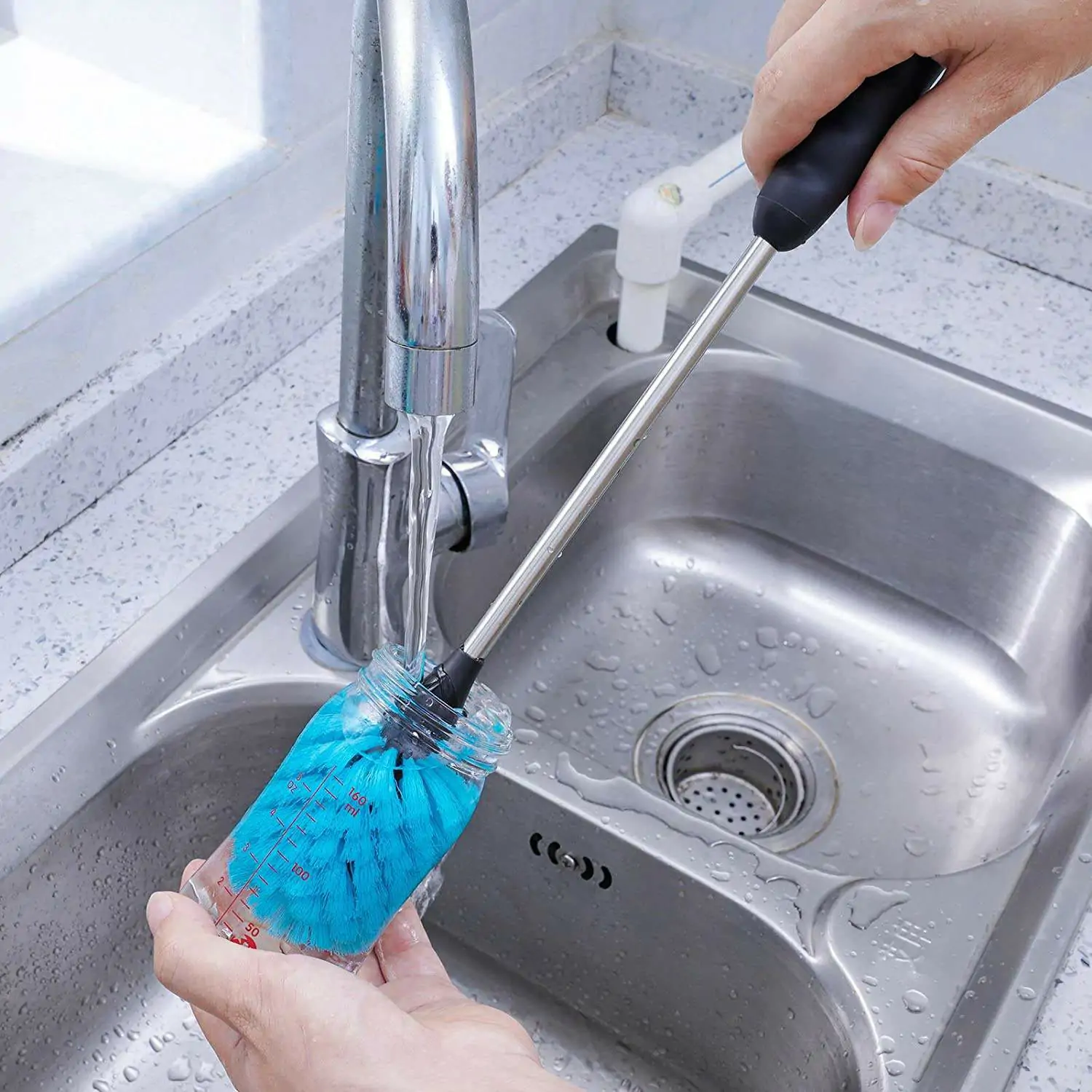
Custom Bottle & Container Brushes
A bottle or container brush goes in through an opening and then cleans a body that is wider than the way in: the wall, the shoulder under the neck and…
See how this type is builtBottle & Container Cleaning
A bottle brush is sized to the neck, not the body.
See the cleaning job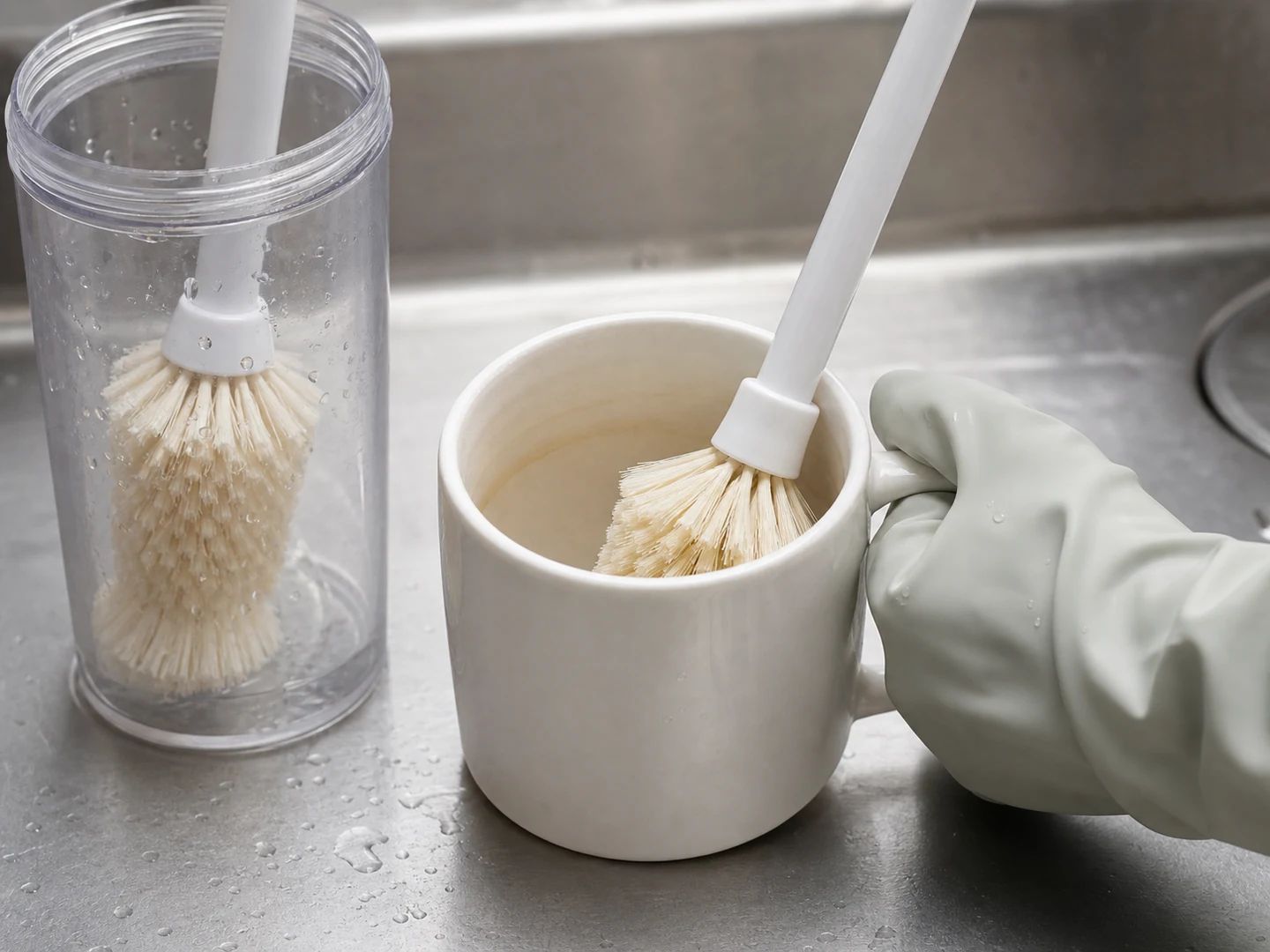
Cup & Mug Cleaning
Mugs and cups are cleaned with a short round brush whose fill reaches the base corner, where the coffee and tea ring survives a sponge.
See the cleaning job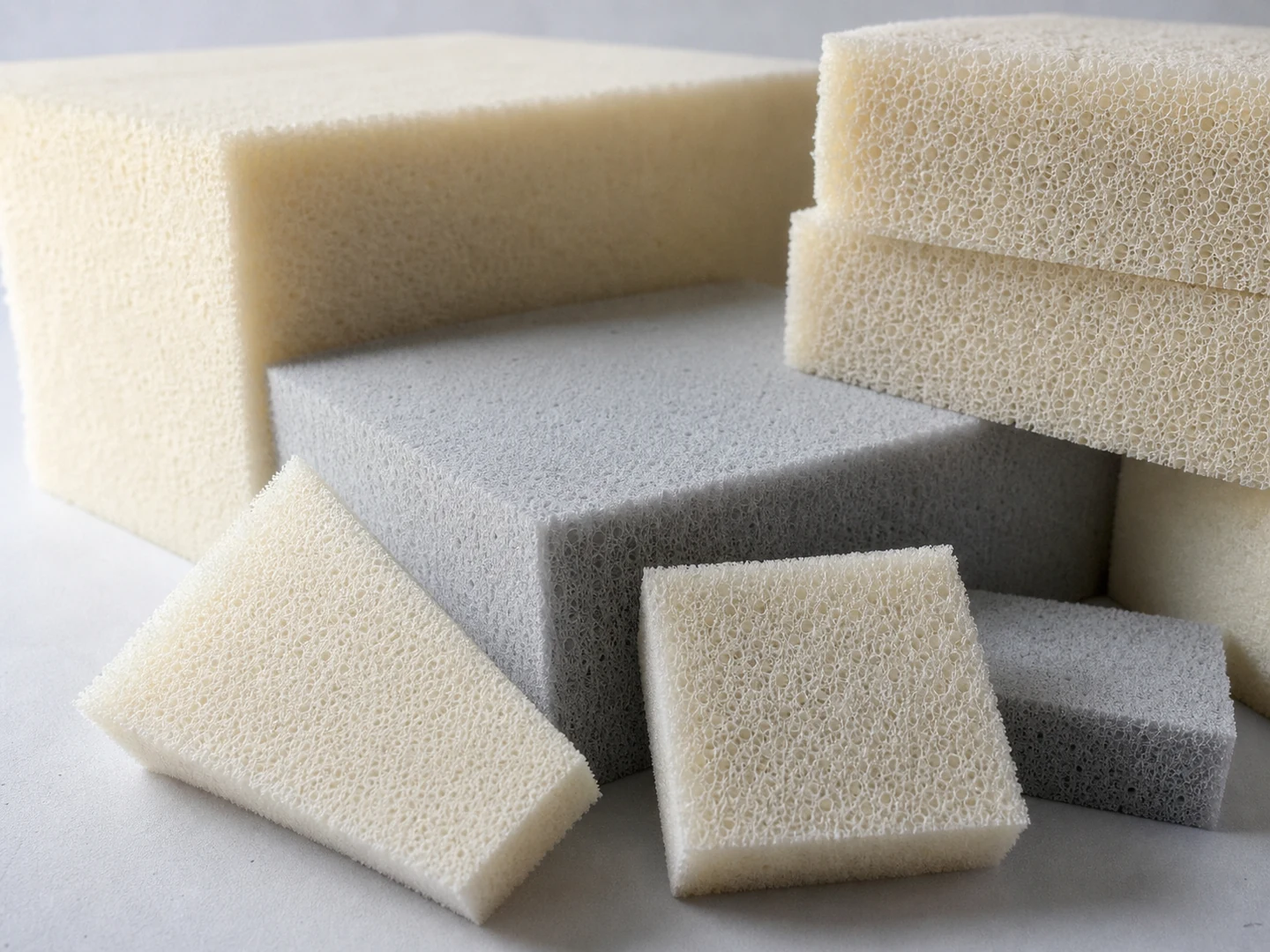
PU Sponge
PU sponge is a soft, open-cell polyurethane foam that absorbs and releases water and wipes without scratching.
Compare this material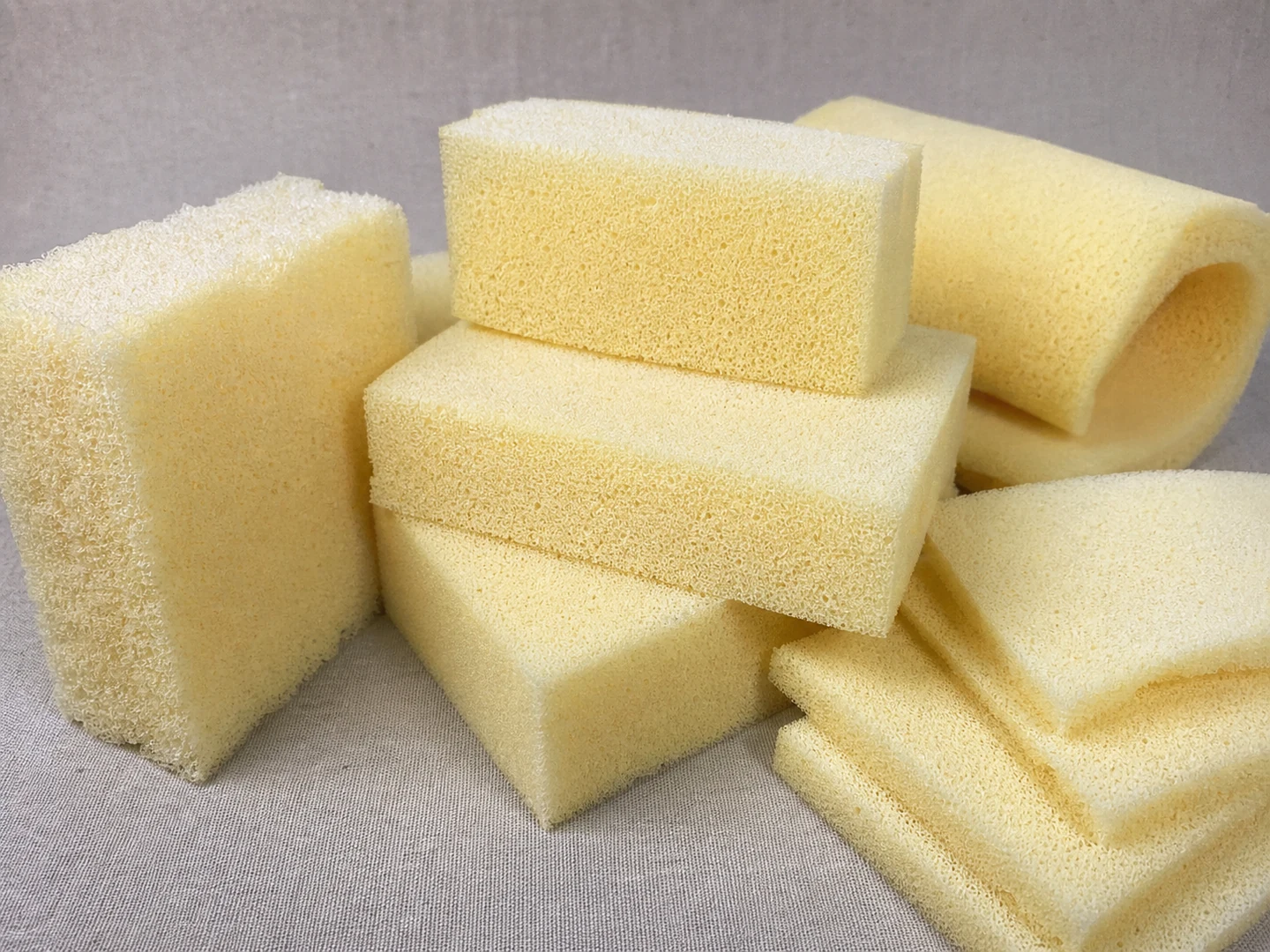
PVA Sponge
PVA sponge is a highly absorbent, soft porous polymer that holds many times its own weight in water.
Compare this material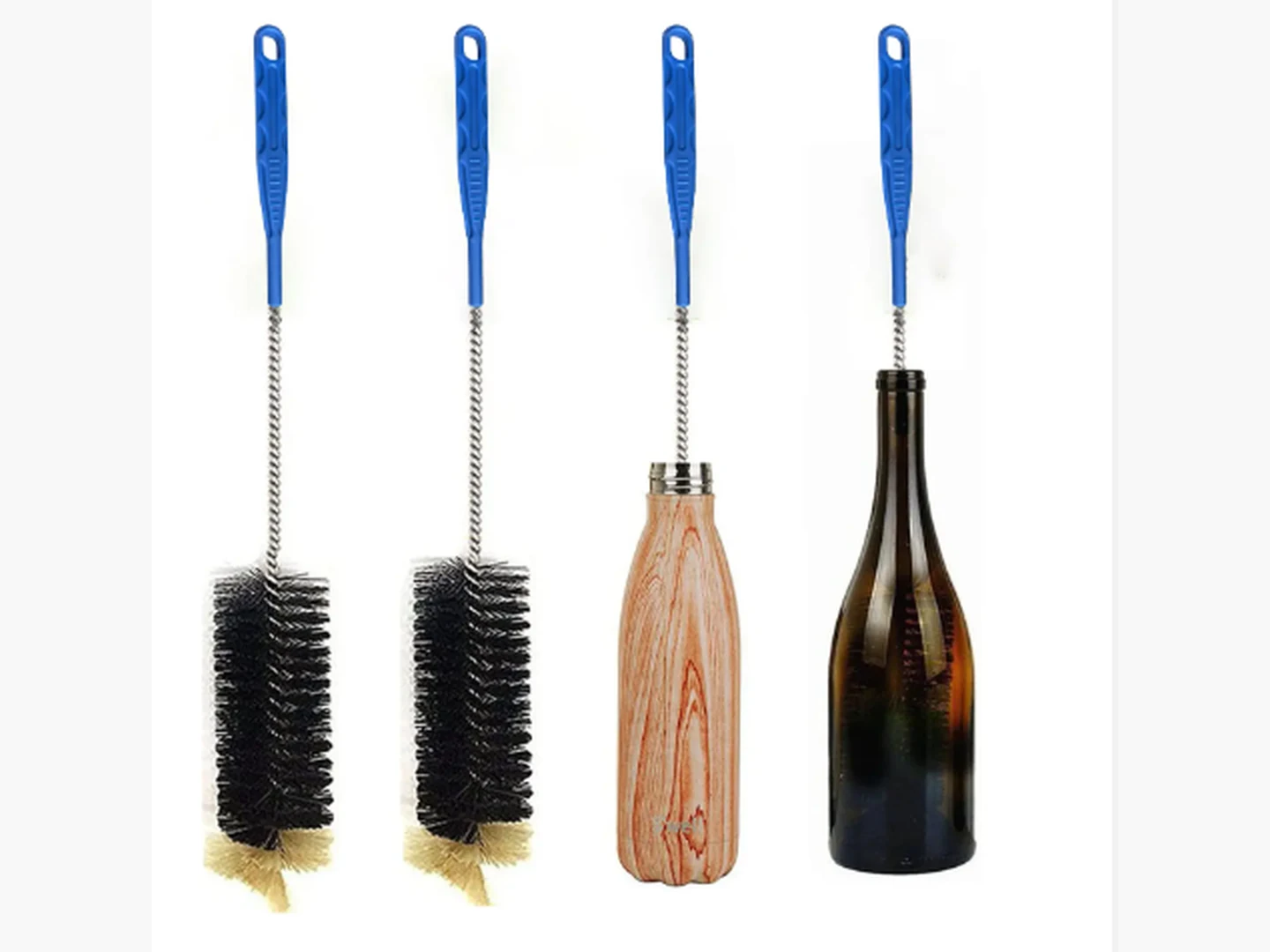
Stainless Steel Bottle Brush
Custom stainless steel bottle brushes with 304/316 wire for hard scale, biofilm, and dried residue inside glass and metal bottles.
Compare the specification
Long-Handle Baby Bottle Brush with Sponge Tip
Long-handle baby bottle brush with soft nylon bristles and PU sponge tip for milk film, formula residue, and curved bottle interiors.
Compare the specification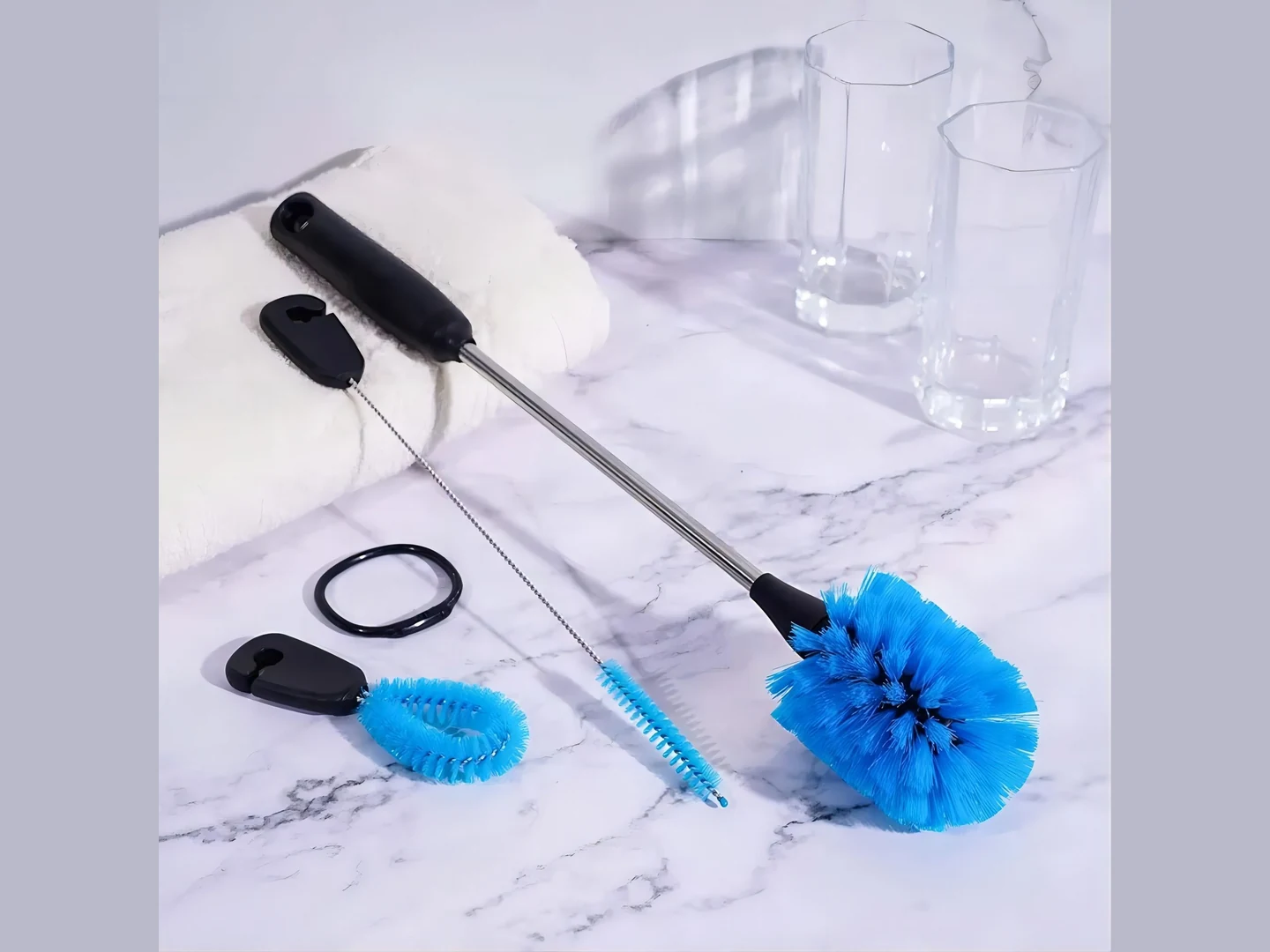
Brush Kit for Stainless Steel Bottles
Multi-brush kit with stainless steel twisted-wire cores and nylon bristles for cleaning bottle interiors, necks, threads, and valves.
Compare the specificationCustom Manufacturing RFQ
Describe Your Application
For an accurate quotation, please provide the main dimensions, material preference, working surface, residue, quantity, and a drawing or photo.
We reply to every request within 24 hours, with a quotation or with the questions we need answered first. If the brush can be made on our existing tooling, we make the sample directly. If it needs new tooling, we quote a sample fee and a tooling fee, and the sample fee is credited against the bulk order. Need an NDA first? We sign yours before you send drawings, and the files you send are never shown to other customers.
- MOQ500 pcs for small hand-held brushes, 100 pcs for medium and large ones
- SampleTypically 3–7 days
- ProductionFrom 7 days after sample approval, by size and quantity
- Payment30% deposit and 70% before shipment above US$10,000; smaller orders on agreed terms
Have the old brush? Send a photo on WhatsApp
Drawing or photo optional — it speeds things up, it does not gate the enquiry.
“We need a brush to remove wet residue from a stainless steel conveyor, about 800mm wide. The current brush wears quickly. We can send photos.”
“We sell drinkware and need a cleaning brush to include with the product. Quantity around 5,000 pieces.”